Transform your Long Island home with our custom sunrooms, liferooms, pergolas, and more! Quality Designs That Improve Your Space And Lifestyle.
Contact Info
Transform your Long Island home with our custom sunrooms, liferooms, pergolas, and more! Quality Designs That Improve Your Space And Lifestyle.
Contact Info
Houston's climate is relentless. Here's how an all season sunroom gives Harris County homeowners their outdoor space back — without the heat, humidity, or mosquitoes.
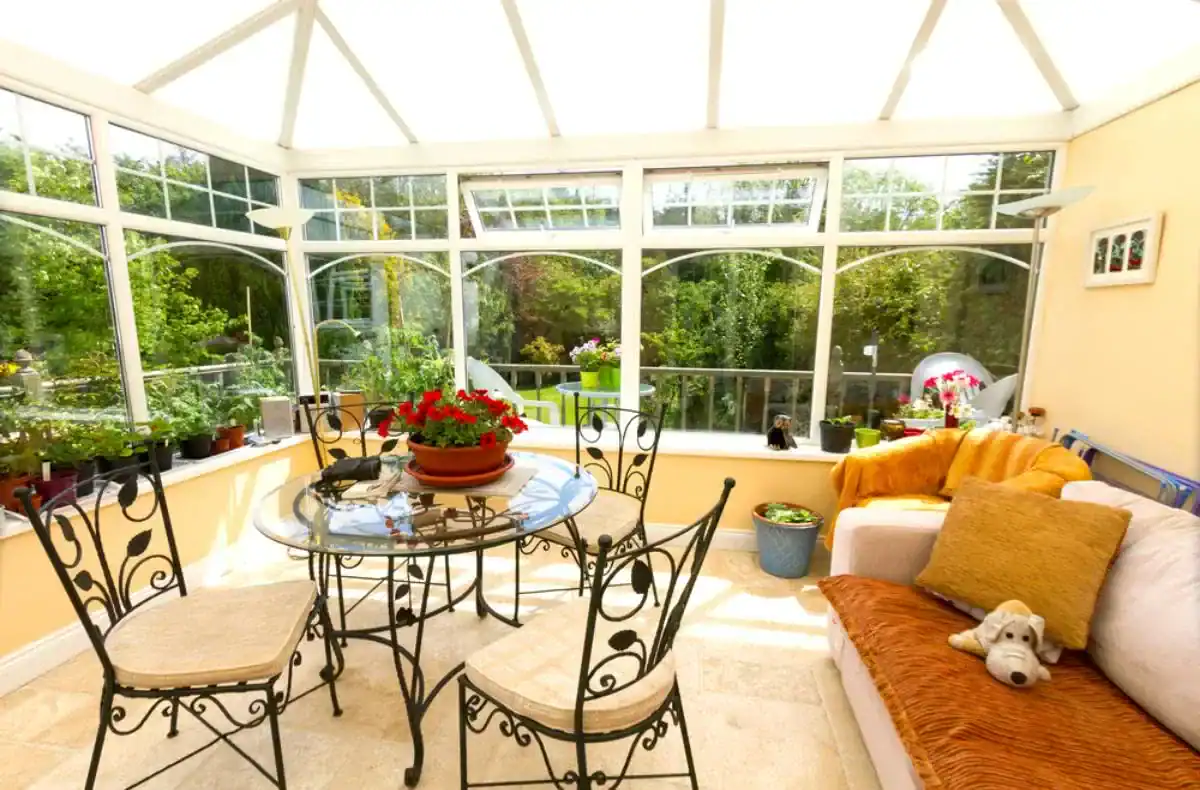
Houston doesn’t do seasons the way the rest of the country does. Locals joke that there are four of them — hot summer, hotter summer, still summer, and Christmas — and honestly, that’s not far off. From late April through October, the heat and humidity make spending real time outdoors uncomfortable at best and dangerous at worst. That’s six months of a backyard you’re paying for but not using.
An all season sunroom is built specifically for this problem. Not a screened porch, not a basic glass enclosure — a fully insulated, climate-controlled room that connects you to your outdoor space without putting you in it. Here’s what that actually means for a Harris County home.
The term “sunroom” gets used loosely, and that’s part of the confusion. A three-season room — the kind with screened panels and basic ventilation — works fine in a climate with mild summers. Harris County is not that climate. When it’s 97°F with 77% humidity and the feels-like temperature is pushing 110, a screened room is just the outdoors with a roof.
An all season sunroom is a different category entirely. It’s insulated, it’s sealed, and it connects to your home’s HVAC system — or gets its own dedicated unit — so it maintains a comfortable temperature year-round. The glass is engineered to block solar heat gain, not just let light through. That distinction matters enormously in a market like Harris County, where the sun is relentless for half the year and standard glass turns any enclosed space into a greenhouse by mid-morning.

This is the question most Harris County homeowners land on once they start researching, and the answer is pretty clear once you understand what each option is built to handle.
A three-season room is designed for spring, fall, and mild winters. It relies on airflow and screened panels to stay comfortable, which means it’s at the mercy of whatever the weather is doing outside. In Houston, that approach works maybe four or five months out of the year — and even then, the mosquitoes and humidity make it a mixed experience. From May through September, a three-season room is effectively off-limits.
A four season porch — or all season sunroom — is built to perform regardless of what’s happening outside. The walls and roof are insulated. The glass is double or triple-paned, with coatings that reflect solar heat before it enters the room. The space connects to climate control, so you’re not fighting the outdoor temperature, you’re ignoring it entirely. In Houston’s humid subtropical climate, that’s not a luxury feature — it’s the baseline requirement for a room you’ll actually use.
The financial case makes sense too. A three-season room that sits empty six months a year delivers about half the value of a room you can use every day of the year. Four-season rooms sit at the top of that range because they offer complete year-round utility — something buyers in the Houston market actively look for. A light-filled, climate-controlled glass room is a genuine listing differentiator in Harris County communities like Katy, Sugar Land, or Cypress, where real estate is competitive and buyers are discerning.
There’s also the practical side. Mosquitoes in Harris County are a genuine quality-of-life issue from spring through fall. An enclosed, sealed sunroom eliminates that problem entirely. Add in the fact that you’re blocking UV exposure during Houston’s long, intense summers, and the case for a fully enclosed all season room becomes hard to argue against.
A lot of homeowners assume adding a sunroom is close to a full home addition — months of construction, structural disruption, living in a job site. The reality is different. An average-sized all season room addition typically takes two to eight weeks from start to finish, which is a fraction of the timeline for a traditional room addition.
That said, there are real construction requirements involved, and this is where the quality gap between sunroom contractors becomes visible. A proper all season room addition starts with structural engineering — calculating load requirements, anchoring the structure correctly, and making sure the foundation can support the addition. Skipping this step is how you end up with a room that shifts, leaks, or fails inspection.
The glass selection matters more than most buyers realize going in. Not all insulated glass performs the same way, and in Houston’s climate, the difference is dramatic. The glass used in a high-quality all season sunroom is specifically engineered to manage solar heat gain — measured by something called Relative Heat Gain. The lower that number, the less heat the glass allows into the room. In a Gulf Coast climate where the sun is intense for six or more months, glass with a Relative Heat Gain score in the high 20s or low 30s performs completely differently from standard glass, which offers no such protection at all.
HVAC integration is the other major factor. A room that’s properly insulated but not connected to climate control will still overheat in a Houston summer. The right approach is either extending the home’s existing system — if it has the capacity — or installing a dedicated mini-split unit sized for the room. Either way, the HVAC solution needs to be part of the design from the beginning, not an afterthought bolted on after the room is built.
Permits are also a real consideration in Harris County. The county encompasses the City of Houston and dozens of incorporated suburbs — Katy, Sugar Land, Pearland, Cypress, Humble — each with its own building department and permitting requirements. Any structural addition to a home requires permits, and unpermitted work creates serious problems when you go to sell. We handle permitting in-house and coordinate HOA approval for communities that require it, removing a significant burden from your plate.
Want live answers?
Connect with a Four Seasons Sunrooms Houston expert for fast, friendly support.
The most common concern we hear from Harris County homeowners is some version of this: “Won’t it just be a hot box in summer?” It’s a fair question, and the honest answer is — a cheap one might be. But a properly designed all season sunroom with the right glass and insulation is as comfortable in July as any other room in your house.
The glass is the variable that makes or breaks the experience in a Houston climate. Standard glass transmits solar heat freely. High-performance glass — the kind engineered specifically for southern climates — uses microscopic coatings to reflect solar energy before it enters the room, while still allowing natural light through. The result is a bright, airy space that doesn’t turn into an oven the moment the sun hits it.

We use CONSERVAGLASS™ NXT in our all season sunrooms — a patented glazing system that was engineered specifically for this kind of performance challenge. It uses multiple coatings of exotic metals and compounds to block solar heat gain while allowing natural light through, reflect interior conditioned air back into the room rather than letting it escape, and resist dirt accumulation through a permanent exterior coating that lets rainwater do the cleaning.
The numbers are worth understanding in plain terms. Relative Heat Gain is the measure of how much solar heat a glass unit allows into a space. Standard glass has no meaningful rating — it simply lets heat through. CONSERVAGLASS™ NXT triple-glazed configurations achieve Relative Heat Gain scores as low as 29. Even the double-glazed roof glass comes in at 39. In Houston’s summer, that gap between rated glass and standard glass is the difference between a room you retreat to and one you avoid.
R-values tell the insulation story. Triple-glazed CONSERVAGLASS™ NXT reaches R-values up to 7.7 — comparable to a well-insulated wall. That matters in both directions: it keeps summer heat out and helps maintain warmth during Harris County’s occasional cold fronts in January and February, when temperatures can drop quickly and unpredictably.
One detail that often surprises homeowners: we formulate different glass recipes based on geographic location. The glass we install in a Houston home is specifically engineered for the Gulf Coast’s solar intensity — not the same product used in Minnesota or Michigan. Southern-region glass prioritizes solar protection; northern-region glass prioritizes thermal retention. Getting the right formula for your climate is not a minor detail. It’s the reason the room stays comfortable.
The warranty on CONSERVAGLASS™ NXT covers manufacturer’s defects for the lifetime of the product and transfers to future owners — which matters when you’re thinking about resale value in a competitive Harris County market.
A reasonable concern with any home addition is what it does to your energy bills. The short answer for a well-designed all season sunroom: less than you’d expect, and sometimes nothing at all.
High-performance glass like CONSERVAGLASS™ NXT can reduce cooling costs by as much as 25% compared to standard glass, because it’s blocking solar heat gain before it ever enters the space. A sunroom that’s pulling less heat from the sun puts less demand on your HVAC system — and in Houston, where air conditioning runs hard from April through October, that adds up. The net energy impact of a properly designed room is often neutral, and in some cases it reduces the overall load on your home’s cooling system.
The property tax question comes up too, and it’s worth being straightforward about: adding an all season sunroom increases your home’s assessed square footage, which can raise your property tax bill. That’s a real consideration. It’s also offset by the fact that you’re adding documented, appraised value to the home. A well-designed all season room addition becomes the most-used space in the house for Harris County homeowners, which translates to genuine appeal at resale. Homes with quality sunrooms tend to attract more interest and sell faster, because the room does something no other addition quite replicates: it makes the home feel larger and more connected to the outdoors without the heat, bugs, or weather that make Houston’s actual outdoors difficult.
The installation timeline is also worth noting for homeowners who’ve been putting this off because they assume it means months of disruption. An average all season room addition is typically completed in two to eight weeks. We handle permits, HOA coordination, and structural engineering as part of the process, so your involvement in the bureaucratic side is minimal. The goal is a finished room that looks like it was always part of the house — not something bolted on after the fact.
If you’re spending six months a year looking at your backyard through a window because it’s too hot, too humid, or too full of mosquitoes to actually be out there — then yes, an all season sunroom is worth it. It’s the only addition that gives you that space back on your terms, in a room that works in July just as well as it does on a mild January afternoon.
The key is getting the design, glass, and HVAC integration right from the start. A room built with the wrong glass in Houston’s climate will disappoint you. A room built with the right materials, by a contractor who understands what the Gulf Coast actually demands, will become the most-used room in your house.
We’ve been building all season sunrooms in the Houston area since 1975. If you’re ready to talk through what makes sense for your home and your budget, we’re a good place to start that conversation.
Summary:
Article details:
Share: