Transform your Long Island home with our custom sunrooms, liferooms, pergolas, and more! Quality Designs That Improve Your Space And Lifestyle.
Contact Info
Transform your Long Island home with our custom sunrooms, liferooms, pergolas, and more! Quality Designs That Improve Your Space And Lifestyle.
Contact Info
Houston's climate doesn't play by the same rules as the rest of the country. Here's what that means for your 3 season sun room decision.
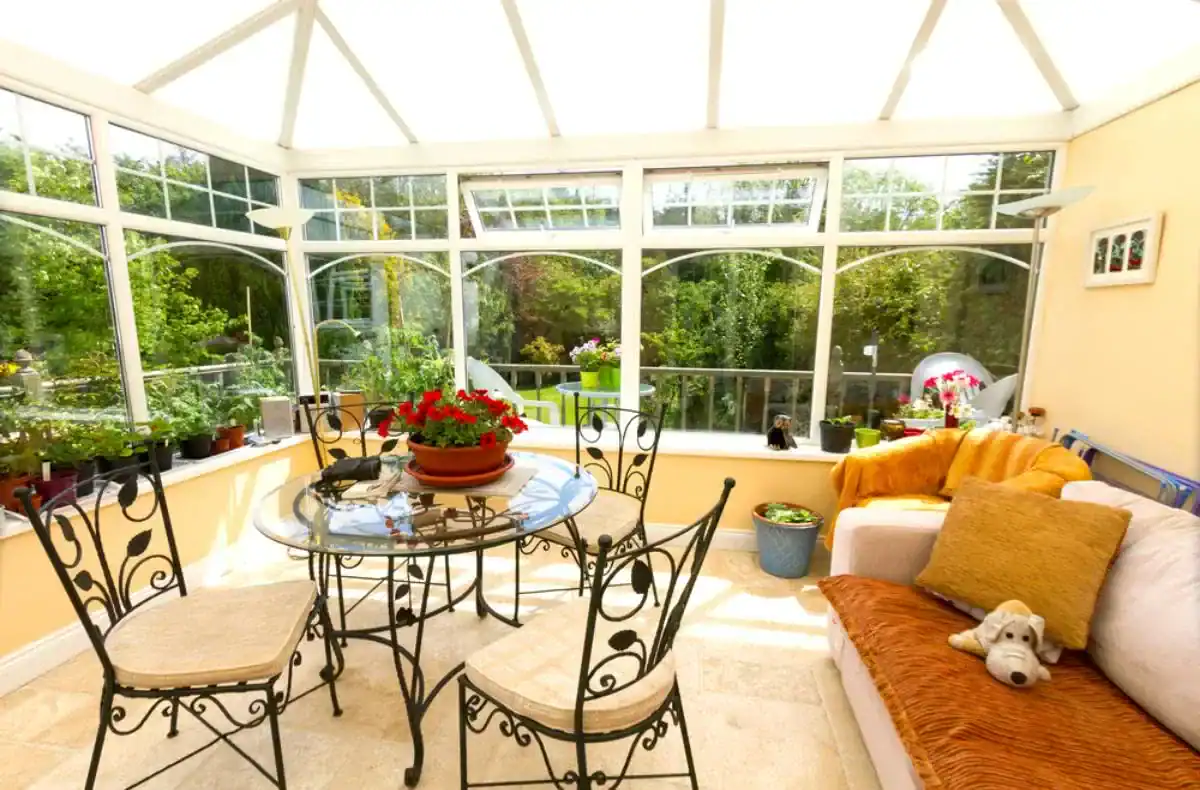
You’ve probably watched your back patio sit empty from May through September, maybe longer. It’s not that you don’t want to use it — it’s that between the heat index pushing past 105°F, humidity that makes the air feel physical, and mosquitoes that appear the moment the sun dips, going outside stops feeling optional and starts feeling punishing.
A 3 season sun room is one answer to that problem. But before you decide whether it’s the right answer for your home in Harris County, it helps to understand what these rooms actually do — and where they have limits in a climate like Houston’s.
The short version: a 3 season room is an enclosed, glass-walled space that’s weathertight and protected from bugs and rain, but not connected to your home’s heating and cooling system. A 4 season room is essentially a full addition — insulated, climate-controlled, and livable year-round regardless of what’s happening outside.
In most northern markets, the “3 season” label is pretty literal. You get spring, summer, and fall — maybe seven or eight months of real use before the cold makes it uncomfortable. Harris County rewrites that math entirely. With average January lows sitting around 43°F and only a handful of genuinely cold weeks per year, a well-built 3 season room here is realistically usable ten to eleven months out of twelve. The name undersells what the product delivers in this market.

A 4 season screen porch — or more accurately, a fully conditioned sunroom — gives you complete control over the indoor environment no matter what month it is. That means air conditioning in August, heat on the occasional January night, and a space that functions like any other room in your house. If you’re planning to use the space as a home office, a dining room, or a place where guests actually spend time, the 4 season option removes every barrier.
The honest tradeoff is cost. A 4 season room runs significantly more than a 3 season build — often $200 to $400 per square foot installed, compared to $80 to $230 for a 3 season room. That gap can represent $20,000 to $40,000 on a mid-sized project, depending on how the room is finished and what it connects to structurally.
Here’s where Houston’s climate actually works in your favor with a 3 season room: the months that make outdoor living genuinely miserable in Harris County are concentrated. June, July, and August are brutal — no argument there. But September cools off faster than most people expect, October through April is legitimately pleasant, and even May and late August have mornings and evenings where a well-glazed room with ceiling fans is entirely comfortable. If your honest answer is that you’d use the space heavily from October through May and occasionally in the shoulder months, a 3 season room may deliver 85% of the value at 50% of the cost.
The deciding question isn’t really about the room — it’s about how you live. If you want a space that works like a bedroom or a home office at 2pm on a Tuesday in July, go 4 season. If you want to extend your outdoor living season dramatically, reclaim your mornings and evenings, and stop letting the patio sit empty nine months a year, a 3 season room built right will do exactly that. We’ve been helping Harris County homeowners make this call since 1975, and the answer is different for almost every household.
A glass three season room uses floor-to-ceiling glass panels for the walls — sometimes the roof too — creating a space that feels genuinely connected to the outdoors while keeping the weather, bugs, and UV exposure on the other side of the glass. The views are panoramic. The light is natural. And in Houston’s climate, the glass you choose makes or breaks the whole project.
Standard window glass was never designed for a room that’s almost entirely glass surface. In direct Texas sun, a poorly glazed sunroom becomes an oven by 10am — which is exactly the reputation that gives some buyers pause about glass rooms in general. The fix isn’t to avoid glass. It’s to use glass that was actually engineered for this application.
We use CONSERVAGLASS™ NXT, a patented glazing system built specifically for sunrooms. It uses microscopic layers of exotic metals and compounds applied through a multi-coating process to block excess solar heat while still letting natural light through. In triple-glazed configurations, it reaches R-values up to 7.7 — which is meaningful insulation performance for a glass wall. It also includes Stay-Clean Technology, a hydrophilic exterior coating that uses UV rays to break down surface dirt so rain can rinse it away. In Harris County, where homeowners experience over 17 rain days a month during summer, that’s a practical benefit, not just a marketing feature.
The glass is also tempered safety glass — four times stronger than standard window glass. That matters in Harris County, where homeowners have lived through Harvey, Ike, and Allison and have a very concrete sense of what severe weather looks like. A glass three season room built with this glazing system isn’t a fragile structure. It’s engineered for the environment it’s going into.
Want live answers?
Connect with a Four Seasons Sunrooms Houston expert for fast, friendly support.
Houston’s climate is hard on materials. The combination of intense UV exposure, persistent humidity averaging in the mid-70% range year-round, heavy seasonal rain, and the occasional severe storm creates conditions that expose the difference between a well-built room and a cheap one within just a few years.
The two main material conversations for a 3 season room are the glass system — covered above — and the framing. Both decisions have real consequences in this market, and both are worth understanding before you commit to a contractor or a price point.

Aluminum framing gets dismissed sometimes as the budget option — people associate it with lawn furniture or temporary structures, which isn’t a fair comparison when you’re talking about engineered sunroom construction. Powder-coated aluminum is actually the professional standard in the sunroom industry, and there are specific reasons it makes sense in Houston’s climate.
Corrosion resistance is the first one. Wood frames require regular painting, sealing, and eventual replacement when moisture works its way in — and in Harris County, moisture is a constant. Vinyl can warp under extended UV exposure and extreme heat, which Houston delivers in abundance from May through September. Powder-coated aluminum doesn’t rust, doesn’t warp, doesn’t need repainting, and maintains its structural integrity across decades of Houston summers. For a room you’re building to last, that’s not a minor detail.
The structural engineering piece matters too. Every sunroom we build uses pre-engineered aluminum frame systems that have been reviewed and approved by licensed engineers before installation begins. That’s not standard practice across the industry — plenty of contractors build as they go and figure out the structural questions later, or don’t figure them out at all. In unincorporated Harris County, no General Contractor’s License is required to perform construction work, which means the barrier to entry for sunroom contractors here is genuinely low. That makes the engineering and licensing credentials of whoever you hire more important, not less.
For hail and wind resistance specifically — which Harris County homeowners think about seriously — the aluminum structural system combined with tempered safety glass provides meaningful protection. These aren’t residential-grade components pressed into service for a sunroom. They’re purpose-built for this application, tested against the demands of a glass-dominant structure in a climate that doesn’t go easy on buildings.
**Do I need a permit to build a 3 season sun room in Harris County?**
Almost certainly yes. Harris County requires building permits for sunroom additions, and projects with a total estimated cost exceeding $50,000 also require a project number and accessibility review from the Texas Department of Licensing and Regulation (TDLR). Skipping permits isn’t a paperwork shortcut — it’s a liability. An unpermitted sunroom can result in fines, a forced tear-down, denied insurance claims after storm damage, and complications when you sell the home. We handle the permitting process from start to finish, including HOA approvals when applicable, so you’re not navigating Harris County’s e-Permits system on your own.
**How much does a 3 season sun room cost in the Houston area?**
For a professionally installed room, expect a range of roughly $80 to $230 per square foot, with most projects landing somewhere between $15,000 and $50,000 depending on size, glass selection, foundation requirements, and finishing details. A 4 season room typically runs $200 to $400 per square foot. In Harris County specifically, foundation work can vary significantly depending on whether you’re building on a concrete pad, pier and beam, or slab — and that’s a conversation we have early with every homeowner since it directly affects your final cost.
**Will a 3 season room hold up against Houston’s weather?**
A well-built one will. The combination of tempered safety glass — four times stronger than standard glass — and engineered aluminum framing handles Houston’s rain, UV exposure, and wind loads effectively. After Hurricane Ivan, one customer specifically noted their Four Seasons sunroom came through two inches of rain in three to four hours without a single drop entering the structure. Harris County’s storm history is real, and the structural engineering behind these rooms reflects that reality.
**Does a sunroom add value to a home in Houston?**
Yes, in most cases meaningfully so. Texas market data puts the added value of a 3 season room at roughly $60 to $100 per square foot — meaning a 200 square foot room can add $12,000 to $20,000 in appraised home value. The average ROI for enclosing a patio runs around 70%, which compares favorably to most other home improvement projects. A permitted, professionally built room with transferable warranty protection is an asset at resale. An unpermitted, poorly built one is a liability. The difference comes down to who builds it and whether the work was done to code.
The bottom line is this: Houston’s climate doesn’t make a 3 season sun room a compromise. It makes it a genuinely smart option for a large number of homeowners — especially when the room is built with the right glass, the right framing, and the right contractor behind it. Ten to eleven months of real usability, meaningful home value added, and no more watching the patio sit empty because the bugs or the heat won again.
That said, the right answer depends on how you actually plan to use the space. A 4 season room makes sense for some households. A 3 season room makes more sense for others. The conversation is worth having before you decide.
We’ve been helping Harris County homeowners since 1975. If you’re ready to figure out which option fits your home, your budget, and the way you live — reach out and we’ll start there.
Summary:
Article details:
Share: