Transform your Long Island home with our custom sunrooms, liferooms, pergolas, and more! Quality Designs That Improve Your Space And Lifestyle.
Contact Info
Transform your Long Island home with our custom sunrooms, liferooms, pergolas, and more! Quality Designs That Improve Your Space And Lifestyle.
Contact Info
Houston sunroom costs vary widely — and local factors like clay soil, flood zones, and year-round heat change the math fast. Here's what to expect.
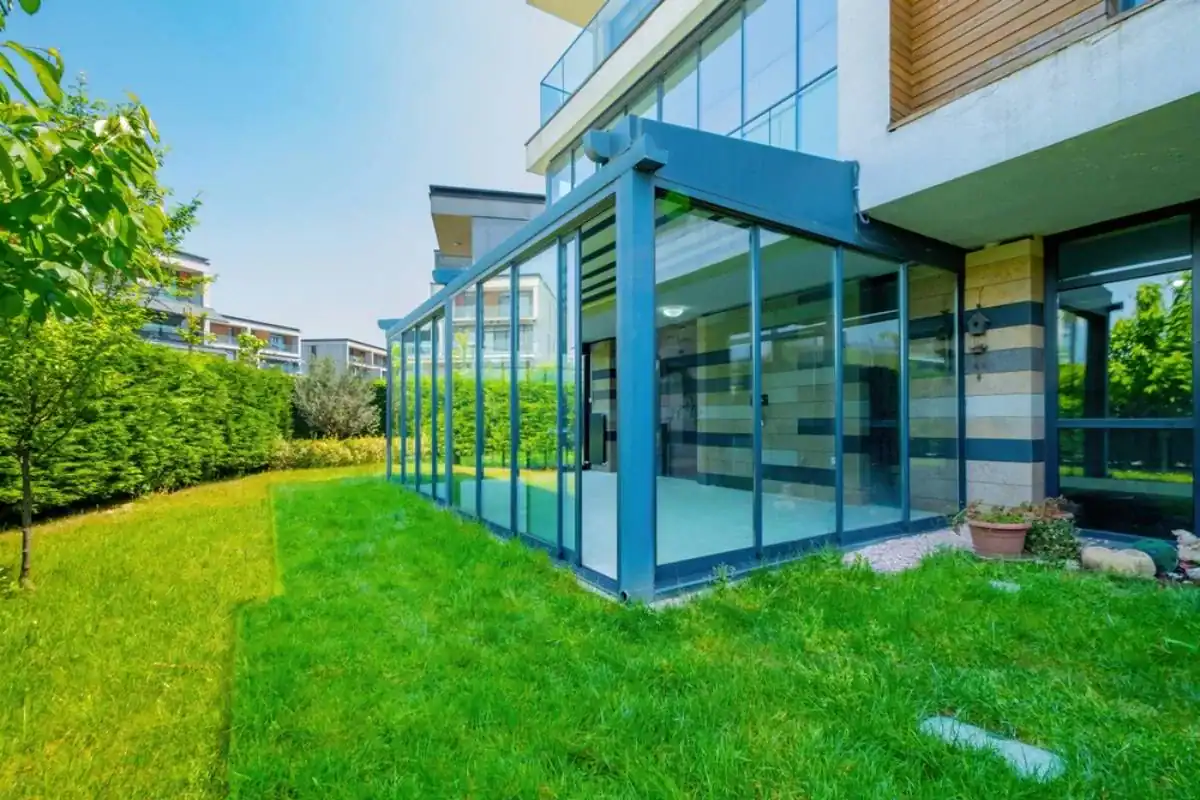
If you’ve tried to get a straight answer on what a sunroom addition costs in Harris County, you already know how frustrating that search can be. Contractors hedge. Websites give you national averages that don’t account for our clay soil, flood zones, or the fact that a room without climate control is basically unusable here from May through October. You deserve better than that. This guide gives you real 2026 pricing for the Harris County market, explains what drives costs up or down, and helps you figure out what type of room actually makes sense for where you live — before you commit to anything.
Based on completed projects throughout Harris County, most homeowners spend somewhere between $36,600 and $54,100 on a sunroom addition, though the full range runs from around $12,500 on the low end to over $95,000 for larger, fully custom builds. That spread reflects real differences in room type, size, materials, and site conditions — not just contractor markup.
What makes Harris County pricing distinct from the national average is the local environment. The expansive clay soil that dominates our area — what locals call “Houston gumbo” — moves seasonally and requires deeper footings or engineered pier systems to keep a permanent addition stable. That alone can add $2,000 to $8,000 to foundation work that contractors in drier markets never have to think about.

This is where the conversation gets important for Harris County homeowners specifically. A three-season room typically runs $8,000 to $50,000 depending on size and materials. A four-season room — fully insulated, climate-controlled, connected to your home’s HVAC or equipped with its own system — costs $20,000 to $80,000, and high-end custom builds can push past $100,000.
The price gap is real. But here’s the thing: in Harris County, a three-season room is really a four-month room. Our heat index regularly exceeds 105°F from late May through September. Add humidity that makes outdoor air feel like a wet towel, and that uninsulated enclosure becomes a room you avoid for the better part of the year. The math on a three-season room stops making sense when you factor in how little you’ll actually use it.
A four-season sunroom, by contrast, is usable every day of the year. You’re not just adding square footage — you’re adding livable, comfortable space that functions in Harris County’s actual climate, not an idealized version of it. For families in Katy, Cypress, Pearland, or Friendswood who entertain year-round or want a dedicated home office with natural light, that distinction matters enormously.
The cost premium for a four-season room comes from a few specific line items: insulation in the walls and roof panels, thermally broken framing, high-performance glazing, and HVAC integration. Each of those components serves a real function in our environment. The insulation keeps summer heat out and conditioned air in. The glazing — we use CONSERVAGLASS™ NXT, which blocks UV rays and resists heat transfer — prevents solar gain from turning the room into an oven. The HVAC connection ensures the space is as comfortable in August as it is in January.
None of that is upselling. It’s what a room in Harris County actually needs to work.
Not every homeowner needs a full four-season room, and it’s worth being honest about that. A sun porch or screened enclosure — the most basic type of outdoor addition — typically runs $5,000 to $30,000 installed. These are open-air or lightly enclosed structures, usually with screens or minimal glazing, and no climate control.
For Harris County homeowners, a sun porch works well as a transitional space — somewhere to sit in the morning before the heat sets in, or a covered area for outdoor dining when the weather cooperates. If you’re primarily looking for shade, bug protection, and rain coverage, a sun porch can deliver that at a fraction of the cost of a fully enclosed room.
The trade-off is usability and long-term value. Appraisers typically value three-season rooms and screened enclosures at 25 to 75 percent of your home’s standard per-square-foot rate — significantly less than a four-season room that qualifies as conditioned living space. If your goal is to increase your home’s appraised value alongside your enjoyment of the space, a sun porch won’t move the needle the way a climate-controlled addition will.
There’s also the Harris County humidity factor. Screened enclosures and lightly built sun porches expose wood framing, furniture, and finishes to the full force of our moisture levels. Materials degrade faster here than in drier climates. What looks great in year one can show real wear by year five if the structure isn’t built with weather-resistant materials and proper ventilation from the start.
The honest answer is: if budget is the primary constraint and year-round use isn’t the goal, a sun porch is a legitimate option. But if you’re investing in something that adds lasting value and you’ll actually use it — a four-season sunroom is worth the comparison.
Want live answers?
Connect with a Four Seasons Sunrooms Houston expert for fast, friendly support.
The number we quote you on day one is rarely the number you write the final check for. That’s not always bad faith — some costs are genuinely site-specific and can’t be confirmed until the project starts. But in Harris County, several cost factors are predictable enough that any experienced contractor should be surfacing them upfront.
Permit fees in Harris County typically run $250 to $1,500 depending on project scope and jurisdiction. If you’re in unincorporated Harris County versus the City of Houston versus an incorporated suburb like Katy or Pasadena, you’re dealing with different permit offices, different timelines, and sometimes different fee structures. We handle the permitting process for every project we build, which means you’re not navigating that alone.

Two factors that rarely appear in national cost guides — but matter enormously in Harris County — are flood zone requirements and HOA approval processes.
A significant portion of Harris County sits in FEMA-designated Special Flood Hazard Areas. If your property is in or near one of these zones, your sunroom foundation may need to be elevated, built with flood-resistant materials, or engineered to specific standards that go beyond standard residential code. That can add thousands to the foundation budget — and skipping it isn’t an option if you want the addition to pass inspection and not create problems when you sell.
HOA deed restrictions are the other factor that surprises homeowners. Harris County has no traditional zoning, but communities throughout the area — from master-planned developments in Katy and Cypress to established neighborhoods in Friendswood and Spring — are governed by detailed deed restrictions and HOA covenants. Before a single permit is pulled, you may need architectural review board approval, which can take four to eight weeks and sometimes requires your addition to use specific materials: matching brick, particular roofing profiles, or approved color palettes. Factor that timeline into your project planning, and ask your contractor whether they’ve navigated HOA approvals in your specific community before.
General contractor overhead and coordination fees in Harris County typically add $5,700 to $7,200 to a project on top of materials and labor. HVAC extension or dedicated HVAC unit costs vary based on your existing system capacity and the square footage of the addition. Electrical work — outlets, lighting, ceiling fans — runs separately and must be performed by a TDLR-licensed electrician in Texas. These aren’t surprises if your contractor lays them out clearly at the start. They are surprises if they don’t.
It does — with some important nuance. Four-season rooms return 70 to 80 percent of their cost at resale. In Harris County’s market specifically, room additions typically return 65 to 75 percent of their cost in appraised home value, with premium neighborhoods like River Oaks and West University seeing returns closer to 80 to 85 percent for high-quality additions.
A 400-square-foot four-season sunroom can add $12,000 to $60,000 to your home’s resale value depending on finish level, neighborhood, and how well the addition integrates with the existing structure. Homes with sunrooms also tend to spend less time on the market — a differentiating feature in a competitive listing environment matters to buyers who are comparing similar properties.
The key variable is whether the room qualifies as conditioned living space. A properly permitted, climate-controlled, four-season sunroom that meets Harris County’s energy code can be included in your home’s total square footage for appraisal purposes. A screened enclosure or three-season room typically cannot. That distinction directly affects your return.
For Harris County homeowners who are weighing the investment, it helps to think about it this way: you’re not just buying a room. You’re buying usable square footage in a market where livable, climate-controlled space is what buyers pay for. The four-season sunroom cost reflects that value — and in most cases, it delivers it.
Harris County’s work-from-home shift has made light-filled, semi-separate home office spaces genuinely desirable. A sunroom that functions as a home office — comfortable year-round, full of natural light, visually distinct from the main living area — is a selling point that matters to today’s buyers. It’s worth factoring into your thinking about long-term value.
The cost of adding a sunroom in Harris County is shaped by factors that don’t show up in national pricing guides: your soil conditions, your flood zone status, your HOA requirements, and the reality that a room without climate control isn’t much of an investment in this climate. A four-season sunroom costs more upfront — but it’s the version that actually works here, year-round, and holds its value when you sell.
Budget for the full picture: base construction, foundation prep, permits, HVAC, electrical, and any site-specific requirements your property brings. A contractor who gives you a single number without addressing those line items is leaving you to discover the rest mid-project.
If you’re ready to get real numbers for your specific home and neighborhood, we’ve been building climate-controlled sunroom additions throughout Harris County for decades — and we’ll give you a straight answer from the first conversation.
Summary:
Article details:
Share: