Transform your Long Island home with our custom sunrooms, liferooms, pergolas, and more! Quality Designs That Improve Your Space And Lifestyle.
Contact Info
Transform your Long Island home with our custom sunrooms, liferooms, pergolas, and more! Quality Designs That Improve Your Space And Lifestyle.
Contact Info
Houston's climate flips the usual sunroom logic. Here's what that means for choosing between a 3 season room and a four season room.
If you’ve spent any time researching sunrooms, you’ve probably noticed that most of the information out there assumes you live somewhere with four distinct seasons. Harris County doesn’t exactly work that way. The joke around here is that we get hot summer, hotter summer, still summer, and Christmas — and honestly, that’s not far off.
So when someone asks whether a 3 season room is worth it in Harris County, the answer isn’t simple. It depends on what you want from the space and when you plan to use it. This page walks through both options clearly, so you can make the right call for your home and your lifestyle.
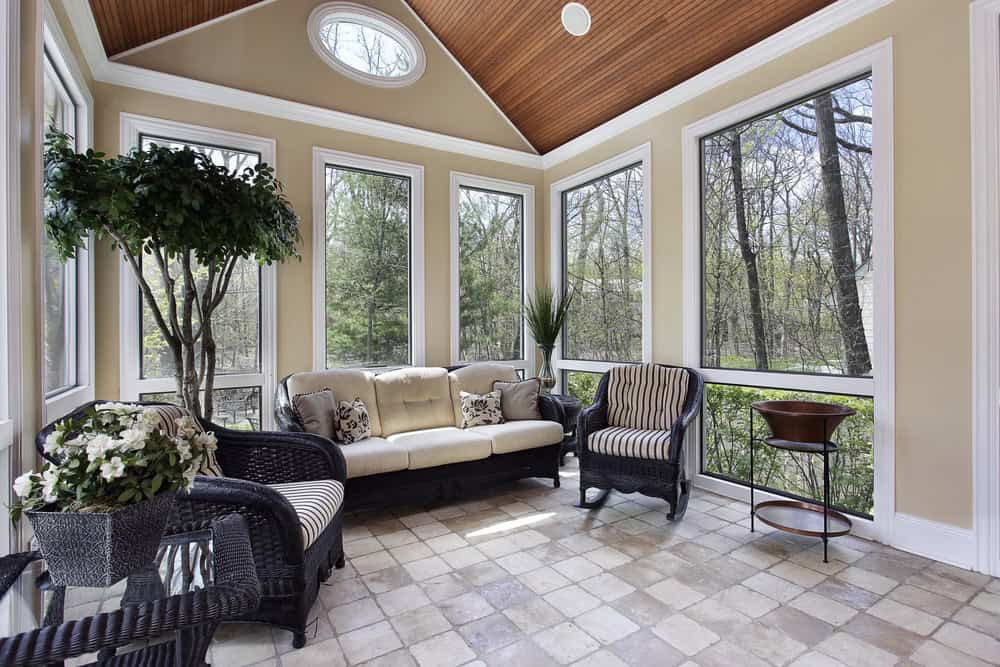
A 3 season room is an enclosed addition — typically with glass or screen panels, a solid roof, and a structural frame — designed to be used during the milder parts of the year. It’s not insulated for HVAC, so it isn’t meant to handle extreme heat or cold. What it does well is keep out rain, bugs, and wind while letting in natural light and fresh air.
Construction is lighter than a full room addition. The framing, glazing, and roof system are engineered to attach to your home and meet local building codes, but there’s no ductwork, no insulation package, and no climate control system involved. That’s what keeps the cost lower and the installation timeline shorter — most of our projects wrap up in a matter of weeks.

Here’s where Harris County flips the script on the standard advice. In most parts of the country, people use their 3 season rooms from spring through fall — roughly March to October. In our area, that logic doesn’t hold. Our summers are genuinely brutal. July and August heat index values regularly push past 105°F, and the humidity sits around 75% year-round thanks to our proximity to the Gulf. A room without climate control becomes unusable fast once June arrives.
But that doesn’t mean a 3 season room is the wrong choice — it means the usable window is different here. In Harris County, the three seasons that work for a non-conditioned space are fall, winter, and spring. October through May is genuinely beautiful. Mild temperatures, lower humidity, and the kind of weather that makes you want to sit outside with a cup of coffee or host people on a Saturday afternoon. A well-built 3 season room captures all of that.
For homeowners in communities like Katy, Cypress, or Kingwood who primarily want to extend their enjoyment of Harris County’s shoulder seasons — and who aren’t planning to use the space during peak summer — a three season room delivers real value without the added cost of full climate control. It’s not a lesser option. It’s the right option for a specific use case.
There’s also a practical consideration worth mentioning: mosquito season in Harris County is essentially year-round. An enclosed space that keeps insects out while still feeling open and airy solves a real, daily problem that outdoor patios and screen-free decks simply can’t address. If that’s a big part of what you’re after, a 3 season room handles it well.
Material selection matters more here than it does in most markets. Harris County’s persistent humidity — not just summer humidity, but year-round Gulf Coast humidity — puts real stress on frames, seals, and glazing over time. A room built with materials that weren’t selected for this climate will show it within a few years: fogged glass, failed seals, warped frames, water intrusion.
For three season rooms, the glazing choice is especially important. Single-pane glass with no coating is essentially useless in Harris County — it turns the room into a greenhouse on any sunny day, even in October. Quality installations use performance-rated glass with UV-blocking and heat-transfer-limiting properties that keep the room comfortable during the shoulder seasons without relying on AC.
We use CONSERVAGLASS™ NXT in our installations — a patented glazing system with multiple microscopic coating layers that block excessive heat and UV penetration while still letting in natural light. The visible light transmission sits at 56, which keeps the room bright without the glare that makes you reach for sunglasses indoors. The exterior surface also features a hydrophilic coating that repels dirt and uses sunlight to loosen grime, so rain does most of the cleaning for you. In Harris County’s high-pollen, high-humidity environment, that’s a practical benefit that adds up over time.
Harris County also falls within a windborne debris region under Houston’s building code, which means glazing in permanent structures must meet specific impact and pressure resistance standards — ASTM E1996 and E1886, Large Missile Test. This isn’t optional, and it’s not something to gloss over when you’re getting quotes. A room built to those standards will hold up through a tropical storm. One that isn’t built to them won’t, and you won’t find out until it’s too late.
Want live answers?
Connect with a Four Seasons Sunrooms Houston expert for fast, friendly support.
A four season room is a fully conditioned living space. It has insulated walls, insulated glazing, a sealed roof system, and HVAC integration — either tied into your home’s existing system or served by a dedicated mini-split unit. The goal is a room that’s comfortable in January and in August, which in Harris County means it has to handle both the occasional hard freeze and sustained triple-digit heat index conditions.
The construction is more involved than a 3 season room. The thermal envelope has to be tight, the glazing has to perform at a higher level, and the HVAC system has to be sized correctly for the space. Done right, it functions like any other room in your house — just with panoramic glass walls and a connection to the outdoors that no interior room can replicate.

If you want to use your sunroom in July, you need a four season room. That’s the honest answer. Harris County summers are not a gray area — the heat and humidity will make an unconditioned space miserable within minutes on a peak summer day, regardless of how well it’s built. If year-round use is the goal, the investment in insulation, performance glazing, and climate control is not optional.
The good news is that a properly built four season room in Harris County adds meaningful value to your home. National data consistently shows that four season sunrooms recoup 50 to 60 percent of project cost at resale, and homes with year-round sunrooms can command a 4 to 8 percent premium over comparable homes without one. In our active real estate market — particularly in master-planned communities like The Woodlands, Bridgeland, or Cinco Ranch where buyers have high expectations for finished living space — that’s a real number.
CONSERVAGLASS™ NXT performs at its highest level in a four season room context. Its R-value is 100 percent higher than standard competitor double-glazed glass, which directly reduces the load on your HVAC system and keeps energy costs from spiking every time the sun hits the glass. In a Harris County summer, that efficiency matters every single day. The same coating that limits heat transfer in summer also reflects warm interior air back into the room during cooler months — so the room stays comfortable year-round without the HVAC working overtime.
One more thing worth saying clearly: a four season room is a permanent home addition. It needs to be permitted, engineered, and built to Harris County’s current residential building code — including the 2024 updates that added enhanced energy efficiency and climate resilience requirements. We handle all of that. Permits, structural engineering, HOA approvals for homeowners in deed-restricted communities — it’s part of what we do, not an add-on you have to coordinate yourself.
For a lot of Harris County homeowners, the answer is yes — but it depends on how you plan to use the space. An all seasons room earns its cost when it becomes a genuine extension of your daily living. A home office with natural light and a view of the backyard. A morning room where you actually spend time instead of just walking past. A space where you can entertain in October and again in February without checking the weather forecast first.
The homes in Harris County’s suburban communities tend to have the lot size and layout to support a well-integrated sunroom addition. What makes the difference between a room that becomes the favorite space in the house — which is what we hear from customers more than anything else — and one that sits unused is whether it was designed and built to actually function in this climate. That means the right glass, the right HVAC approach, and construction that accounts for our rain, humidity, and wind loads.
It’s also worth knowing that the decision doesn’t have to be permanent in the way you might think. A three-season room that’s designed thoughtfully — with a solid foundation, insulated walls, and infrastructure for future HVAC — can be converted to a four season room down the road. If you’re not sure how much you’ll use the space year-round, or if budget is a factor right now, that upgrade path is a real option. We can build with that flexibility in mind from the start.
What we’d caution against is treating this as a purely financial calculation. The homeowners who get the most out of their sunrooms are the ones who thought clearly about how they actually live — when they’re home, what they do on weekends, whether they’d use a space in August or only in March. The room type should follow that answer, not the other way around.
The short version: if you want to use your room during Harris County summers, build a four season room. If you’re primarily after fall, winter, and spring use — and you want to do it at a lower cost and faster timeline — a well-built 3 season room is a genuinely good choice for our climate.
Either way, the quality of materials and our knowledge of local conditions matter more here than in most markets. Harris County’s humidity, heat, hurricane exposure, and building code requirements are not generic — and a room built without accounting for them will show it.
We’ve been building sunrooms in Harris County since 1975, and we’ve seen what holds up and what doesn’t. If you’re trying to figure out which direction makes sense for your home and how you live in it, we’re happy to walk through it with you — no pressure, just a real conversation about what fits.
Summary:
Article details:
Share: