

Transform your Long Island home with our custom sunrooms, liferooms, pergolas, and more! Quality Designs That Improve Your Space And Lifestyle.
Contact Info
Transform your Long Island home with our custom sunrooms, liferooms, pergolas, and more! Quality Designs That Improve Your Space And Lifestyle.
Contact Info
Hear From Our Clients
You know how your patio sits empty from June through September because it’s just too hot? That changes with a retractable pergola. You get adjustable shade that responds to the day—full coverage when the sun’s beating down, open sky when you want it.
These aren’t decorative add-ons. They’re engineered for Texas weather, built to handle wind gusts up to 175 mph and the kind of summer heat that makes most outdoor spaces unbearable. The sliding pergola roof gives you control with a remote or your phone, so you’re not out there cranking manual systems in 95-degree heat.
What you end up with is outdoor space you actually use. Morning coffee without squinting. Afternoon shade that doesn’t trap heat. Evening gatherings that don’t require everyone huddling under a single umbrella. And when a storm rolls in, you’re covered—literally.
Homes in Hedwig Village with quality outdoor living features sell for about 5% more than comparable properties without them. You’re not just adding shade. You’re adding functional square footage that works as hard as the rest of your home.
We’ve been building outdoor living spaces for over 40 years at Four Seasons Sunrooms. We’re one of the largest manufacturers in the industry, and we’ve worked with thousands of homeowners who needed structures that could handle real weather, not just look good in a catalog.
In Hedwig Village, that means understanding what Mediterranean and colonial revival homes need aesthetically, and what Houston’s climate demands structurally. Your neighborhood has tree-lined streets and homes valued well over a million dollars. A retractable roof system needs to fit that environment without looking like an afterthought.
We handle everything—design, manufacturing, installation. You’re not dealing with a middleman who orders parts and hopes they fit. Our team knows how to integrate a folding pergola canopy with your existing architecture, and we use materials that won’t corrode in Houston’s humidity or fade under constant UV exposure.

It starts with a consultation at your home. We look at your outdoor space, talk about how you want to use it, and figure out what kind of patio shade control makes sense for your layout. We’re measuring for wind exposure, sun angles, and how the structure ties into your home’s existing design.
From there, we create a custom design. You’ll see exactly what the retractable roof system looks like, how it operates, and what materials we’re using. We talk through options—aluminum for durability, integrated lighting, motorized controls, rain sensors. You decide what fits your needs and budget.
Once you approve the design, we manufacture everything to your specs. Installation typically takes a few days, depending on the size and complexity. Our crews handle permits, structural anchoring, electrical for motorized systems, and final testing to make sure everything operates smoothly.
After install, you get a walkthrough on how to use the system. Most of our retractable pergolas come with remote controls and smartphone apps, so you can adjust shade from inside if weather changes. And if something ever needs service, you’re working with a company that’s been in business for decades, not a contractor who might not answer next year.
Ready to get started?
Every retractable pergola we install includes motorized operation as standard. You shouldn’t have to manually crank a system open and closed in Texas heat. Remote control and smartphone app integration mean you can adjust your shade from anywhere—inside during a sudden storm, or from the kitchen while you’re prepping for guests.
Materials matter in Houston’s climate. We use aluminum framing that won’t rust or corrode, even with the humidity levels you get near the Gulf. The retractable canopy fabric is UV-resistant and designed to handle intense sun exposure without fading or breaking down. For louvered systems, the slats are engineered to withstand high winds and provide ventilation so heat doesn’t get trapped underneath.
You can add integrated LED lighting, ceiling fans, and automated rain sensors that close the system when weather hits. Some homeowners in Hedwig Village want their pergola to match their home’s existing color palette—we can powder-coat aluminum to match nearly any finish. Others want natural wood aesthetics with modern functionality, which we can do with composite materials that look like wood but perform like engineered products.
The structure itself is built to meet Texas wind load requirements. We’re talking about engineering that accounts for hurricane-force gusts, not just typical summer breezes. And because these systems extend your home’s architecture, we make sure they tie into existing rooflines and support structures properly—no bolt-on look.
Most retractable pergola installations in Hedwig Village run between $15,000 and $45,000, depending on size, materials, and features. A basic motorized system for a 12×12 patio starts around $15,000. Larger spaces with premium materials, integrated lighting, louvered roofs, and smart home integration can reach $45,000 or more.
The price reflects what you’re getting—engineered structures built for Texas weather, motorized operation, professional installation, and materials that last. Cheaper options exist, but they typically use manual operation, lighter-duty materials, or installation methods that don’t account for Houston’s wind loads and humidity.
We offer financing up to $125,000 with competitive rates, so you’re not writing a single check for the full amount. And given that outdoor living features increase home values by about 5% in this area, you’re looking at an investment that pays back when you sell.
Yes, if they’re engineered correctly. Our retractable roof systems are built to withstand wind gusts up to 175 mph, which covers hurricane-force conditions. The key is proper anchoring and structural integration with your home’s existing framework.
When a storm approaches, you close the retractable canopy or louvers. Most of our systems include automated rain sensors that do this for you if you’re not home. The closed structure is designed to handle heavy rain and wind without damage. The aluminum framing won’t corrode from moisture, and the mechanical components are sealed against water intrusion.
What doesn’t work is leaving a fabric canopy extended during high winds. Even quality systems need to be retracted when severe weather hits. That’s why motorized operation matters—you can close everything with a button press from your phone, even if you’re away from home. We also walk you through maintenance checks before storm season so you know everything’s functioning properly.
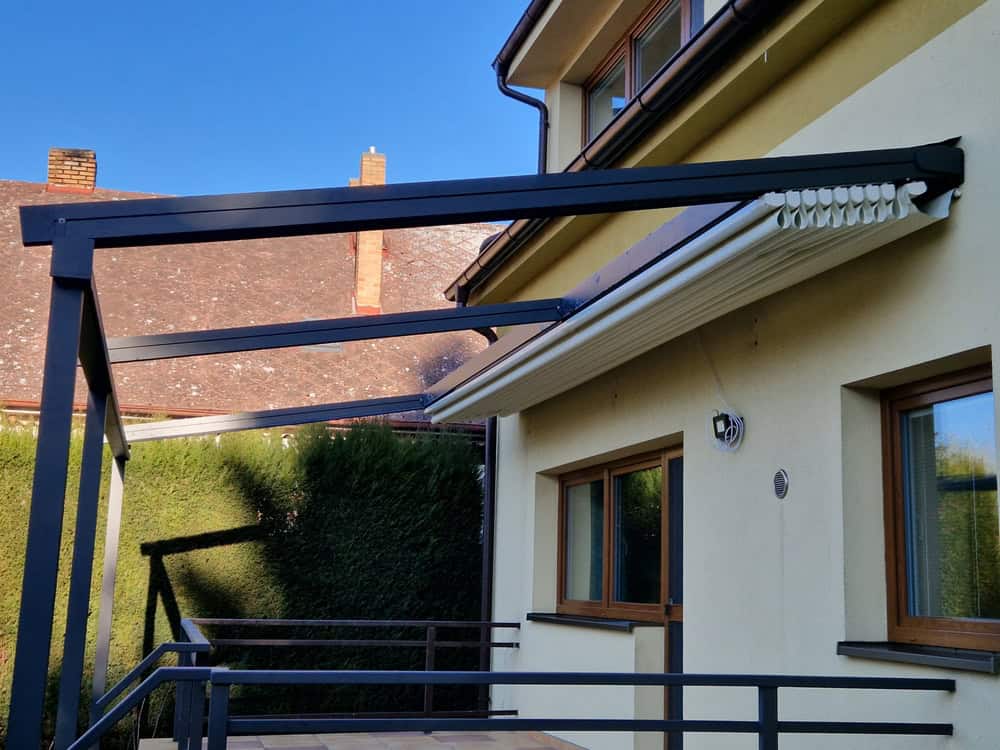
A retractable canopy uses fabric that slides open and closed on a track system. You get full sun when it’s open, full shade when it’s closed. The fabric is UV-resistant and waterproof, so it provides complete rain protection. This option works well if you want maximum flexibility and a softer aesthetic.
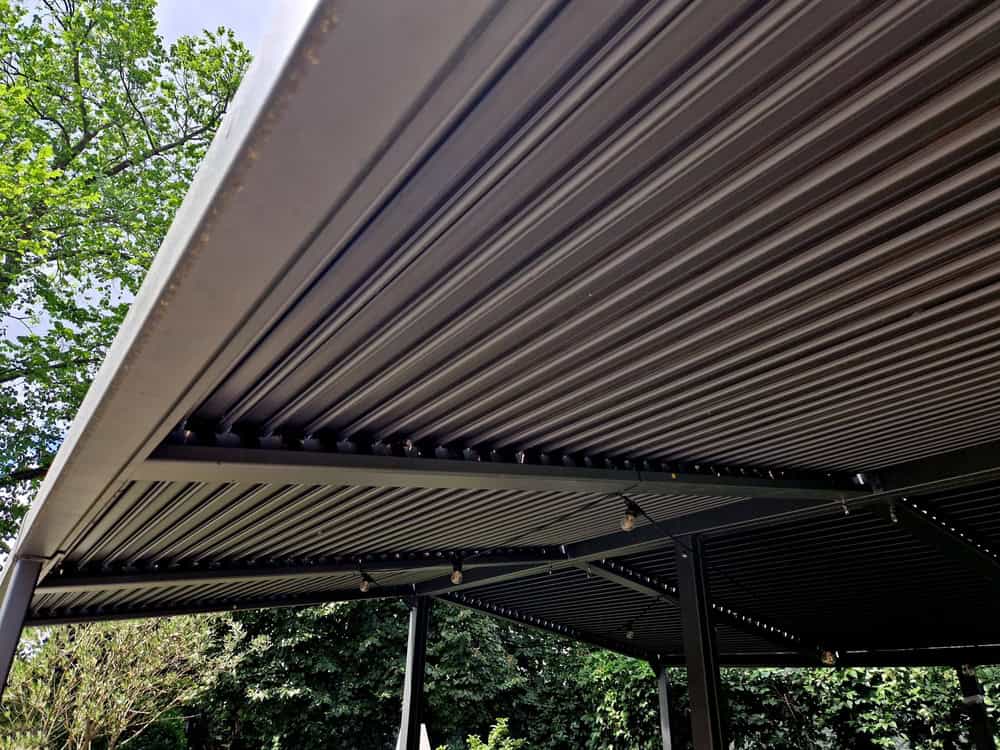
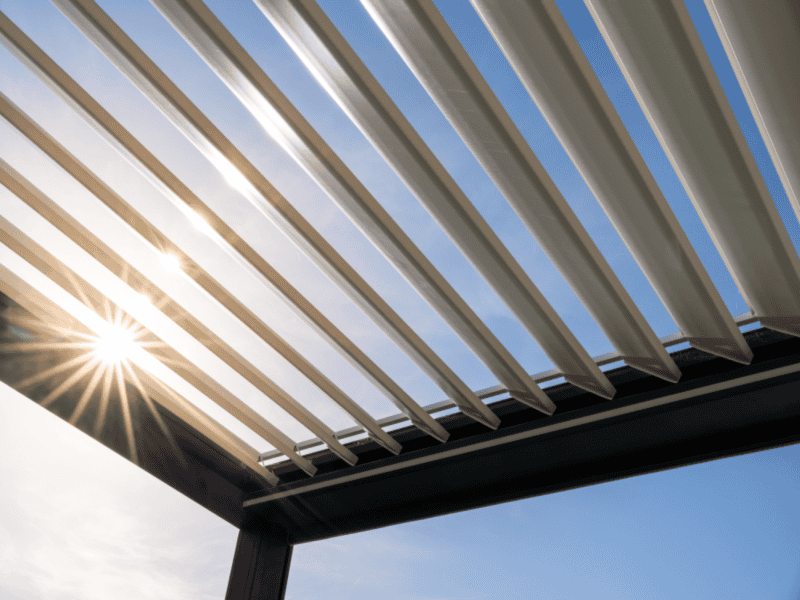
A louvered roof system uses rotating aluminum slats instead of fabric. The slats tilt to adjust shade and airflow—fully closed for rain protection, partially open for filtered light and ventilation, or fully open for clear sky. Louvers are more durable than fabric, require less maintenance, and handle wind better because they’re solid aluminum.
Most homeowners in Hedwig Village choose louvered systems because they last longer and perform better in Houston’s climate. Fabric canopies need replacement every 8-12 years depending on sun exposure. Aluminum louvers can last 20+ years with minimal maintenance. Louvers also look more architectural and integrated with high-end homes, which matters in your neighborhood.
Most installations take 3-5 days from start to finish. Day one is usually site prep and structural anchoring. We’re securing posts, tying into your home’s existing structure if it’s an attached pergola, and running electrical for motorized components.
Days two and three involve assembling the frame, installing the retractable roof system, and integrating any additional features like lighting or fans. Day four is testing and calibration—making sure the motorized operation works smoothly, sensors respond correctly, and everything’s sealed properly.
Larger or more complex projects can take up to a week, especially if we’re adding custom features or working around existing landscaping. Weather can also affect timeline—we don’t install retractable systems during rain or high winds because we need stable conditions for proper alignment and sealing.
You’ll have access to your yard throughout the process, though the immediate work area needs to stay clear. And once we’re done, cleanup is part of the job. You’re not left with construction debris or materials to haul away.
Yes, most retractable pergola installations require a building permit in Hedwig Village. The permit process covers structural safety, wind load calculations, electrical work for motorized systems, and setback requirements from property lines.
We handle the permit application as part of our service. You’re not filling out paperwork or dealing with the city yourself. Our team submits plans, coordinates inspections, and makes sure everything meets local building codes. This typically adds 2-3 weeks to the overall timeline before installation begins.
Some homeowners try to skip permits to save money or time. That’s a mistake. Unpermitted structures can cause problems when you sell your home, and your insurance might not cover damage if the pergola wasn’t built to code. Plus, Hedwig Village has its own building department that actively enforces regulations, so unpermitted work usually gets caught eventually.
Aluminum frames and louvered systems need minimal maintenance—mostly just hosing off dust and pollen a few times a year. Check the tracks and moving parts annually to make sure nothing’s obstructing the retractable mechanism. We recommend lubricating pivot points on louvered roofs once a year with silicone spray.
If you have a fabric canopy system, you’ll need to clean it more regularly. Houston’s humidity can lead to mildew if the fabric stays damp. Most canopies can be cleaned with mild soap and water, then air-dried fully before retracting. Inspect the fabric annually for any tears or UV damage, especially along seams.
Motorized components should be tested before storm season. Make sure remote controls work, sensors respond correctly, and the system opens and closes smoothly. If you notice any grinding sounds or slow operation, that’s usually a sign that tracks need cleaning or lubrication.
We offer maintenance service if you’d rather have professionals handle it, but most homeowners can manage basic upkeep themselves. The key is catching small issues before they become expensive repairs—a loose bolt is easy to tighten, but a motor that burns out from running against an obstruction costs more to replace.
Other Services we provide in Hedwig Village