

Transform your Long Island home with our custom sunrooms, liferooms, pergolas, and more! Quality Designs That Improve Your Space And Lifestyle.
Contact Info
Transform your Long Island home with our custom sunrooms, liferooms, pergolas, and more! Quality Designs That Improve Your Space And Lifestyle.
Contact Info
Hear From Our Clients
You know the problem. Three months of the year, your backyard sits empty because it’s just too hot. The grass is green, the grill is ready, but stepping outside feels like walking into an oven.
A well-designed pergola changes that. Not with gimmicks or temporary fixes, but with engineered shade that drops the temperature where you actually want to spend time. You get defined outdoor space that works for morning coffee, weekend cookouts, or just sitting outside without melting.
The right structure also means your outdoor furniture stops fading in two seasons. Your energy bills stop spiking because your house isn’t absorbing solar heat through every uncovered window and door. And when you’re ready to sell, buyers in Katy notice quality outdoor living—it’s expected here, not optional.
We’ve been in the outdoor living business for nearly five decades. That’s long enough to know what works in Texas and what doesn’t.
We’re not a crew that showed up last year with a truck and a saw. We handle permitting, HOA approvals, engineered footings for Katy’s expansive clay soils, and the kind of details that matter when summer storms roll through. You’re working with people who’ve done this thousands of times, in this climate, for homeowners who expect it done right.
Katy’s master-planned communities have standards. We build to meet them—and we’ve been doing it long enough that we already know what most HOAs will and won’t approve before you even ask.

It starts with a conversation about what you actually need. Not a sales pitch—a real look at your space, your budget, and what you’re trying to accomplish. We measure, discuss design options, and talk through materials: western red cedar for natural beauty or powder-coated aluminum for zero maintenance.
Once you’re clear on the plan, we handle the paperwork. That means pulling permits if your city requires them and coordinating with your HOA if you’re in one of Katy’s neighborhoods that needs approval. We’ve done this enough times to know what documentation they want and how to get it approved without the back-and-forth.
Installation starts with engineered concrete footings. Katy sits on clay soil that shifts, so we don’t cut corners here. Then we build the structure—rafter spacing, beam sizing, and shade percentage all planned for your specific site. You get a pergola that’s level, stable, and built to handle Texas weather for years.

Ready to get started?
You’re choosing between two main material paths: wood or aluminum. Western red cedar gives you that natural look and smell, with grain patterns that age into a silver-gray patina if you let them. It’s real, it’s beautiful, and it requires some maintenance every few years if you want to keep the original color.
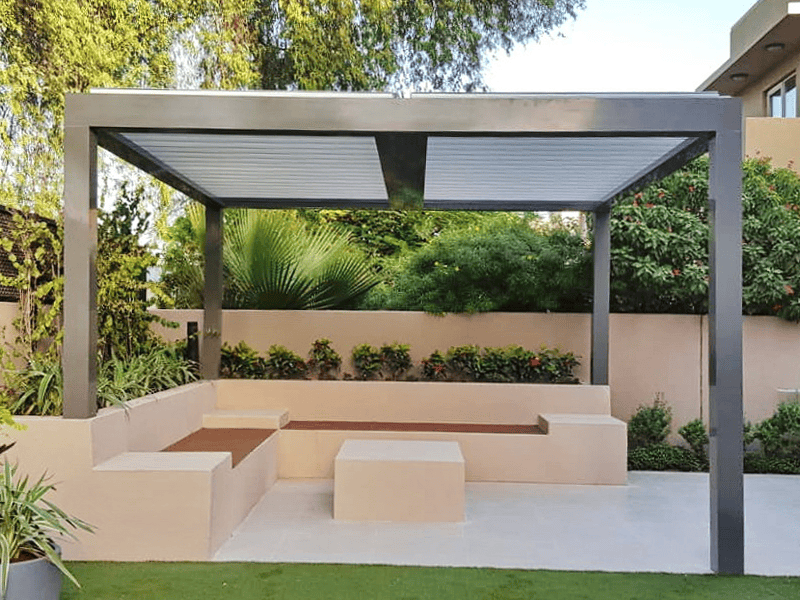
Aluminum pergolas are powder-coated, engineered, and built to ignore Texas humidity, termites, and UV damage. They don’t crack, warp, or need refinishing. If you want something that looks clean and stays that way without weekend projects, that’s the route.
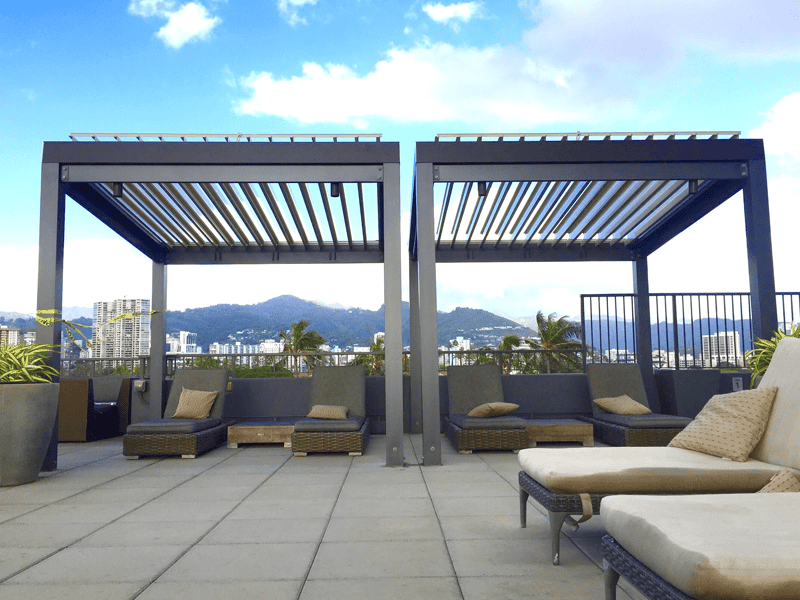
Both options work as attached pergolas that extend your roofline or freestanding structures that create a separate zone in your yard. We’re seeing more Katy homeowners go with attached designs over patios and decks because it ties into the home’s architecture and maximizes covered space. But if you want a pergola over a garden path or pool area, freestanding makes more sense.
Shade percentage matters more than most people realize. We calculate rafter spacing based on sun angles specific to Katy so you’re not guessing whether it’ll actually be comfortable at 3 p.m. in July.

It depends on the size and whether it’s attached to your house. Texas doesn’t have a single statewide rule—every city sets its own requirements.
In many cases, detached pergolas under 200 square feet don’t require a permit. But that’s not universal, and Katy’s building department may have different thresholds. If your pergola is attached to your home’s structure, you’re almost certainly going to need a permit regardless of size.
We handle this as part of the process. We’ll confirm what’s required, pull the permits if needed, and make sure inspections are scheduled. You don’t have to call the city or figure out the paperwork—we’ve done it enough times to know exactly what they’re looking for.
Yes, but how much cooler depends on the design. A pergola doesn’t create full shade like a solid roof, but that’s the point—you get airflow and filtered light instead of a heat trap.
The key is rafter spacing. We calculate spacing based on sun angles so you’re getting meaningful shade during peak heat hours, not just decorative beams. Depending on the design, you can expect temperature drops of 10 to 20 degrees in the shaded area compared to full sun.
If you want even more coverage, you can add retractable canopies or shade cloth between the rafters. That gives you flexibility—open it up when you want breeze and light, close it when you need serious sun protection. Either way, you’re turning an unusable space into somewhere you’ll actually spend time during Texas summers.
Most Katy HOAs focus on three things: materials, color, and how the structure fits with your home’s existing architecture. They want clean lines, quality materials, and designs that don’t look like an afterthought.
We’ve worked with HOAs across Cinco Ranch, Bridgewater, Lakes of Katy, and other master-planned communities enough to know what typically gets approved. Aluminum pergolas in neutral tones that match your trim or roofline usually sail through. Wood pergolas in natural or stained finishes that complement your home’s style do well too.
Before we build anything, we’ll provide you with the drawings and specs your HOA needs to review the project. If they come back with questions or requests for changes, we handle that communication. The goal is to get approval on the first submission so you’re not waiting months to start.
Wood pergolas—especially western red cedar—give you natural beauty and that traditional outdoor living look. The grain, the color, the way it weathers over time—it’s real and it’s warm. The tradeoff is maintenance. You’ll need to reseal or restain every few years if you want to preserve the original color, and you’re dealing with a natural material that can eventually crack or warp in extreme conditions.
Aluminum pergolas are engineered for durability. They’re powder-coated to resist rust, fading, and weather damage. You’re not resealing anything, ever. They handle Texas heat, humidity, and storms without splitting, rotting, or attracting termites. The look is cleaner and more modern, which works well with contemporary home styles common in newer Katy neighborhoods.
Both are strong, both provide the shade and structure you’re looking for. It comes down to whether you want the maintenance and character of wood or the set-it-and-forget-it durability of aluminum.
For most residential pergolas, you’re looking at one to three days of actual construction time once we’re on site. Smaller freestanding structures on the shorter end, larger attached pergolas on the longer end.
The timeline before that depends on permits and HOA approvals. If your project doesn’t require a permit and you’re not in an HOA, we can usually start within a week or two of finalizing your design. If we’re waiting on city permits or HOA architectural review, add another two to four weeks.
We don’t rush the foundation work. Katy’s clay soil expands and contracts with moisture, so we’re setting engineered concrete footings that account for that movement. That work needs time to cure properly before we build the structure on top. Skipping that step or rushing it is how you end up with a pergola that shifts or settles unevenly after the first heavy rain.
Cost depends on size, materials, and complexity. A basic freestanding wood pergola might start around $8,000 to $12,000. Larger attached aluminum pergolas with custom features can run $15,000 to $25,000 or more.
That’s not a dodge—it’s reality. A 10×10 cedar structure over a garden path costs a lot less than a 16×20 aluminum pergola with integrated lighting, engineered attachments to your home, and decorative details that match your existing architecture.
We offer financing up to $125,000 with competitive rates, so you’re not writing a check for the full amount upfront if that doesn’t work for your budget. During your consultation, we’ll give you a real number based on what you actually want to build—not a range pulled from a website. You’ll know what it costs before we start, and that number won’t change unless you change the scope.