

Transform your Long Island home with our custom sunrooms, liferooms, pergolas, and more! Quality Designs That Improve Your Space And Lifestyle.
Contact Info
Transform your Long Island home with our custom sunrooms, liferooms, pergolas, and more! Quality Designs That Improve Your Space And Lifestyle.
Contact Info
Hear From Our Clients
You’re not looking for decoration. You want a backyard that works when it’s 95 degrees in July and when you’re hosting family in October.
A well-built pergola gives you defined outdoor space that actually gets used. It creates shade where you need it. It holds up when Houston throws humidity, clay soil shifts, and afternoon storms at it. And if you go with louvered options, you control exactly how much sun or airflow you want with a simple adjustment.
This isn’t about curb appeal alone—though that’s a bonus. It’s about turning your patio or deck into a place you’ll actually sit, not just walk past. Most Eldridge homeowners see their outdoor living upgrades deliver 70-80% ROI when it’s time to sell, but the real return is having a backyard you use instead of avoid.
We bring decades of experience to every pergola installation in the Eldridge and West Oaks area. We’re not new to Houston’s challenges—the clay soil that cracks and swells, the humidity that warps cheaper materials, the permits that confuse most homeowners.
We handle the full process: design, permits, installation, cleanup. You get a pergola that’s built to code, matches your home’s style, and stands up to what Houston weather throws at it. Our team knows the Energy Corridor market, and we know what local buyers look for when outdoor living space is done right.
Licensed, insured, and backed by a 100% satisfaction guarantee. We don’t leave until you’re happy with the result.

It starts with a free in-home consultation. We look at your space, talk through what you want, and give you an upfront estimate that includes everything—no surprise fees later.
Once you’re ready to move forward, we handle the permit process. Houston requires structural plans, surveys, and inspections for pergolas, and we take care of that paperwork so you don’t have to figure it out yourself. If you’re in an HOA, we make sure the design meets their requirements before we start building.
Installation typically takes one to three days depending on the design. For standard aluminum pergolas, most jobs finish in a day. Custom wood pergolas with staining might take three to five days. We prep the foundation to account for Eldridge’s clay soil conditions, install the structure, and clean up completely when we’re done.
You’re left with a pergola that’s permitted, installed correctly, and ready to use. No guesswork, no shortcuts.

Ready to get started?
You can choose from wood or aluminum pergolas depending on your budget and maintenance preference. Wood pergolas—usually cedar—run around $50 per square foot and give you that natural look. Aluminum pergolas average $38 per square foot, require almost no upkeep, and come in finishes that mimic wood without the warping or cracking.
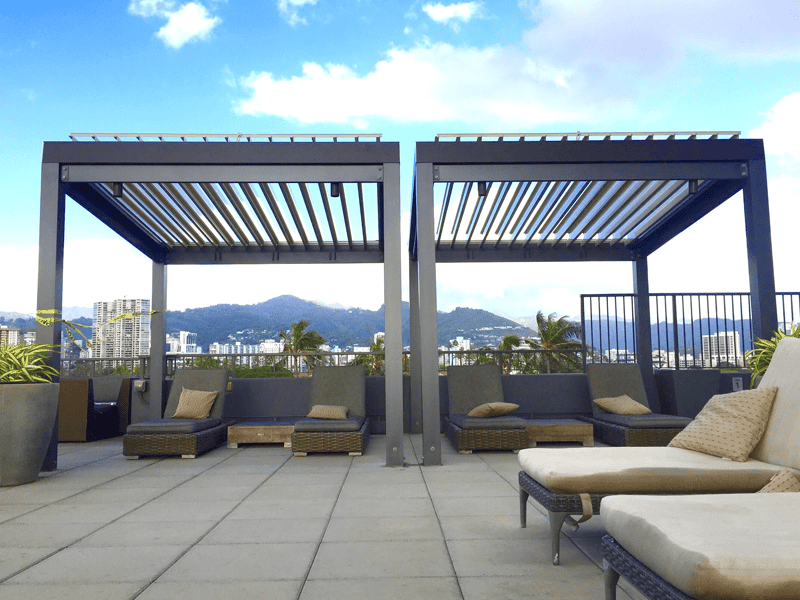
If you want more control over sun and rain, louvered pergolas let you adjust the roof slats with a button. Open them for airflow, close them when it rains, or angle them for partial shade. It’s the most versatile option for Houston’s unpredictable weather.
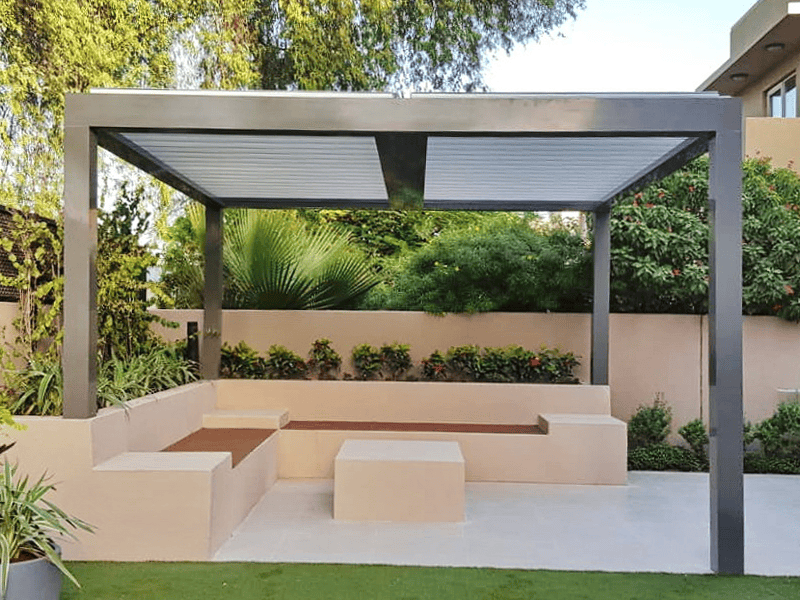
We also offer attached pergolas that extend from your home and freestanding designs for poolside or garden areas. Every installation includes proper foundation work to handle the clay soil common in Eldridge and West Oaks. That means concrete footings that won’t shift when the ground swells after a storm or cracks during a dry spell.
All materials are selected to withstand Gulf Coast humidity and UV exposure. You’re not getting something that looks good for two years and falls apart by year five.

Yes, and it’s worth doing it right. Houston requires permits for pergolas, and that means submitting a site survey showing where the structure will go, providing structural plans, paying the $80 fee, and passing inspections.
Some homeowners skip this step because it seems like overkill for a backyard shade structure. But if you ever sell your home, unpermitted work can kill a deal or force you to tear it down. Inspectors also catch foundation issues before they become expensive problems later.
We handle the permit process as part of our service. You don’t have to figure out what the city needs or wait in line at the permitting office. We submit everything, coordinate inspections, and make sure the build meets code from the start.
It depends entirely on the materials. Houston’s blend of high humidity, intense heat, and heavy coastal rainfall destroys low-quality pergolas fast. Wood that isn’t properly treated will warp, crack, or develop termite damage within a few years. Cheap aluminum can fade or corrode.
We use materials built for Gulf Coast conditions. Our wood pergolas are cedar or treated lumber that resists moisture and insect damage. Our aluminum pergolas come with powder-coated finishes that don’t peel or fade under UV exposure.
The foundation matters just as much. Eldridge sits on black clay soil that swells when wet and shrinks when dry. We install concrete footings deep enough to stay stable through those shifts. That’s how you get a pergola that still looks solid ten years from now instead of leaning or cracking after the first heavy rain season.
A standard pergola has fixed slats or beams across the top. You get partial shade, some airflow, and a defined structure—but you can’t adjust it. If the sun shifts or it starts raining, you’re stuck with whatever coverage the design provides.
Louvered pergolas have adjustable roof slats that you control manually or with a motor. Open them all the way for full sun and maximum airflow. Close them completely to block rain or create full shade. Angle them anywhere in between depending on the time of day or weather.
For Houston, louvered pergolas make a lot of sense. You can close the louvers during an afternoon storm, then open them back up when it passes. You’re not locked into one configuration, and that flexibility makes the space usable in more conditions. The tradeoff is cost—louvered systems run higher than fixed designs—but most Eldridge homeowners who choose them say the control is worth it.
Most standard pergola installations take one to three days once permits are approved and materials arrive. Simple aluminum pergolas usually go up in a single day. Custom wood builds with staining or more complex designs might take three to five days.
The timeline also depends on your property. If we’re working around existing landscaping, pools, or drainage issues common in West Oaks, that can add time. Clay soil sometimes requires extra foundation prep to make sure the footings stay stable.
Permitting adds a few weeks to the overall timeline, but that’s mostly waiting for city approval—not active construction time. We submit everything as soon as the design is finalized, and once we get the green light, the actual build moves quickly. You’re not looking at a months-long project. From consultation to completion, most homeowners are using their new pergola within four to six weeks.
Yes, if it’s done right. Outdoor living upgrades consistently rank among the highest-ROI projects for Houston-area sellers, and pergolas are one of the most popular additions buyers look for in 2025. Most well-designed pergolas return 70-80% of the installation cost when you sell.
Buyers in Eldridge and the Energy Corridor want homes with functional outdoor space. A pergola signals that your backyard is move-in ready—not a project they’ll have to tackle themselves. It also extends your usable square footage without the cost of a full room addition.
The key is quality. A pergola that’s already warping, leaning, or showing weather damage won’t help your resale value. But a professionally installed structure with proper permits, durable materials, and a design that complements your home’s architecture? That’s something buyers will pay for. Even if you’re not selling anytime soon, you’re still getting the benefit of a backyard you’ll actually use instead of one that just sits there.
Usually, yes. Attached pergolas connect directly to your home and extend over an existing patio or deck. They’re a great option if you want covered space right off your back door without building a freestanding structure farther out in the yard.
The main considerations are your home’s exterior material and the patio’s current condition. We need to attach the pergola securely to your home’s framing—not just siding—so it stays stable in high winds. If your patio has cracks or drainage issues, we’ll address those before installation to avoid problems later.
Attached pergolas also require careful planning around roof lines, gutters, and windows. We make sure the design doesn’t block natural light or create water runoff issues. And because it’s connected to your home, the style needs to match—we don’t slap a modern aluminum pergola onto a traditional brick house. The goal is a seamless extension that looks like it was always part of the plan.
Other Services we provide in Eldridge / West Oaks