

Transform your Long Island home with our custom sunrooms, liferooms, pergolas, and more! Quality Designs That Improve Your Space And Lifestyle.
Contact Info
Transform your Long Island home with our custom sunrooms, liferooms, pergolas, and more! Quality Designs That Improve Your Space And Lifestyle.
Contact Info
Hear From Our Clients
Right now, your backyard probably sits empty most days. Too hot by 10 a.m. Furniture fading under relentless UV. AC running overtime because the sun beats straight into your windows.
A well-designed pergola changes that. You get shade where you need it, airflow that actually cools things down, and protection that drops your cooling costs by up to 30%. Not a decorative add-on—a structure that makes outdoor living functional in Bellaire’s climate.
Homeowners here see 50% to 80% ROI on quality pergola installations. That’s because buyers in this market expect outdoor spaces that work year-round, not just in spring. When you add usable square footage to a $978,000 median home value, the math makes sense.
We’ve been designing custom outdoor living spaces since the mid-1970s. We’re not a general contractor who does pergolas on the side—this is what we do.
Bellaire homeowners have different expectations than most of Houston. You’re investing in a property worth nearly a million dollars on average, in a neighborhood where 87.9% of residents own their homes. You want quality that lasts and design that fits the architecture here.
We work with aluminum and wood pergolas, attached and freestanding designs, modern and traditional styles. Every project gets engineered for Texas wind ratings, UV exposure, and the kind of humidity that destroys cheap materials in three years.

First, we come to your property. We look at sun patterns, existing structures, drainage, and how you actually want to use the space. Not a sales pitch—a real assessment of what works on your lot.
Then we design the structure. You’ll see drawings that show dimensions, materials, and how it integrates with your home’s architecture. We handle permits and engineering specs required in Bellaire, so you’re not guessing about code compliance.
Installation takes anywhere from a few days to two weeks, depending on size and complexity. We’re setting footings, assembling the frame, and making sure everything is level and anchored properly. If you’re adding electrical for lighting or fans, that gets coordinated during the build.
After completion, you get a structure rated for 20 to 30+ years of service. Aluminum pergolas need almost no maintenance—maybe a rinse twice a year. Wood pergolas require more upkeep, but if you prefer that look, we’ll walk you through what’s involved so there are no surprises.

Ready to get started?
Material choice matters in this climate. Aluminum pergolas handle humidity without rotting, warping, or requiring annual maintenance. Wood pergolas offer a traditional look but need sealing every few years to survive Texas weather. Both can be engineered to the same wind and load standards.
Attached pergolas extend from your home’s roofline, creating a covered transition to the yard. They’re popular in Bellaire because they integrate with existing architecture and provide shade right where you walk out. Freestanding pergolas work better if you want a separate gathering area or need to avoid foundation issues near the house.
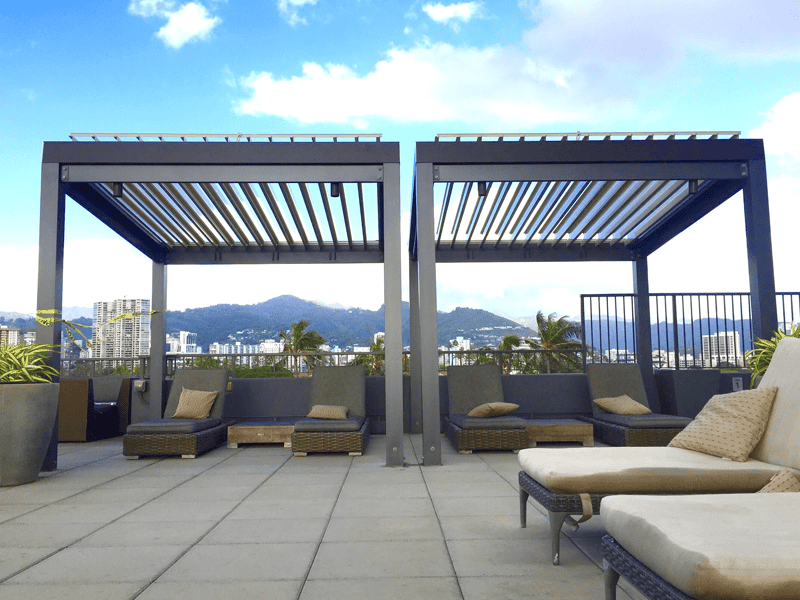
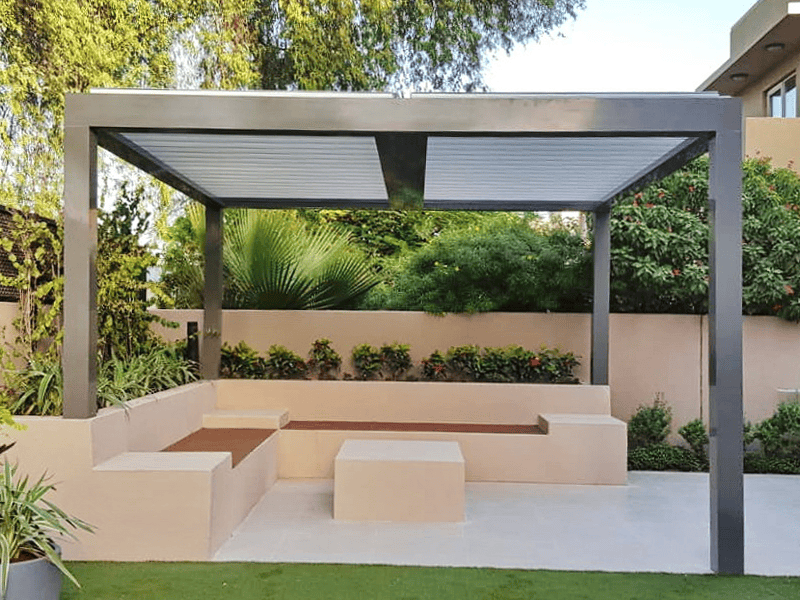
Modern pergola designs use clean lines and adjustable louvers that let you control sunlight throughout the day. Some homeowners add motorized systems that close when rain hits or open when you want full sun. Traditional designs use fixed slats and decorative brackets that match older home styles common in this area.
Backyard shade isn’t just about comfort—it’s about making your property functional. Bellaire gets 204 sunny days a year, and summer temps regularly hit triple digits. A pergola that blocks 95% of UV rays means you can actually use your patio in July without feeling like you’re standing on a griddle.

Most custom pergola projects in Bellaire run between $8,000 and $25,000, depending on size, materials, and features. A basic 12×12 aluminum pergola with standard finishes sits at the lower end. Add motorized louvers, integrated lighting, or a larger footprint, and you’re looking at the higher range.
Wood pergolas can cost less upfront, but factor in maintenance. You’ll spend $200 to $500 annually on sealing, staining, and repairs over the structure’s life. Aluminum pergolas cost more initially but require almost nothing beyond occasional cleaning.
We offer financing up to $125,000 with competitive rates, so you’re not writing a check for the full amount upfront. Given that quality outdoor structures add 8% to 12% to home value in this market, the investment usually makes sense if you’re staying in the home or prepping for resale.
Yes. Bellaire requires permits for most permanent outdoor structures, including pergolas. The city wants to see engineered drawings, foundation plans, and proof that the structure meets wind load requirements for this region.
We handle permit applications as part of the installation process. That includes submitting plans, coordinating inspections, and making sure everything is documented correctly. Trying to skip permits is a bad idea—it creates problems when you sell the home, and the city can require you to remove unpermitted structures.
Permit costs vary based on project size, but expect a few hundred dollars for a standard pergola. Turnaround time is usually two to four weeks, depending on the city’s workload. We factor that into the project timeline so you know when construction actually starts.
Aluminum pergolas last longer in Texas humidity and require almost no maintenance. They won’t rot, warp, or attract termites. You can powder-coat them to match any color, and they hold up in coastal or high-UV climates for 20 to 30+ years. Downside: some people think they look too modern or industrial for traditional homes.
Wood pergolas offer a classic look that fits older architecture common in Bellaire. Cedar and redwood are popular because they resist rot better than standard lumber. But wood needs sealing every two to three years, and even treated wood will eventually crack, fade, or develop mold in Houston’s humidity.
Cost difference isn’t huge upfront—maybe 10% to 20% more for aluminum depending on the design. The real gap shows up over time. Aluminum saves you hundreds annually in maintenance and lasts a decade longer. Wood gives you the aesthetic some homeowners prefer but requires ongoing care to keep it looking good.
Most pergola installations take three to ten days once permits are approved and materials arrive. A simple freestanding structure on level ground goes faster. An attached pergola with electrical, custom brackets, or challenging site conditions takes longer.
Weather affects the timeline. We’re not pouring footings in heavy rain, and extreme heat can delay concrete curing. Summer storms in Texas can push schedules back a few days, but we’ll keep you updated if that happens.
Permit approval adds two to four weeks before construction starts. Material lead times vary—standard aluminum pergolas might be in stock, but custom colors or motorized louvers can take several weeks to arrive. We give you a realistic timeline upfront so you’re not planning a party around a structure that isn’t finished yet.
Yes, if it’s positioned correctly. A pergola that shades your patio doors and west-facing windows can reduce cooling costs by 20% to 30% during summer months. That’s because you’re blocking direct sun before it heats up your interior.
The effect is most noticeable on homes where large windows or glass doors face south or west. Without shade, your AC fights a losing battle against solar heat gain. With a pergola, you’re cutting that heat before it hits the glass, which means your system runs less and your bills drop.
Adjustable louver pergolas give you the most control. You can angle slats to block afternoon sun but let morning light through. Some homeowners add retractable screens or outdoor fans to boost cooling even more. The ROI on energy savings alone won’t pay for the pergola in a year, but over a decade, it adds up—especially with Texas electricity rates.
Usually, yes. Most existing concrete patios can support a pergola as long as the slab is in good condition and thick enough to anchor posts. We’ll inspect the site to make sure there are no cracks, drainage issues, or foundation problems that would cause trouble later.
If your patio is too thin or poorly poured, we might need to add footings outside the slab or reinforce specific areas. That adds some cost but prevents the structure from shifting or cracking your existing concrete over time.
Attached pergolas are popular additions to existing patios because they tie into your home’s fascia and create a covered outdoor room. We’ll check roof load capacity and make sure the attachment points are solid. If your home has stucco or brick, we take extra care with flashing and sealing so you don’t end up with water intrusion down the road.
Other Services we provide in Bellaire