

Transform your Long Island home with our custom sunrooms, liferooms, pergolas, and more! Quality Designs That Improve Your Space And Lifestyle.
Contact Info
Transform your Long Island home with our custom sunrooms, liferooms, pergolas, and more! Quality Designs That Improve Your Space And Lifestyle.
Contact Info
Hear From Our Clients
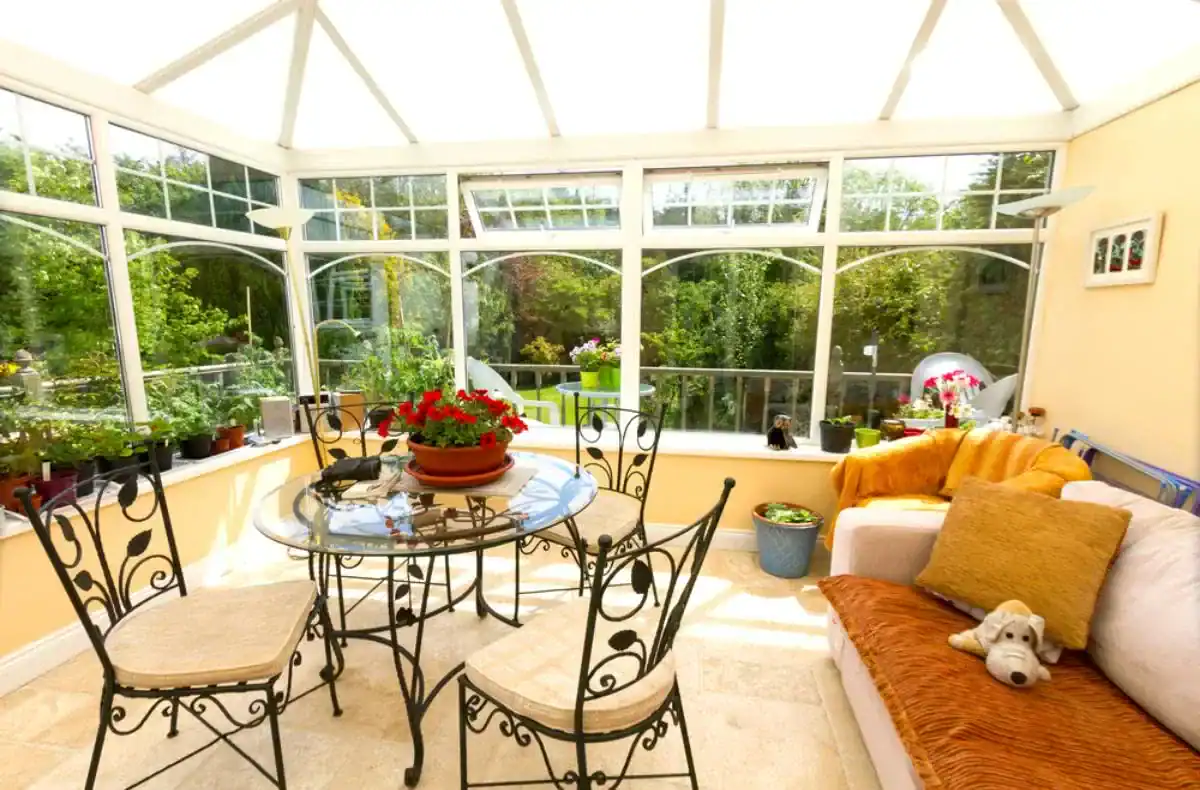
Most glass rooms in Houston sit empty from June through September because they turn into greenhouses. You’re looking at a conservatory because you want the light, the architecture, the connection to your garden. But you need it to stay comfortable when it’s 102°F outside.
That’s where the engineering matters. CONSERVAGLASS™ NXT isn’t standard patio glass. It’s designed to reflect heat before it enters the space, paired with proper ventilation and insulation that keeps your HVAC from working overtime. The result is a custom glass room that doesn’t punish you with utility bills or force you indoors half the year.
West University Place homes average $1.75 million. A conservatory addition should match that level of finish and function. Clean sightlines, architectural detailing that complements your home’s existing style, and materials that hold up without constant maintenance. You get a garden room that adds 55-75% ROI when it’s done right, and a space your family actually uses daily.
We’ve installed conservatories across Houston for nearly five decades. We’re not new to this market, and we’re not learning on your property. Our team understands what works in West University Place—how to navigate permits, how to match architectural styles in a neighborhood where 93% of homes are owner-occupied and standards are high.
You’re working with a company that’s installed thousands of custom glass rooms, not a general contractor adding sunrooms as a side service. Every project gets handled by trained builders who know the difference between a functional addition and one that actually increases your home’s value. We’re fully licensed and insured, and we guarantee the work with 24/7 support if anything needs attention.

We start with an on-site consultation at your home. You’ll walk us through what you’re envisioning—whether that’s a Victorian conservatory with curved eaves or a Georgian design with symmetrical lines. We measure the space, assess how the structure will integrate with your existing roofline and foundation, and discuss orientation to manage sun exposure.
Next comes the design phase. You’ll see detailed plans showing floor layout, glass specifications, framework style, and how we’re addressing climate control. This is where we talk through options like CONSERVAGLASS™ NXT for energy efficiency, ventilation systems, and whether you want the conservatory architecture to match your home’s current style or create a contrasting focal point.
Once you approve the design, we handle permits and schedule installation. Our crews work in stages—foundation, framework, glazing, then finishing details like trim and sealing. Most custom glass rooms take 4-6 weeks from permit to completion, depending on size and complexity. We walk you through the finished conservatory, explain maintenance (which is minimal), and make sure everything meets your expectations before we consider the job done.
Ready to get started?
You’re getting more than a glass box attached to your house. Victorian conservatory designs include curved bull nose detailing, ornamental ridge cresting, and intricate framework that references historic English architecture without the maintenance headaches of actual antique structures. Georgian styles offer clean, symmetrical lines with balanced proportions and classic elegance.
Every conservatory uses CONSERVAGLASS™ NXT as standard—not an upgrade. That’s low-E glass with stay-clean coating and thermal performance designed for climates where summer temps regularly hit 100°F+. The framework is engineered aluminum or vinyl (depending on your aesthetic preference), both maintenance-free and built to handle Houston humidity without warping or rotting.
Climate control is built into the design, not added as an afterthought. Insulated roof panels, proper ventilation, and integration with your home’s HVAC system mean the garden room stays usable in July and January. In West University Place, where outdoor space is limited and property values justify premium improvements, a four-season conservatory makes sense. You’re adding 200-400 square feet of living space that functions as a sunlit office, entertaining area, or quiet retreat—without sacrificing comfort for aesthetics.

Yes, if it’s built with standard glass and no climate strategy. That’s the biggest complaint we hear from homeowners who went with cheaper installations—the room is unusable from June through September.
CONSERVAGLASS™ NXT solves most of this problem. It’s engineered to reflect solar heat before it enters the space, which keeps interior temperatures 15-20°F cooler than standard patio glass. Pair that with proper ventilation (ridge vents, operable windows positioned for cross-breeze) and integration with your home’s HVAC, and you’ve got a room that stays comfortable even when it’s 102°F outside. It won’t feel like your living room, but it won’t feel like a sauna either.
Orientation matters too. A conservatory facing south or west gets hammered by afternoon sun. North or east orientations stay cooler naturally. If your only option is south-facing, we’ll talk through shading solutions—either exterior overhangs or interior cellular shades that block heat without killing the light. The goal is a custom glass room you actually use in August, not one that sits empty half the year.
Four-season conservatories typically return 55-75% ROI in Central Texas markets, which is above the national average for most home improvements. But that number assumes quality construction and design that matches your home’s existing architecture.
In West University Place, where the typical home is valued at $1.75 million, buyers expect high-end finishes and functional spaces. A well-built glass conservatory checks both boxes—it’s visually distinctive and adds usable square footage. The key is not over-improving. If your home is worth $1.5 million, a $40,000 conservatory makes sense. A $100,000 conservatory might not recover that investment unless you’re planning to stay long-term and value the lifestyle benefit over pure ROI.
Appraisers and buyers notice craftsmanship. Poor installation, mismatched design, or a room that clearly overheats will hurt value instead of helping it. That’s why working with experienced conservatory builders matters. You’re protecting a significant investment, and the details—proper permits, code compliance, quality materials—directly impact what you’ll get back when you sell.
Conservatories have glass roofs. Sunrooms typically have solid, insulated roofs with windows on the walls. That’s the structural difference, but it affects everything—how much light you get, how the space feels, and how much it costs to keep comfortable.
A glass conservatory gives you that greenhouse effect—maximum natural light, views of the sky, and a stronger connection to your outdoor space. The tradeoff is more heat gain in summer and more heat loss in winter, which is why the glass technology and climate control matter so much. Victorian and Georgian conservatory designs lean into this aesthetic with ornamental framework and curved or angled rooflines that make the structure a focal point, not just an addition.
Sunrooms are easier to climate-control because the solid roof provides better insulation. They feel more like a traditional room extension. If your priority is a space that blends seamlessly with your home’s interior and stays comfortable with minimal HVAC investment, a sunroom makes sense. If you want the architecture and light of a garden room—something that feels distinct and connected to the outdoors—a conservatory is the better choice. Both add value, but they serve different purposes.
Most custom glass conservatories take 4-6 weeks from permit approval to final walkthrough. Larger or more complex designs—especially Victorian styles with curved glass and ornamental detailing—can push closer to 8 weeks.
Permitting in West University Place usually takes 2-3 weeks, depending on the scope of work and whether we’re tying into existing electrical or HVAC systems. Once permits are in hand, we schedule foundation work first. That’s typically 3-5 days, followed by a brief curing period before we start the framework. The framework and glazing stage takes the longest—1-2 weeks for most projects—because that’s where precision matters. We’re fitting custom glass panels, sealing joints, and making sure everything is structurally sound and weathertight.
Finishing work (trim, paint touch-ups, final HVAC connections) takes another few days. Weather can delay outdoor work, especially during Houston’s heavy rain periods in spring and fall. We’ll give you a detailed timeline during the design phase, and we stay in contact throughout the project so you know what’s happening and when. The goal is to finish on schedule without rushing details that affect long-term performance.
Yes, if it’s built as a four-season structure with proper climate control. That means insulated glazing, integration with your home’s HVAC system, and a design that manages Houston’s temperature extremes.
Many West University Place homeowners use conservatories as home offices, dining areas, or morning rooms—spaces they’re in daily, not just occasionally. The key is making sure the room stays comfortable year-round. Without climate control, you’re looking at 5-6 months of ideal conditions (March-May, October-November) and the rest of the year fighting heat or cold. That’s fine for a seasonal garden room, but not for a space you’re counting on as functional square footage.
Building codes treat conditioned conservatories the same as other living spaces, which means they need to meet insulation and energy standards. That’s actually a good thing—it forces the design to be livable, not just decorative. If you’re planning to use the conservatory as a primary room, we’ll spec the glass, ventilation, and HVAC capacity accordingly. The investment is higher upfront, but you get a custom glass room that functions like the rest of your home instead of sitting empty half the year.
Less than you’d think. The framework is maintenance-free—either powder-coated aluminum or vinyl that doesn’t need painting, sealing, or regular upkeep. CONSERVAGLASS™ NXT has a stay-clean coating that breaks down dirt with UV exposure, so rain naturally rinses the glass. You’ll still want to hose it down a few times a year, especially after Houston’s pollen season, but it’s not the constant cleaning job that standard glass requires.
Gutters and seals need occasional attention. We recommend clearing gutters twice a year to prevent water backup, and checking door and window seals annually to make sure they’re still weathertight. If you notice a draft or moisture where there shouldn’t be, that’s usually a seal issue that’s easy to fix before it becomes a bigger problem.
The mechanical systems—HVAC connections, ventilation fans—should get checked during your regular home maintenance schedule. Most conservatory owners in West University Place fold this into their annual HVAC service. The structure itself is built to last decades without major repairs. We back that with warranties and 24/7 support, so if something does need attention, you’re not tracking down a contractor who may or may not still be in business.
Other Services we provide in West University Place