

Transform your Long Island home with our custom sunrooms, liferooms, pergolas, and more! Quality Designs That Improve Your Space And Lifestyle.
Contact Info
Transform your Long Island home with our custom sunrooms, liferooms, pergolas, and more! Quality Designs That Improve Your Space And Lifestyle.
Contact Info
Hear From Our Clients
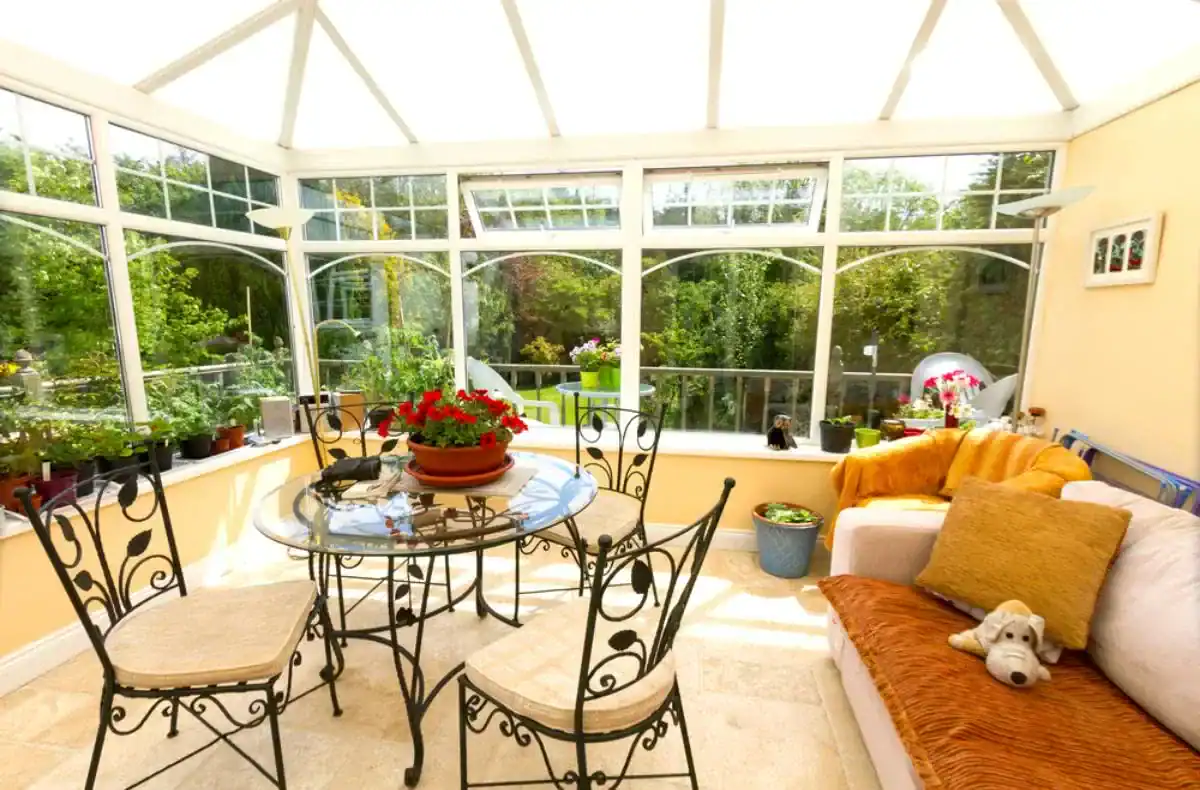
You’re not adding a glass box that bakes in summer and freezes in winter. You’re getting a custom glass room with insulation, ventilation, and energy-efficient glass technology that actually handles Webster’s climate swings.
The conservatories we build use CONSERVAGLASS™ NXT—advanced glazing that blocks heat while letting light through. That means you get the brightness and views without the greenhouse effect that makes standard glass rooms unbearable by 10 a.m. in July.
This isn’t about aesthetics alone. It’s about creating space that extends your home’s livable square footage year-round. Morning coffee in February. Dinner parties in August. A garden room that doesn’t require you to check the weather forecast before using it.
Four Seasons Sunrooms has been designing and installing conservatories since the 1970s. We’re not a general contractor who occasionally does glass rooms—this is what we do, and we’ve refined the process over five decades.
Our Houston-area team understands what works in Webster’s climate. We know how Harris County’s humidity affects materials, how the Gulf Coast sun impacts glass selection, and what construction methods hold up when temperatures swing 40 degrees between December and July.
You’re working with us—a company that’s installed thousands of conservatories nationwide, backed by manufacturer warranties and local service. We’re licensed, insured, and we’ve been serving Webster homeowners long enough to have built second conservatories for customers who moved to larger properties.

We start with a free in-home consultation where we assess your property, discuss your goals, and take measurements. You’ll see design options, material choices, and get an upfront cost estimate that includes everything—no surprise fees later.
Once you approve the design, we handle permits and prep work. Most conservatory installations take two to four weeks depending on size and customization. We’re building a permanent structure with proper foundations, not bolting a kit onto your house.
During construction, you’ll work with the same project manager from start to finish. They’ll walk you through each phase, answer questions, and make sure the final result matches what you approved. After installation, we do a complete walkthrough to verify everything works—doors, windows, ventilation, electrical—before we consider the job done.
You’ll receive warranty documentation and maintenance guidelines. And if something needs attention down the road, you’re calling a local team that knows your project, not a national call center reading from a script.
Ready to get started?
A conservatory isn’t just a sunroom with fancier glass. You’re getting a structure with more architectural detail, higher-end materials, and design flexibility that matches your home’s style. Victorian conservatories feature ornate ridge cresting and decorative finials. Georgian designs offer cleaner lines with classic proportions.
The framework options include maintenance-free vinyl, powder-coated aluminum, or natural wood depending on your aesthetic and budget. Glass options range from standard insulated panels to self-cleaning, UV-blocking, energy-efficient glazing that reduces cooling costs in Webster’s brutal summers.
Webster homeowners typically add conservatories for three reasons: creating a garden room that protects plants from pests and extreme heat, building an entertainment space with panoramic views, or adding a breakfast nook that brings in natural light without the bugs that make Houston-area patios unusable half the year.
The investment varies based on size and materials, but most custom glass conservatories in the Webster area range from $30,000 to $80,000. That’s less than a traditional room addition and typically adds 5-10% to your home’s resale value—while giving you space you’ll actually use instead of another bedroom that sits empty.

Most conservatories we build in Webster run between $30,000 and $80,000 depending on size, materials, and customization level. A basic 12×12 Victorian-style conservatory with vinyl framing and standard insulated glass starts around $35,000. Larger designs with premium materials, self-cleaning glass, and custom architectural details can reach $75,000 or more.
That price includes design, permits, materials, installation, and cleanup. You’re not paying separately for foundation work, electrical, or finishing touches—it’s all in the estimate we provide during your consultation.
For context, a traditional room addition in Harris County costs $150-300 per square foot. Conservatories typically run $200-400 per square foot but deliver more natural light, better views, and architectural interest that standard additions can’t match. Most Webster homeowners see 60-80% cost recovery at resale, with well-designed conservatories often adding more value than generic room additions.
Not if it’s built correctly. Standard glass rooms absolutely turn into saunas in Houston-area summers—that’s why we don’t build standard glass rooms.
The conservatories we install use energy-efficient glazing designed for southern climates. CONSERVAGLASS™ NXT blocks solar heat gain while allowing visible light through, reducing the greenhouse effect that makes cheap sunrooms unbearable. We also incorporate proper ventilation—ridge vents, operable windows, and in some cases, ceiling fans—to move air and prevent heat buildup.
Insulation matters too. We insulate the roof structure and use thermal breaks in the framing to prevent heat transfer. Many Webster clients add HVAC extensions to their conservatories, which works because the space is properly insulated and sealed—something you can’t do effectively with a basic screen room or patio cover.
Will it be warmer than your main house on a 98-degree July afternoon? Probably slightly. Will it be unusable? No. We’ve built hundreds of conservatories in the Houston area, and clients use them year-round because we design for this climate from the start.
The terms overlap, but conservatories typically feature more glass, higher-end materials, and more architectural detail. A sunroom might have glass on three sides with a solid insulated roof. A conservatory usually has glass walls and a glass roof with decorative framework—think Victorian ridge cresting, ornamental finials, or Georgian-style proportions.
Conservatories also tend to use premium materials. You’ll see more hardwood or powder-coated aluminum framing instead of basic vinyl. The glass is often self-cleaning or low-E coated. The overall design integrates with your home’s architecture rather than looking like an add-on.
Functionally, both extend your living space and bring in natural light. But conservatories lean more toward creating a garden room or elegant entertaining space, while sunrooms often serve as casual family rooms or enclosed porches. The cost reflects this—conservatories typically run 20-40% more than comparable sunrooms due to materials and craftsmanship.
For Webster homeowners, the choice usually comes down to how you’ll use the space and what matches your home’s style. A ranch-style home might suit a clean-lined sunroom. A two-story traditional with architectural detail calls for a Victorian conservatory that complements the existing design.
Most conservatory projects take three to five weeks from permit approval to final walkthrough. Smaller designs—10×12 or 12×14—can be completed in two to three weeks if weather cooperates. Larger custom conservatories with complex rooflines or extensive site prep may take six weeks.
The timeline breaks down roughly like this: permit processing takes one to two weeks in Harris County. Foundation and site prep take three to five days. Framework and glass installation take one to two weeks. Electrical, finishing, and detail work take another three to five days.
Weather impacts the schedule since we’re working outdoors. Heavy rain delays foundation work. Extreme heat slows certain installation steps. We build buffer time into estimates, but Webster’s climate means occasional delays are part of the process.
You’ll have access to the space once the structure is weathertight, but we don’t consider the job complete until every detail is finished—trim work, door adjustments, final cleaning. We’d rather take an extra few days to get it right than rush the finish and leave you with gaps, misaligned doors, or sloppy caulking.
Well-designed conservatories typically add 5-10% to home value in the Webster area and make properties more attractive to buyers. A $50,000 conservatory on a $300,000 home might add $15,000-30,000 in resale value—that’s a 30-60% return, which beats most home improvements.
The actual return depends on execution. A custom glass conservatory that matches your home’s architecture and uses quality materials will recoup more than a generic kit that looks tacked on. Location matters too—homes in Webster’s established neighborhoods with larger lots see better returns than properties where the conservatory dominates a small yard.
Real estate agents in Harris County report that conservatories appeal to buyers looking for character and livable space. They photograph well, create strong first impressions, and offer functionality that empty bedrooms don’t. Buyers see them as entertainment space, home offices, or plant rooms—versatile square footage that adapts to different lifestyles.
Even if you’re not selling soon, the value is in daily use. You’re gaining 150-300 square feet of climate-controlled living space for less than half what a traditional addition costs. Most Webster homeowners tell us they use their conservatory more than they expected—it becomes the favorite room in the house, not a novelty that wears off after six months.
Sometimes, but it depends on the patio’s condition, size, and structural capacity. Conservatories require proper foundations that can support the weight of glass, framing, and roof loads. Most concrete patios aren’t engineered for that—they’re four inches of concrete over compacted soil, designed for patio furniture, not a permanent structure.
We’ll assess your existing patio during the consultation. If it’s in good condition, properly reinforced, and meets current building codes, we may be able to build on it with additional footings or perimeter support. If it’s cracked, settling, or undersized, we’ll recommend removing it and starting fresh.
Building on an existing patio can save money on demolition and site prep, but it’s not always the right choice. A conservatory built on a compromised foundation will develop problems—settling, cracked glass, doors that won’t close properly. We’d rather do it right the first time than save you $2,000 upfront and cost you $10,000 in repairs three years later.
The good news is that even if we can’t use your existing patio, the new foundation work is included in your project estimate. You’re not paying extra for something we should have caught during planning—we scope the full project before giving you a price.
Other Services we provide in Webster