

Transform your Long Island home with our custom sunrooms, liferooms, pergolas, and more! Quality Designs That Improve Your Space And Lifestyle.
Contact Info
Transform your Long Island home with our custom sunrooms, liferooms, pergolas, and more! Quality Designs That Improve Your Space And Lifestyle.
Contact Info
Hear From Our Clients
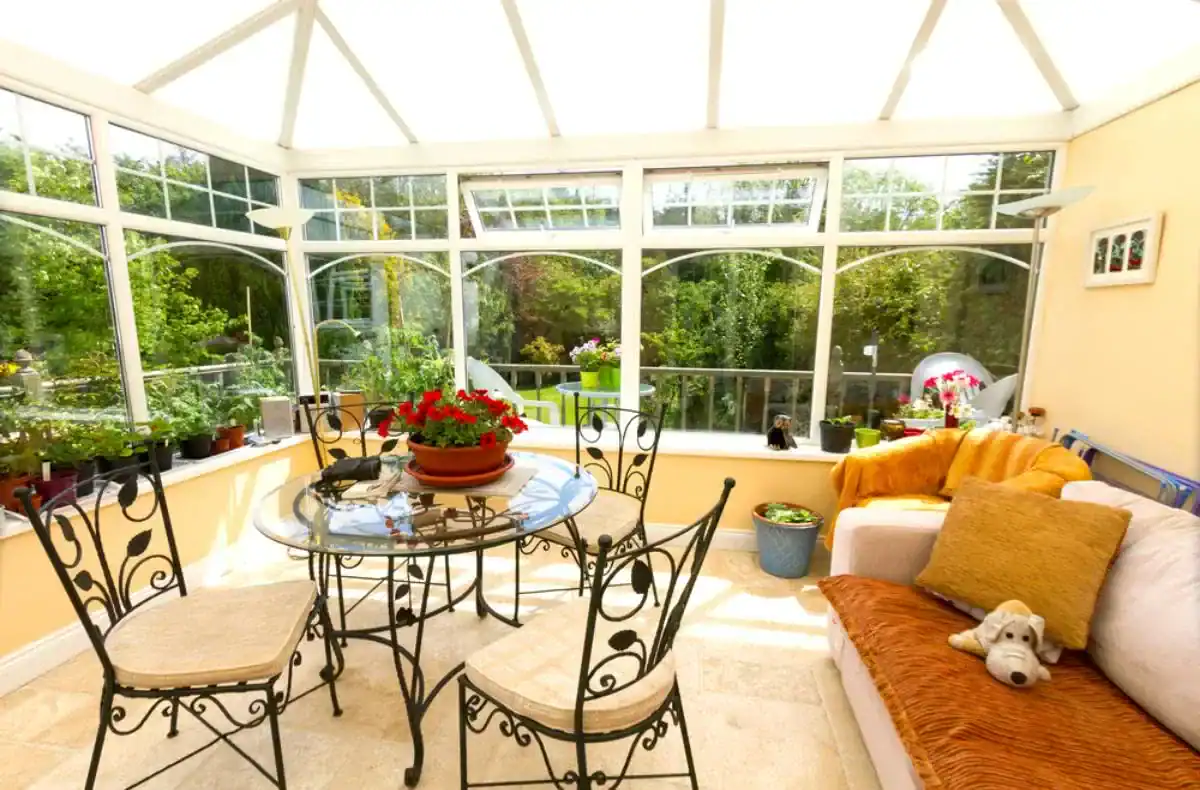
Most glass conservatories in Texas fail because they trap heat. A glass roof facing the summer sun absorbs and holds temperatures that standard HVAC systems can’t offset without costing you a fortune. You end up with a beautiful room you can’t use half the year.
That’s the difference between a conservatory designed for England and one engineered for Houston’s climate. You need insulated roofing systems that block heat gain, high-performance glass that filters UV without losing natural light, and proper ventilation that doesn’t require running your AC into the ground.
When it’s built right, you get a garden room that stays comfortable in July and January. Natural light floods in. Your energy bills stay reasonable. And you actually use the space you paid for.
We’ve spent nearly five decades figuring out how to build glass rooms that actually work in climates like yours. We’re not a general contractor who dabbles in sunrooms. This is what we do.
Every custom glass room we build in Hunters Creek Village gets designed around your property’s orientation, your home’s architecture, and how you’ll actually use the space. We’re fully licensed and insured, and we handle everything from permits to final walkthrough.
You’re in one of the wealthiest communities in Texas. Your home deserves construction that matches that standard, not a prefab kit that looks good in a catalog but fails in real conditions.

We start with a consultation at your home. You show us where you’re thinking, we look at sun exposure, existing structure, and what you want to use the space for. No pressure, no gimmicks—just an honest conversation about what’s possible.
From there, we create a custom design. You’ll see exactly what it looks like, how it integrates with your home’s architecture, and what materials we’re using. We walk through ventilation, climate control, glass options, and how the finished conservatory will perform in summer and winter.
Once you approve the design, we handle permits and scheduling. Our installation team shows up on time, works clean, and communicates clearly about timeline and any issues that come up. When we’re done, you get a final walkthrough and a structure that’s built to last.
The whole process typically takes 6-10 weeks from design approval to completion, depending on size and complexity. You’ll know the timeline upfront.
Ready to get started?
Your conservatory gets built with insulated roof panels that block heat transfer—not a glass ceiling that turns into a greenhouse. We use high-performance glass with low-E coatings that filter 99% of UV rays while letting natural light through. The framing is engineered aluminum or vinyl that won’t warp, rot, or need constant maintenance.
Climate control is integrated from the start. That means proper ventilation, connection to your existing HVAC if needed, and design that promotes natural airflow. You’re not bolting on solutions after the fact because someone didn’t plan for Texas summers.
In Hunters Creek Village, where property values average $2 million, a poorly designed conservatory stands out for the wrong reasons. We match your home’s architectural style—whether that’s traditional, contemporary, or Victorian—and use materials that complement your existing exterior. The finished structure looks like it was always part of your home, not an obvious addition.
You also get flexible financing up to $125,000 with competitive rates, 24/7 emergency service, and a customer satisfaction guarantee. The construction is maintenance-free on the exterior, so you’re not repainting or replacing materials every few years.

Most custom conservatories in your area run between $40,000 and $150,000, depending on size, materials, and complexity. A basic 12×16 garden room with standard features sits at the lower end. A large Victorian conservatory with premium glass, integrated climate control, and custom architectural details hits the higher range.
The cost breaks down into materials, labor, permits, and site prep. If your property needs foundation work or significant electrical upgrades, that adds to the total. Glass type matters too—standard insulated glass costs less than high-performance low-E glass with argon fills, but the energy savings over time usually justify the upgrade in Texas heat.
We provide detailed quotes after the initial consultation so you know exactly what you’re paying for. No surprise costs, no hidden fees. And we offer financing up to $125,000 if you’d rather spread payments out instead of paying upfront.
Yes, but only if it’s designed correctly from the start. A traditional glass roof conservatory will absolutely overheat in Houston—there’s no way around the physics of direct sun on glass in 95-degree weather. That’s why we use insulated roof systems instead of all-glass ceilings.
The roof panels block heat transfer while still allowing natural light through strategically placed windows and glass walls. We add high-performance glass with UV filtering on the walls and proper ventilation that moves hot air out before it builds up. If you’re connecting to your existing HVAC, we size everything correctly so you’re not overworking your system.
You’ll still want blinds or shades for the hottest days—that’s just smart in Texas. But the room stays comfortable enough to use year-round, not just October through April. We’ve been building these in the Houston area long enough to know what works and what doesn’t. The conservatories we installed ten years ago are still comfortable today.
From design approval to final completion, most projects take 6-10 weeks. Smaller garden rooms on the simpler end might finish in 6 weeks. Larger custom conservatories with complex architectural details can push toward 10 weeks or slightly longer.
The timeline breaks down into permit approval (1-2 weeks), material ordering and prep (1-2 weeks), and actual construction (3-6 weeks depending on size). Weather delays happen occasionally—we’re not pouring foundations in heavy rain or installing glass in high winds.
We give you a detailed schedule upfront and update you if anything changes. Most of the construction happens outside your home, so disruption to your daily routine is minimal. You’re not dealing with contractors tearing through your house for months. The work is contained, professional, and finished on the timeline we commit to.
A conservatory typically has more glass—walls and sometimes roof—with a focus on Victorian or classical architectural style. Think elegant lines, decorative details, and a structure that makes a visual statement. It’s designed to feel like a garden room or glass pavilion attached to your home.
A sunroom usually has a solid insulated roof with glass walls, built more for practical year-round living space than architectural drama. The design is simpler, the construction is often faster, and the focus is on comfortable, usable square footage rather than ornate style.
Both can be climate-controlled and used year-round if built correctly. The choice comes down to what you value more—the elegance and light of conservatory architecture, or the straightforward functionality of a sunroom. In Hunters Creek Village, we see more requests for conservatories because homeowners want something that adds architectural interest to already premium properties. But we build both, and we’ll tell you honestly which makes more sense for your home and how you plan to use the space.
A well-designed conservatory typically adds 50-70% of its construction cost to your home’s resale value, sometimes more in markets like Hunters Creek Village where buyers expect premium features. You’re adding functional square footage, architectural interest, and a desirable indoor-outdoor living space that appeals to buyers.
The return depends on quality of construction and how well it integrates with your home’s existing style. A beautiful Victorian conservatory that looks original to the house adds more value than an obvious add-on that clashes with your architecture. Materials matter too—maintenance-free exteriors and energy-efficient glass are selling points that cheap construction can’t match.
Beyond resale value, there’s the practical benefit of actually using and enjoying the space while you live there. You’re not building this purely as an investment—you’re creating a room you’ll use for morning coffee, entertaining, or just relaxing in natural light. The value isn’t only financial. But yes, when you do sell, a quality conservatory is an asset that helps your home stand out in a competitive market.
Yes. Any permanent structure attached to your home requires permits in Hunters Creek Village and Harris County. That includes conservatories, sunrooms, and covered patios. The permit process covers structural engineering, electrical work if you’re adding outlets or climate control, and compliance with local building codes.
We handle the entire permit process for you. Our team prepares the drawings, submits to the city, and manages any revisions or questions that come up. You don’t need to visit the permit office or deal with inspectors—that’s our job. The approval typically takes 1-2 weeks depending on the city’s workload.
Some homeowners try to skip permits to save money or time. That’s a mistake. Unpermitted work creates problems when you sell—buyers’ inspectors flag it, lenders won’t finance it, and you end up either tearing it down or going through expensive after-the-fact permitting. We do it right the first time so you never have to worry about it.
Other Services we provide in Hunters Creek Village