

Transform your Long Island home with our custom sunrooms, liferooms, pergolas, and more! Quality Designs That Improve Your Space And Lifestyle.
Contact Info
Transform your Long Island home with our custom sunrooms, liferooms, pergolas, and more! Quality Designs That Improve Your Space And Lifestyle.
Contact Info
Hear From Our Clients
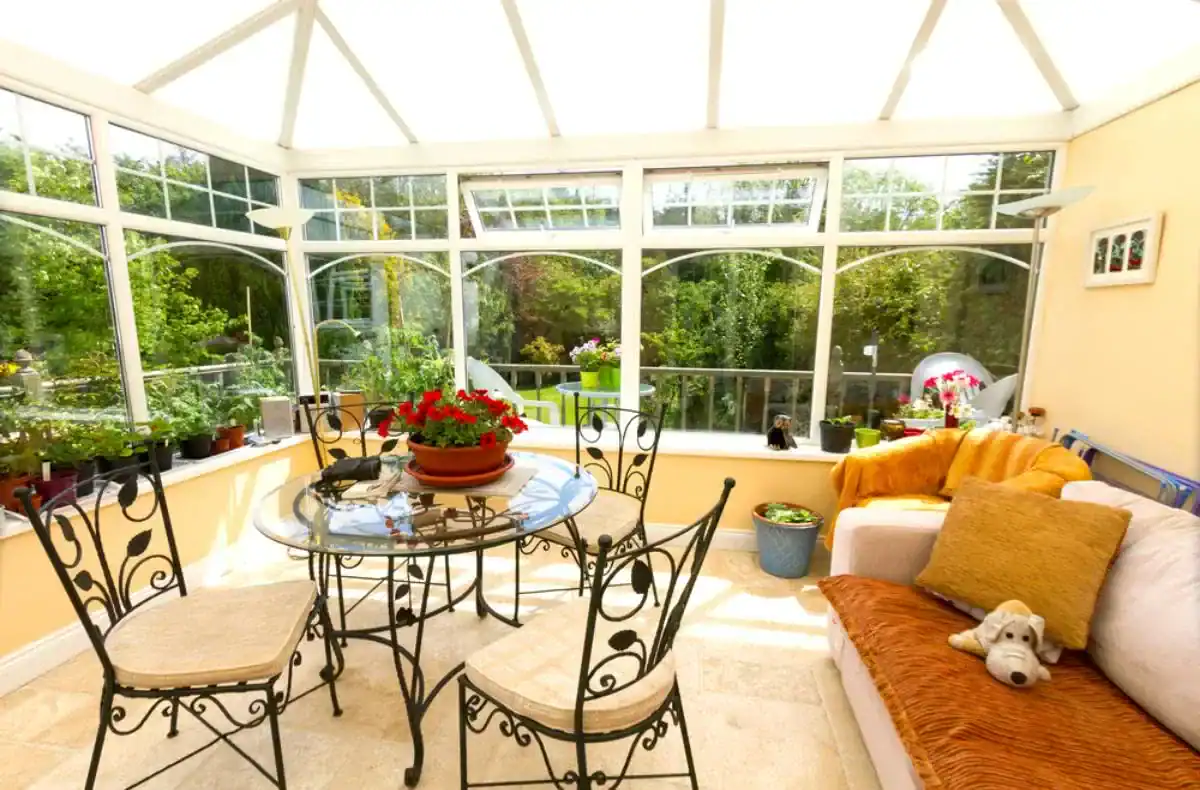
Houston doesn’t have four seasons. It has hot, hotter, still summer, and two weeks in December where you might need a jacket. That makes outdoor living complicated—you either roast or you’re stuck inside watching your backyard through a window.
A conservatory changes that. You get the natural light, the connection to your yard, and actual comfort because the space is climate-controlled. No more choosing between sweating through dinner or cranking the AC in a room that wasn’t designed to stay cool.
It’s not just about adding square footage. It’s about creating a room you’ll actually use—whether that’s a dining area that feels open and airy, a home office with better light than any lamp could give you, or a spot where you can drink your coffee without fighting mosquitoes the size of hummingbirds. The glass walls and roof bring in the kind of brightness that changes how a room feels, but the insulation and HVAC options mean you’re not paying a fortune to keep it livable when it’s 98 degrees outside.
We’ve been building conservatories and sunrooms since before most of the homes in Golfcrest were renovated. We’re not new to Houston, and we’re not new to the specific challenges that come with building glass rooms in a place where the weather tries to kill you six months out of the year.
We’re a family-owned company. That means when you call, you’re talking to people who actually care whether your project gets done right—not a call center three states away. We handle everything from the initial design consultation to the final walkthrough, and we don’t subcontract out the work to whoever’s cheapest that week.
The homes in this area—most of them built between the ’30s and ’70s—have character. Ranch-style layouts, decent-sized lots, and floor plans that were designed before “open concept” became a buzzword. We know how to work with that. We’ve built conservatories across metro Houston, from the Heights to Katy, and we understand what it takes to get permits, work with HOAs, and make sure the finished product actually fits your home instead of looking like an awkward add-on.

First, we come to your house. We look at the space, talk about what you’re trying to accomplish, and figure out what’s actually possible given your property layout and budget. This isn’t a sales pitch—it’s a real conversation about whether a Victorian conservatory makes sense for your home or if a simpler garden room design fits better.
Once we’ve agreed on a design, we handle the permits and any HOA requirements. Then we order the materials—CONSERVAGLASS™ NXT with stay-clean technology, energy-efficient framing, and whatever structural components your specific build requires. Everything’s custom, so there’s no “one size fits all” approach here.
The build itself usually takes a few weeks depending on size and complexity. We’re on-site, not bouncing between five other jobs. You’ll know what’s happening and when, because we don’t disappear for days at a time and then show up unannounced. When it’s done, we walk through it with you to make sure everything works the way it should—doors seal properly, climate control is dialed in, and the space actually feels finished.
You get a warranty that covers the structure and materials, plus our contact info for anything that comes up down the road. We’re local, so if something needs attention, we’re not impossible to reach.
Ready to get started?
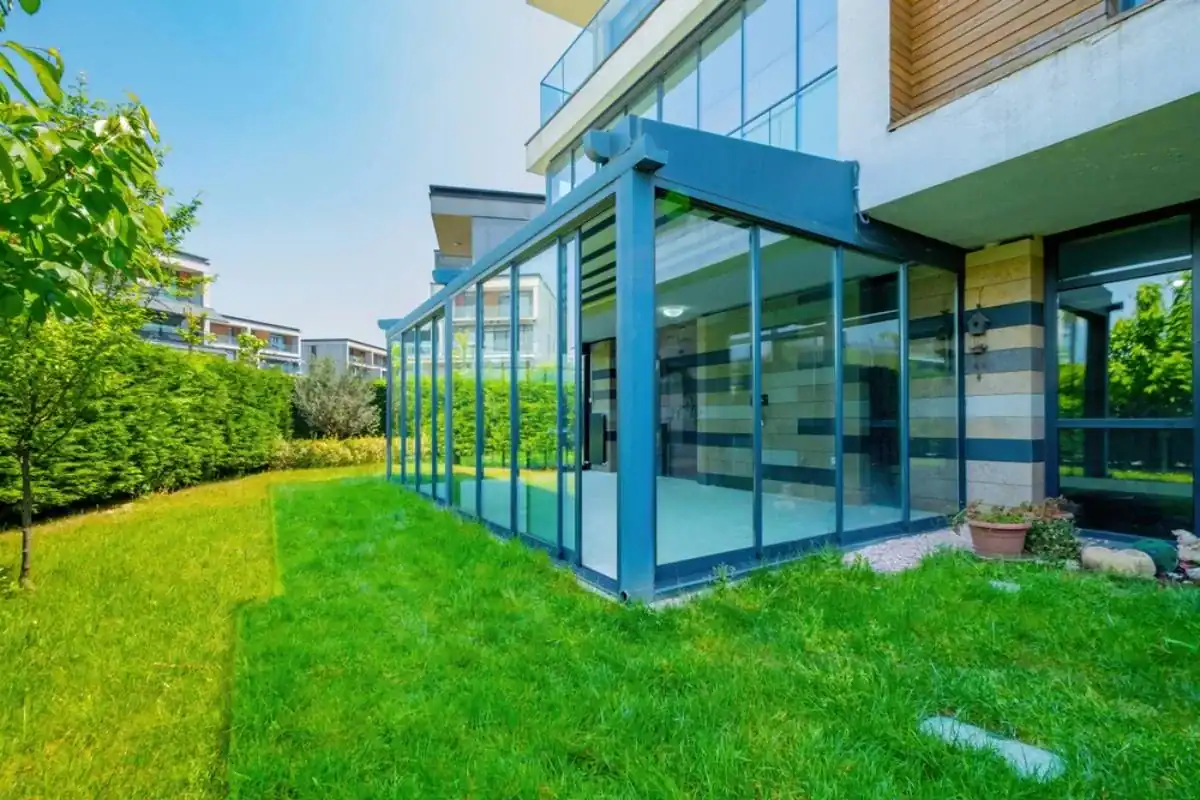
Conservatory architecture isn’t just about slapping some glass on the back of your house. The style matters—both for how it looks and how it functions. Victorian conservatories have the ornate details and steep roof lines that work well if your home has traditional character. Georgian designs are more symmetrical and refined, with cleaner lines that fit contemporary or transitional homes. Modern conservatories skip the decorative elements entirely and focus on maximizing glass and minimizing framing.
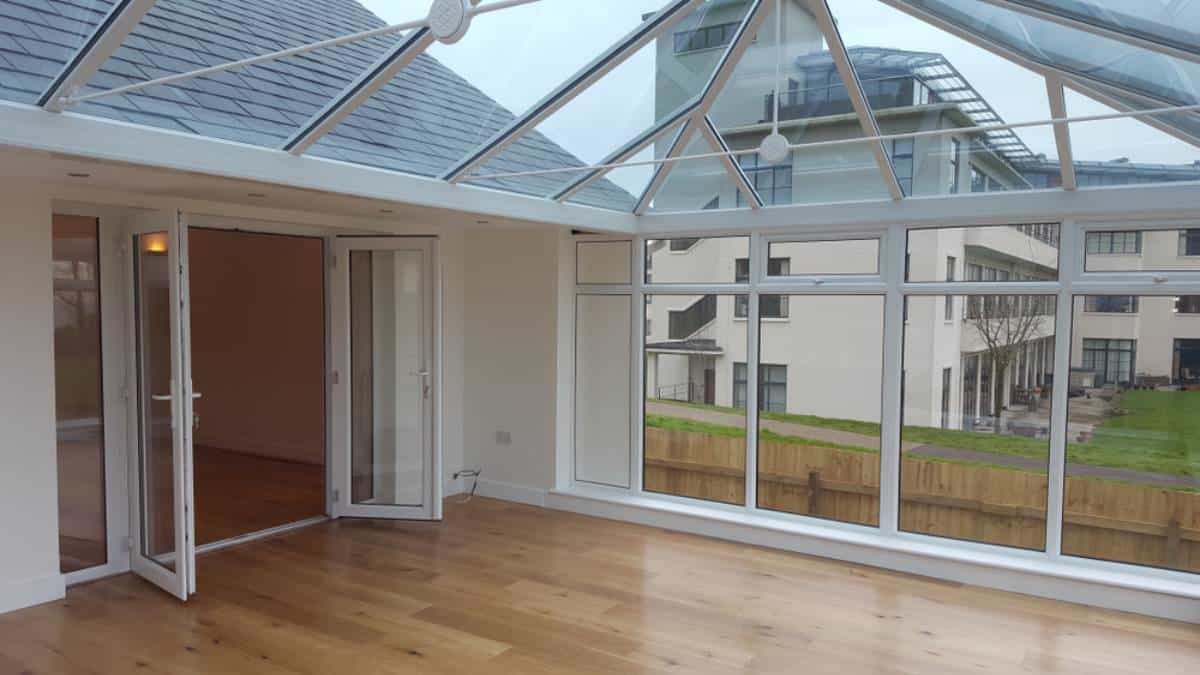
In Golfcrest/Bellfort, where most homes are single-story ranches with 1,300 to 3,000 square feet, we typically recommend designs that don’t overpower the existing structure. A lantern roof—a raised center section that adds height and pulls in even more natural light—works well here because it creates visual interest without requiring a massive footprint.
The glass itself is a bigger deal than most people realize. Houston’s sun is brutal, and standard glass will turn your conservatory into a greenhouse. We use high-performance, energy-efficient glass that blocks UV rays and reduces heat transfer. That means you get the light without the furnace effect, and your HVAC system isn’t working overtime to keep the space comfortable.
Flooring, electrical, HVAC integration—all of that gets planned during the design phase. You’re not figuring out where to put outlets after the walls are up. And because these are permanent structures built to code, they add real value to your property. When you sell, buyers see a finished room, not a screened porch with delusions of grandeur.

Yes, but only if it’s built right. Standard glass and poor insulation will turn any conservatory into a sauna by 10 a.m. in July. That’s why we use CONSERVAGLASS™ NXT, which is specifically designed to block heat and UV rays while still letting in natural light.
You’ll also need climate control—either by extending your existing HVAC system into the conservatory or adding a dedicated mini-split unit. Ceiling fans help with air circulation, and if your conservatory has operable windows or vents, you can pull in cooler air during the early morning or evening when Houston’s temperature drops below “surface of the sun” levels.
Insulated framing matters too. Cheap aluminum frames conduct heat like crazy. We use thermally broken frames that don’t turn into radiators when the sun hits them. All of this adds up to a space that’s actually comfortable year-round, not just usable three months out of the year.
It depends on size, style, and what features you want. A basic garden room addition might start around $25,000 to $35,000. A larger Victorian conservatory with a lantern roof, high-end glass, and full HVAC integration can run $60,000 to $100,000 or more.
That’s a wide range, but conservatories are custom builds. The square footage, the complexity of the roofline, the type of glass, whether we’re tying into your existing foundation or pouring a new one—all of that affects the final number. We offer financing options, including unsecured loans up to $125,000 with competitive rates, so you’re not stuck paying cash upfront.
What matters more than the sticker price is whether the conservatory actually adds value to your life and your property. In Houston’s market, where the median home price is around $342,000 and well-designed additions can significantly boost resale value, a conservatory that gives you usable space and curb appeal is a solid investment. Just make sure you’re working with a builder who’s licensed, insured, and isn’t going to disappear halfway through the job.
Conservatories have more glass—usually a full glass roof and glass walls on at least three sides. Sunrooms typically have a solid insulated roof with windows on the walls. That difference changes how much natural light you get and how the space feels.
Conservatories tend to be more architectural. They’re designed to make a statement, with styles like Victorian, Georgian, or modern that have specific design elements. Sunrooms are more about function—adding a climate-controlled room that happens to have a lot of windows.
Both can be four-season spaces if they’re built with the right materials and climate control. But if your main goal is maximum natural light and a room that feels like you’re outside without actually being outside, a conservatory is the better choice. If you want a more traditional room that’s easier to heat and cool, a sunroom might make more sense. We build both, so the conversation is really about what fits your home and how you plan to use the space.
Yes. Any permanent structure that’s attached to your home and has electrical, HVAC, or foundation work requires a permit from the city. We handle that process—pulling permits, scheduling inspections, and making sure everything meets Houston’s building codes.
If you’re in an HOA, you’ll also need approval from your homeowners association before construction starts. Some HOAs have restrictions on exterior modifications, setback requirements, or design guidelines that limit what you can build. We’ve worked with HOAs across Houston, so we know how to submit plans that are more likely to get approved without a bunch of back-and-forth.
Skipping permits is a bad idea. If you ever sell your home, unpermitted work can kill a deal or force you to rip out the addition entirely. Plus, if something goes wrong—structural issues, electrical problems, whatever—your homeowner’s insurance might not cover it if the work wasn’t permitted. It’s not worth the risk just to save a few hundred dollars in permit fees.
From the initial consultation to the final walkthrough, you’re looking at roughly 8 to 12 weeks for most projects. That includes design, permits, material ordering, and construction. Larger or more complex builds—like a Victorian conservatory with custom details and a lantern roof—can take longer.
The permit process is usually the biggest variable. Houston’s permitting office can take anywhere from two to six weeks depending on how backed up they are. Once permits are approved and materials arrive, the actual construction typically takes three to five weeks.
We don’t rush jobs to move on to the next one. You’ll have a crew on-site consistently, not sporadically. We also don’t leave your house torn apart for weeks—once we start, we push through to completion so you’re not living in a construction zone any longer than necessary. If weather delays things (hello, Houston thunderstorms), we’ll let you know immediately and adjust the timeline. Communication is pretty straightforward: you’ll know what’s happening and when.
A well-built conservatory typically adds value, especially in areas like Golfcrest/Bellfort where homes are in the $147,000 to $200,000 range and buyers are looking for move-in-ready properties with extra living space. You’re not going to recoup 100% of the cost the day you sell, but you’re adding functional square footage and curb appeal, both of which matter in Houston’s competitive market.
Buyers like conservatories because they’re finished, climate-controlled spaces—not unfinished patios or screened porches that need work. If your conservatory is designed to match your home’s architecture and built with quality materials, it reads as an intentional upgrade, not a DIY project gone wrong.
The bigger value is in how you use the space while you’re still living there. If a conservatory gives you a home office, a dining area with natural light, or a place where you can actually enjoy your yard without melting, that’s worth something even if you never sell. But when you do sell, having an extra 200 to 400 square feet of finished space in a market where inventory is tight and buyers are picky? That’s an advantage.
Other Services we provide in Golfcrest / Bellfort