

Transform your Long Island home with our custom sunrooms, liferooms, pergolas, and more! Quality Designs That Improve Your Space And Lifestyle.
Contact Info
Transform your Long Island home with our custom sunrooms, liferooms, pergolas, and more! Quality Designs That Improve Your Space And Lifestyle.
Contact Info
Hear From Our Clients
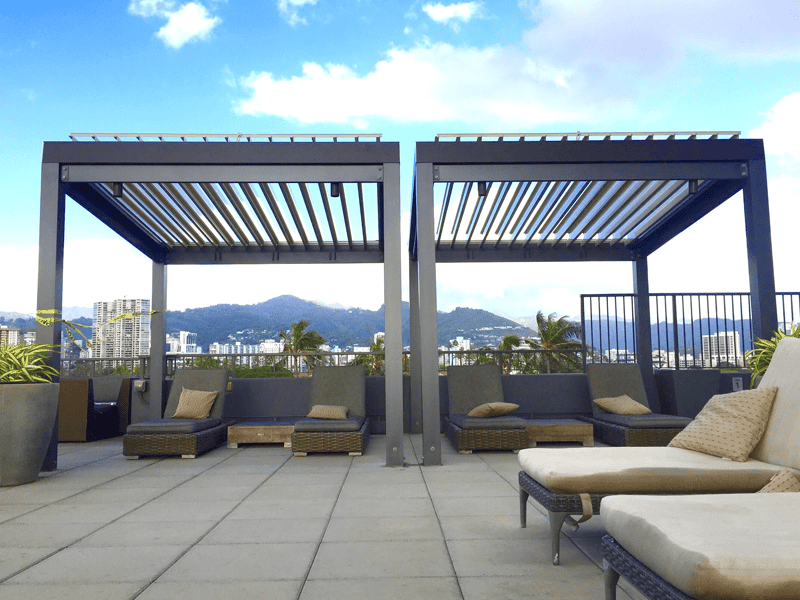
You know the problem. It’s 95 degrees by 10 a.m., and your patio becomes unusable until October. You’ve got the space, the furniture, maybe even the outdoor kitchen—but the Houston heat makes it all pointless for months at a time.
An automated retractable pergola changes that. The louvers adjust based on sun position and temperature, giving you shade exactly when you need it. When a storm rolls in, the system closes automatically. You’re not running outside to crank an awning or drag cushions inside.
This isn’t about adding another structure to your yard. It’s about reclaiming outdoor living space you’re already paying for. The system integrates with your phone or smart home setup, so you control everything without stepping outside. You get weather sensing pergola technology that actually responds to conditions in real time—not something you have to babysit.
We’ve been building outdoor living spaces since the 1970s. We’re not new to this, and we’re not experimenting with your property. Our team understands how Houston weather works—the humidity, the sudden storms, the relentless summer sun that makes West University Place feel like a furnace.
We handle everything from design to installation. You’re not coordinating between three different contractors or hoping the electrician shows up when the builder does. One team, one timeline, one point of contact.
We also know what matters in West University Place. You expect quality that matches your home’s value. You want systems that work seamlessly with the technology you already use. And you don’t have time for projects that drag on for months. We get that, and we build accordingly.

We start with a site visit to your property. We’re looking at sun exposure, existing structures, how you actually use your outdoor space. This isn’t a cookie-cutter setup—the design has to work with your specific yard and your specific needs.
Once you approve the design, we handle permits and scheduling. Installation typically takes a few days, depending on the size and complexity of your pergola. We’re installing the structure, running electrical for the motorized components, and integrating the weather sensors and controls.
After installation, we walk you through the system. You’ll know how to operate it manually, how the automation works, and how to connect it to your smart home if you want that integration. We don’t leave until you’re comfortable with everything.
The system comes with environmental sensors that detect rain, wind, and temperature changes. You can override them anytime through the remote control pergola app, or let the automation handle it. Most people do a mix of both—manual control when they’re entertaining, automation the rest of the time.
Ready to get started?
The louvers are aluminum, powder-coated to handle Houston’s humidity and heat without warping or rusting. They rotate up to 160 degrees, so you control exactly how much light and airflow you want. Fully closed, they’re waterproof—you can sit outside during a rainstorm if you want to.
The motor is quiet. You’ll hear it, but it’s not disruptive. The system runs on standard electrical, and we integrate it during installation. You’re not dealing with complicated wiring or separate power sources.
Weather sensors are built into the structure. They monitor wind speed, rain, and temperature. If wind hits a certain threshold, the louvers automatically adjust to a safe position. If it starts raining, they close. You can adjust these thresholds in the app based on your preferences.
In West University Place, where property values average over $1.7 million, this kind of installation makes sense. You’re not just adding shade—you’re increasing usable square footage and enhancing your home’s functionality. The system also reduces cooling costs by blocking direct sun from hitting your windows and exterior walls during peak heat.

Most installations in West University Place run between $15,000 and $35,000, depending on size, features, and site conditions. A basic 12×12 motorized pergola with standard automation starts around $15,000. Larger structures with premium finishes, integrated lighting, and advanced smart home connectivity can push toward $35,000 or higher.
The price includes the structure, motor system, weather sensors, electrical work, permits, and installation. You’re not paying separately for each component or contractor. We also offer financing up to $125,000, so you’re not writing a check for the full amount upfront.
What drives cost up? Custom sizing, difficult site access, extensive electrical runs, or adding features like built-in speakers, heaters, or specialty lighting. What keeps it down? Standard dimensions, straightforward installation, and sticking with core automation features without a lot of extras.
Yes. The system comes with an app that lets you open, close, or adjust the louvers from anywhere. You can also integrate it with Alexa or Google Home if you want voice control or want it tied into your existing smart home setup.
The app shows you real-time status—whether the louvers are open or closed, current weather conditions, and any alerts from the sensors. You can create schedules, like having the pergola close automatically at sunset or open at a specific time in the morning.
If you lose internet or your phone dies, there’s a physical remote that works independently. The system doesn’t become useless just because your Wi-Fi is down. And if the power goes out, you can manually operate the louvers—it’s not fun, but it’s possible in an emergency.
Most installations take three to five days from start to finish. Day one is usually site prep and setting the posts. Day two and three are building the structure and running electrical. Day four is installing the motor, sensors, and doing final adjustments. Day five is cleanup and walkthrough, though sometimes we finish that on day four.
Weather can delay things—we’re not pouring concrete in the rain or working in unsafe wind conditions. Complex sites with difficult access or extensive electrical work can add a day or two. But we give you a realistic timeline upfront, and we don’t disappear for weeks between phases.
You don’t need to be home the entire time, but we do need access to your electrical panel and outdoor space. And you’ll want to be there for the final walkthrough so we can show you how everything works.
Yes, if it’s built correctly. We use powder-coated aluminum for the structure and louvers—it doesn’t rust, warp, or degrade in humidity and heat the way wood does. The motor and sensors are rated for outdoor use in extreme temperatures, and all electrical components are weatherproofed.
The wind sensors are critical here. When wind speed hits a preset threshold (usually around 35-40 mph), the system automatically adjusts the louvers to a safe position to prevent damage. You can also manually close everything if you know a storm is coming.
Houston throws a lot at outdoor structures—intense sun, sudden downpours, high humidity, occasional high winds. The materials and engineering have to account for all of that. Cheap systems fail within a few years. Quality installations last decades with minimal maintenance. We’re building for the latter.
They can, especially if your pergola is positioned to shade windows or exterior walls that get direct afternoon sun. Blocking that heat before it hits your home reduces the load on your AC system. The impact varies based on your home’s orientation, insulation, and how much of your exterior the pergola shades.
Most homeowners see a 5-10% reduction in cooling costs during summer months. That’s not enough to pay for the pergola in a year, but over time it adds up. The bigger benefit is comfort—your outdoor space becomes usable, and your indoor spaces near the pergola stay cooler.
If energy savings are a priority, we can position and size the pergola to maximize shade coverage during peak heat hours. But most people install these for lifestyle reasons first, and the energy efficiency is a secondary benefit.
Not much. You’ll want to rinse off the louvers a few times a year to remove pollen, dust, and debris—just use a garden hose. Check the tracks and hinges occasionally to make sure nothing’s obstructing movement. If you notice the motor struggling or making unusual sounds, call us.
The motor and sensors don’t require regular maintenance, but we recommend an annual checkup to make sure everything’s calibrated correctly and the automation is responding as it should. That’s usually a quick visit, not a major service call.
The powder coating protects against rust and corrosion, so you’re not repainting or refinishing every few years like you would with wood. Houston’s humidity is tough on outdoor structures, but aluminum holds up significantly better than most materials. You’re looking at decades of use with minimal upkeep if the installation is done right.
Other Services we provide in West University Place