

Transform your Long Island home with our custom sunrooms, liferooms, pergolas, and more! Quality Designs That Improve Your Space And Lifestyle.
Contact Info
Transform your Long Island home with our custom sunrooms, liferooms, pergolas, and more! Quality Designs That Improve Your Space And Lifestyle.
Contact Info
Hear From Our Clients
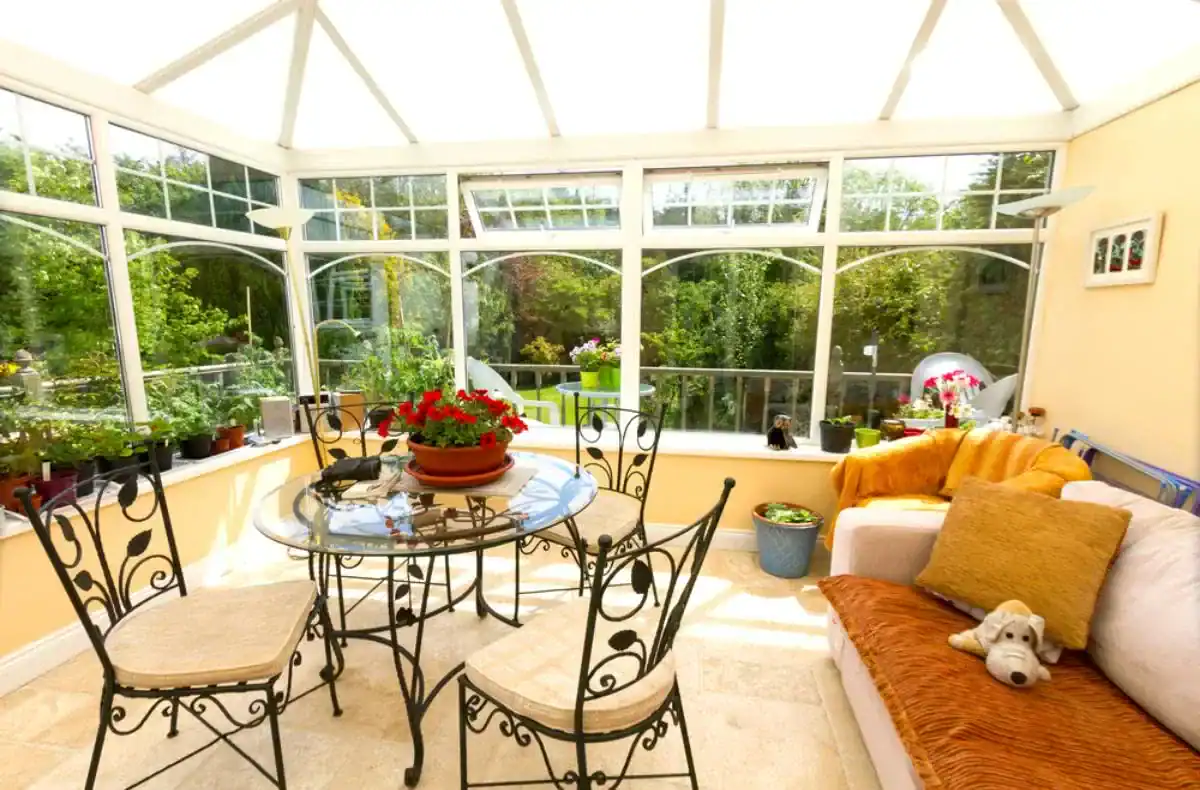
You’re not adding another patio that sits empty half the year. You’re creating space you’ll use in August when it’s 98 degrees outside and in February when the temperature drops. That’s the difference between a screened porch and an insulated sunroom with real heating and cooling.
Most Taylor Lake Village homeowners already know the problem. You’ve got beautiful lake views and green spaces right outside, but between the mosquitoes from March to October and the summer heat that makes your deck unusable for four straight months, your outdoor investment doesn’t pay off. You’re inside with the blinds closed instead of enjoying what you bought the house for.
A four season room changes that. You get the natural light and the view without fighting the weather or the bugs. It’s conditioned space that works like the rest of your home, which means you can actually use it when you want to—not just during the two weeks in April when the temperature happens to cooperate.
We’re a family-owned company that’s been building custom sunrooms since the 1970s. We’re not a general contractor who does sunrooms on the side. This is what we do, and we’ve spent decades figuring out how to make these spaces work in climates like yours.
Taylor Lake Village has specific challenges—humidity that breeds mosquitoes within a week of rain, summer temps that regularly hit triple digits, and homeowners who expect quality that matches their property values. We handle the permits, coordinate inspections, and install with crews who carry insurance and back their work. You’re not dealing with a crew that learned this last month.
The goal isn’t to sell you the biggest sunroom we can. It’s to build something that makes sense for how you’ll actually use it, in a neighborhood where details matter and shortcuts show up fast.

We start with a consultation at your home. You show us the space, we talk about how you want to use it, and we take measurements. If you’re thinking home office, breakfast nook, or just a place to sit without getting eaten alive by mosquitoes, that affects the design. We’re not showing up with a one-size-fits-all template.
From there, we put together a custom design that accounts for your home’s architecture, your lot layout, and the specific features you need—insulation levels, glass options, heating and cooling integration. We handle the building permits and work with your HOA if needed. You’ll see the plan before anything gets built.
Installation typically takes days, not weeks. Our crews work efficiently because they’ve done this hundreds of times. We’re tying into your existing HVAC or installing a separate system, depending on what makes sense. We’re adding electrical if you need it. And we’re building with materials designed for Texas weather—thermal breaks, low-E glass, and foam insulation that keeps heat out in summer and warmth in during winter.
Once it’s done, you’ve got conditioned square footage that’s ready to use year-round. We walk you through everything, make sure you’re comfortable with the space, and then we’re available if anything comes up down the road.

Ready to get started?
Every all season sunroom we build in Taylor Lake Village includes full insulation, energy efficient glass, and integration with your home’s climate control. That’s not an upgrade—it’s standard. Without it, you’re just building an expensive greenhouse that’s unusable in summer.
The glass matters more than most people realize. Low-emissivity glass blocks ultraviolet and infrared light while still letting in plenty of visible light. That means you get the brightness and the view without the heat gain. In a climate where temperatures regularly hit 95+ degrees from June through September, that’s the difference between a space that works and one that doesn’t.
We’re also using fiberglass-reinforced structures instead of straight aluminum, which expands and contracts in extreme heat. Taylor Lake Village sits in a humid environment where materials either hold up or they don’t. We’ve seen what happens when someone tries to save money with subpar materials, and it’s not pretty.
You’ll also get a lifetime transferable warranty on the sunroom system itself. If you sell your home, the warranty transfers to the next owner. That’s a selling point in a market where buyers are paying attention to quality and long-term value. Four season sunrooms typically return 55-75% of their cost at resale in Central Texas, which is above the national average for home improvements.

Yes, if it’s built right. The key is proper insulation, energy efficient glass with a low solar heat gain coefficient, and integration with a real HVAC system. A lot of people assume sunrooms are always hot because they’ve only seen cheap three-season versions that are basically screened porches with windows. Those don’t have insulation or climate control, so they turn into saunas in July.
An insulated sunroom with Low-E glass and dedicated heating and cooling works like any other room in your home. The glass blocks most of the infrared light that causes heat gain, while the insulation in the walls and roof keeps conditioned air inside. You’re not fighting the sun with a box fan—you’re using the same technology that keeps your house comfortable.
We size the HVAC correctly for the space and the sun exposure. A west-facing sunroom in Taylor Lake Village needs more cooling capacity than a north-facing one. That’s basic building science, but it gets skipped when someone’s just trying to close a sale. If your sunroom can’t stay cool in August, it’s not an all season sunroom—it’s a mistake.
Most insulated sunrooms in this area run between $30,000 and $60,000, depending on size, features, and how much site prep is needed. A 12×16 sunroom with standard finishes and HVAC integration will land on the lower end. A larger space with premium glass, custom details, or complicated foundation work will cost more.
The price reflects what you’re actually getting—a permitted, insulated, climate-controlled addition to your home that’s built to code and backed by warranties. That’s different from a contractor throwing up a screen room for $15,000. You’re adding conditioned square footage that increases your home’s value and usable space year-round.
We offer financing up to $125,000 with competitive rates, so you can spread the cost over time while using the space immediately. A $40,000 sunroom financed over 10 years runs about $133 per month. For daily use and a 55-75% return on investment at resale, that’s a reasonable cost for what you’re getting. We’ll give you an exact quote after seeing your property and understanding what you need.
Not if it’s designed with energy efficiency in mind. A well-insulated four season room with Low-E glass and proper HVAC sizing typically adds $30-50 per month to your energy costs in Taylor Lake Village, depending on how much you use it and your temperature preferences. That’s less than most people expect because the insulation and glass technology work together to minimize heat transfer.
The glass is doing most of the heavy lifting. Modern energy efficient windows for hot climates have solar heat gain coefficients between 0.25 and 0.35, which means they block 65-75% of the sun’s heat. Older windows or cheap glass can have values around 0.7, which lets in more than twice as much heat. When you’re running AC in a Texas summer, that difference shows up on your bill.
The other factor is how you use the space. If you’re keeping it at 68 degrees all day while you’re at work, you’ll pay more than if you treat it like the rest of your home and adjust the thermostat when you’re not using it. Some homeowners add a separate zone control so they can manage the sunroom independently. We’ll walk through options during the design phase so you understand the trade-offs.
Most custom sunroom installations take 5-10 days of actual work, spread over 2-4 weeks depending on permits, inspections, and weather. We’re not talking about months of construction—this is a focused project with a clear timeline. The work happens in stages: foundation or deck prep, framing and structure, glass and enclosure, then electrical and HVAC integration.
The permit process in Taylor Lake Village typically adds 1-2 weeks before we start construction. We handle all the applications and coordinate with inspectors, so you’re not dealing with that. If your HOA requires architectural approval, that can add time depending on their review schedule. We’ll give you a realistic timeline upfront based on your specific situation.
Once we start, the disruption to your daily routine is minimal. We’re working outside, not tearing through your kitchen. You’ll have crews on site during business hours, and we clean up at the end of each day. Most homeowners are surprised by how quickly it comes together compared to other home improvement projects they’ve done.
A three-season sunroom has minimal insulation and no real climate control, which makes it usable in spring and fall but too hot in summer and too cold in winter. It’s basically a screened porch with windows. A four season room has full insulation, energy efficient glass, and heating and cooling, so you can use it comfortably year-round regardless of the weather outside.
In Taylor Lake Village, a three-season sunroom gives you maybe five months of comfortable use—March through May and October through November. You’re still losing June through September to heat and December through February to cold. That’s seven months where the space sits empty. A four season room eliminates that problem because it’s conditioned space that works in every season.
The cost difference is significant—maybe $15,000-20,000 for a basic three-season versus $30,000-50,000 for a comparable four season room. But you’re also getting fundamentally different functionality. If your goal is to actually use the space instead of looking at it for half the year, the insulated sunroom makes more sense. It also adds more value at resale because buyers see it as finished square footage, not a seasonal porch.
It depends on the size of your sunroom and the capacity of your existing HVAC system. Some homes have enough extra capacity to extend ductwork into a new sunroom without overloading the system. Others need a separate mini-split or dedicated unit to handle the additional load. We’ll evaluate your current setup during the consultation and recommend what makes sense.
A 12×12 sunroom adds about 150 square feet of conditioned space. If your existing system is already running at capacity during peak summer months, adding that load will make it struggle and drive up your energy costs. A separate mini-split system gives you independent control and doesn’t stress your main HVAC. It’s also more efficient because you’re only conditioning the sunroom when you’re using it.
The other consideration is ductwork routing. If your main system is on the opposite side of the house from where the sunroom is going, running ducts might not be practical or cost-effective. A ductless mini-split installs faster and gives you zone control without major modifications to your existing system. We’ll walk through both options with real numbers so you can make an informed decision based on your home’s layout and your budget.
Other Services we provide in Taylor Lake Village