Transform your Long Island home with our custom sunrooms, liferooms, pergolas, and more! Quality Designs That Improve Your Space And Lifestyle.
Contact Info
Transform your Long Island home with our custom sunrooms, liferooms, pergolas, and more! Quality Designs That Improve Your Space And Lifestyle.
Contact Info
Sunroom leaking in Harris County? Here's how to figure out what's actually wrong — and who's responsible for fixing it.
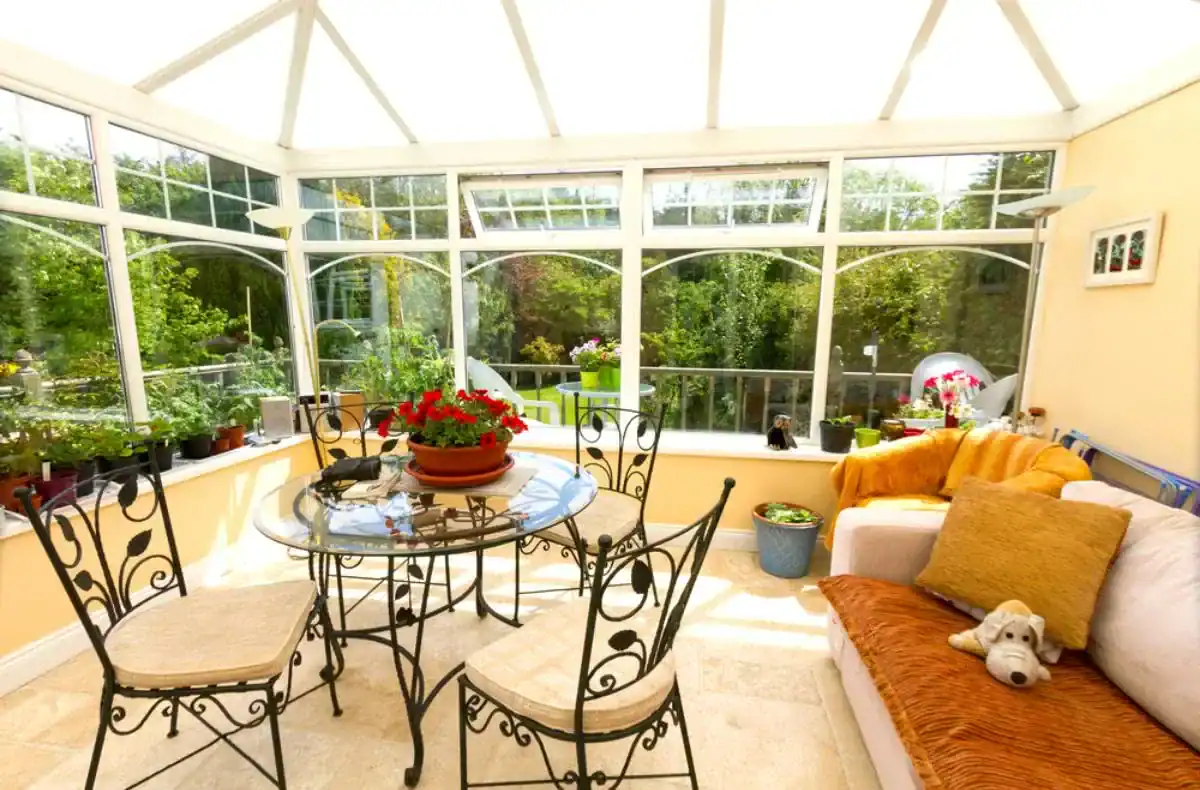
You noticed water where it shouldn’t be. Maybe it happened during a heavy storm, maybe it’s been slowly showing up in the same corner for weeks. Either way, you’re now dealing with a leaking sunroom — and the first question most Harris County homeowners ask isn’t “how do I fix it?” It’s “whose fault is this, and who’s going to pay for it?”
That’s a fair question, and it doesn’t have a simple answer. But it has a real one. Understanding what caused your leak is the difference between a repair that lasts and one that fails again by next hurricane season.
Most sunroom leaks in Harris County don’t come from one obvious failure — they come from a combination of factors that build up over time. The Houston area gets close to 50 inches of rain a year, delivered in short, intense bursts rather than slow drizzles. Add in year-round humidity that rarely dips below 70%, summer heat that regularly pushes past 95°F, and a hurricane season that runs June through November, and you have conditions that stress every seal, gasket, and flashing joint in your sunroom on a regular basis.
The leak you’re seeing now probably didn’t start last week. It started when a seal began to degrade, when flashing shifted slightly, or when a drainage track got blocked and water had nowhere to go but inside. Finding the actual source — not just where the water appears — is the first step.

This is the question that matters most, and it’s the one that causes the most frustration when homeowners try to get answers. The short version: installation problems and product defects look similar on the surface but have completely different causes, different warranty implications, and different repair paths.
An installation problem happens when the sunroom was not assembled correctly. This includes things like improper flashing at the point where the sunroom meets your home’s existing roofline, sealant applied to a surface that wasn’t properly prepared, drainage channels that weren’t sloped correctly, or fasteners that weren’t tightened to spec. These failures often show up within the first few years — sometimes sooner if the structure goes through a significant storm. Many Harris County homeowners first noticed installation-related leaks during or after Hurricane Harvey in 2017, when sustained rainfall exposed weaknesses that had been sitting dormant since the sunroom was built.
A product defect is different. This happens when a component — a glass panel, a gasket, a frame section — fails because of a manufacturing flaw rather than how it was installed. Product defects are less common, but they do happen, and they’re typically covered under the manufacturer’s warranty rather than the installer’s workmanship warranty.
The third category — and the one that gets blamed most unfairly on homeowners — is maintenance-related failure. Silicone sealants have a lifespan. Rubber gaskets degrade under UV exposure. In Harris County’s climate, where UV intensity is high and temperature swings between seasons are significant, these materials wear out faster than they would in a drier or cooler market. A seal that might last 15 years in Denver might need attention after 8 years in Cypress or Pearland. That’s not a defect, and it’s not an installation error — it’s just the reality of owning a sunroom in Southeast Texas.
The reason this distinction matters so much is warranty coverage. If the leak is an installation error, the contractor’s workmanship warranty should cover it. If it’s a product defect, the manufacturer’s warranty applies. If it’s maintenance-related, neither warranty may cover the repair — which is why annual inspections before hurricane season are worth the investment.
When water is getting into your sunroom, the roof is the first place to investigate. Roof-related leaks are the most frequent type we see in Harris County, and they’re also the most damaging when left unaddressed. A slow roof leak in Houston’s humidity doesn’t stay a slow roof leak for long — mold can establish within 24 to 48 hours of water intrusion, and once it’s in the framing or insulation, you’re looking at a significantly more expensive problem than the original repair.
The most common roof leak sources are failed flashing at the junction between the sunroom roof and your home’s existing structure, cracked or displaced roof panels, and blocked drainage tracks that force water to pool and eventually find a path inside. Flat or low-slope sunroom roofs are particularly vulnerable to pooling, especially during the kind of rainfall Harris County sees during tropical systems.
One thing worth knowing: where you see the water is almost never where the water is entering. Water travels. It follows rafters, framing members, and drainage channels before it shows up as a drip on your floor or a stain on your wall. Chasing the visible wet spot without tracing the actual entry point is how you end up with a repair that doesn’t hold. A proper diagnostic inspection works backward from where the water appears to where it actually got in — and that process takes time and experience to do right.
Houston’s expansive clay soils add another layer of complexity that’s specific to this area. The soil around your foundation expands when wet and contracts when dry, and that movement can shift the structural connection between your sunroom addition and your home over time. When that connection shifts, even slightly, it creates gap-based leaks at the roofline junction that look like flashing failures but are actually caused by foundation movement. It’s a uniquely Harris County problem, and it’s one reason why sunroom leak diagnosis here requires someone who actually knows the local conditions.
Want live answers?
Connect with a Four Seasons Sunrooms Houston expert for fast, friendly support.
If your sunroom windows have developed a foggy or hazy appearance between the panes, that’s not a cleaning problem. It’s a sign that the seal on your insulated glass unit has failed, allowing moisture to enter the space between the two panes. Once that happens, the glass cannot be restored by cleaning or resealing the exterior — the entire unit needs to be replaced.
This matters beyond aesthetics. A failed IGU seal means your sunroom has lost a significant portion of its insulating capacity, which in Harris County’s summer heat translates directly to higher cooling costs and a space that’s uncomfortable to use for much of the year. Window seal failure and active roof or frame leaks also tend to occur together in older sunrooms, since both are driven by the same long-term exposure to heat, UV, and humidity.

The honest answer is that not every sunroom window problem requires full replacement. Cracked or chipped glass panels, damaged window frames, and failed gaskets around the glass perimeter can often be repaired or replaced individually without touching the rest of the structure. The key is getting an accurate diagnosis before committing to anything.
What makes this harder in practice is that sunroom windows use proprietary components. The glass panels, frames, and gaskets in a Four Seasons sunroom are engineered to work together as a system — they’re not interchangeable with generic hardware store materials. When a repair is done with mismatched components, it creates new failure points and can void the manufacturer’s warranty on the remaining original parts. This is one of the more common ways a well-intentioned repair by a non-authorized contractor makes a problem worse rather than better.
When we assess window damage in a Harris County home, we’re looking at the full picture: the condition of the glass unit itself, the integrity of the frame and gaskets, whether the window is seated correctly in the sunroom’s structural framing, and whether there’s any related water damage to the surrounding materials. A window that looks like it just needs a new seal might actually be sitting in a frame that has shifted due to foundation movement — and replacing the glass without addressing the frame means you’ll be back to the same problem within a season or two.
The energy efficiency angle is also worth considering when windows need replacement. Our CONSERVAGLASS™ NXT glass blocks UV rays and reduces heat transfer, which makes a meaningful difference in a Harris County sunroom where summer sun is relentless. If you’re already replacing glass panels, upgrading to higher-performance glazing at the same time is worth discussing.
Screen damage is easy to dismiss as a minor cosmetic issue, but in a Harris County screen room or patio enclosure, intact screens are doing real work. They’re keeping insects out, blocking some UV exposure, and in many cases providing the only barrier between your living space and whatever the Gulf Coast weather is doing on a given afternoon. Torn or degraded screens aren’t just an eyesore — they’re a functional failure.
Houston’s UV intensity degrades screen mesh faster than most homeowners expect. A screen that looks fine to the eye may have lost significant tensile strength after a few years of direct sun exposure, making it vulnerable to tearing under wind pressure during a storm. This is especially common in screens that face south or west, where sun exposure is most intense throughout the day.
Screen frame damage is the part that gets overlooked most often. When screens are replaced without inspecting the frames, bent or corroded frame sections create gaps at the edges where insects and water can get through — defeating the purpose of the replacement. We look at the full screen system: the mesh, the frame, the spline that holds the mesh in place, and the way the screen panel fits into the sunroom’s overall structure. If the frame is compromised, replacing just the mesh is a short-term fix.
There’s also the question of screen type. Not all screen mesh is the same. Standard fiberglass mesh is the most common, but for homes in areas with heavy sun exposure — Sugar Land, Katy, Cypress, or anywhere with a lot of south-facing outdoor space — solar screen mesh that blocks a higher percentage of UV and heat can make a real difference in comfort. It’s a relatively small upgrade that changes how usable the space is during Harris County’s long, hot summers.
When screen replacement is part of a broader repair visit — alongside leak repair or window work — it makes sense to address everything at once rather than scheduling separate service calls. A sunroom that’s been through a significant storm often needs attention in multiple areas simultaneously, and a comprehensive inspection will catch issues you might not have noticed yet.
Texas doesn’t require a state-level general contractor’s license, which means the pool of people calling themselves sunroom repair specialists includes a wide range of experience levels. After a major storm, that pool expands quickly with contractors who have no background in sunroom systems specifically. The result is repairs that don’t address the actual problem, components that don’t match the original system, and warranties that evaporate when you try to use them.
What you’re looking for is a contractor who is licensed and insured, knows your specific sunroom system, can source the right parts, and will give you a straight answer about what caused the problem — whether that’s an installation issue, a product defect, or normal wear that needs maintenance. Those things narrow the field considerably.
We’ve been doing this work in the Houston area since 1975. If you’re dealing with a sunroom leak in Harris County — whether it showed up during the last storm or has been quietly getting worse for months — we’re available to take a look, give you an honest assessment, and talk through what repair actually makes sense for your situation.
Summary:
Article details:
Share: