
Transform your Long Island home with our custom sunrooms, liferooms, pergolas, and more! Quality Designs That Improve Your Space And Lifestyle.
Contact Info
Transform your Long Island home with our custom sunrooms, liferooms, pergolas, and more! Quality Designs That Improve Your Space And Lifestyle.
Contact Info
Hear From Our Clients
You’re not looking for decoration. You need functional outdoor space that works in Houston’s climate without falling apart in three years.
A well-built pergola gives you shade when it’s 95 degrees in May. It creates a defined area for furniture, grilling, or just sitting outside without melting. And if you choose the right materials and design, it holds up through storm season without becoming a liability.
Most Greater Heights homes have the yard space but not the shade. That’s where a custom pergola makes sense. Attached or freestanding, wood or aluminum, the right structure turns an unused backyard into somewhere you’ll actually spend time. It also happens to be one of the outdoor upgrades Houston buyers look for when they’re comparing homes in your price range.
We’ve been building outdoor living spaces since the 1970s. We’re not a general contractor who does pergolas on the side. This is what we do.
Our Houston team knows the local HOA requirements in Greater Heights, the city’s permit rules, and how to design structures that won’t buckle under wind load or trap water during a downpour. We’ve worked with enough properties in this area to understand what works and what doesn’t.
You’ll get a free in-home consultation where we measure your space, talk through material options, and give you a detailed estimate with no surprises. Then our licensed and insured installation team handles the rest, usually within one to three days once permits clear.

First, we come to your property for a free consultation. We measure the area, discuss how you want to use the space, and go over material options like cedar versus aluminum. We also check for any HOA restrictions or site conditions that might affect the design.
Once you approve the estimate, we handle the permit paperwork with the city. Houston requires permits for pergolas over 200 square feet or taller than 10 feet, and we make sure everything’s filed correctly so you don’t deal with fines or delays later.
After permits are approved, we schedule installation. Most standard pergolas go up in one to three days depending on size and complexity. Our team sets the footings, builds the structure, and cleans up the site. You get a finished pergola that’s engineered for Houston weather, installed by people who’ve done this hundreds of times.

Ready to get started?
Houston’s humidity, heat, and storm season aren’t kind to outdoor structures. That’s why material choice matters more here than in most places.
Cedar pergolas offer a classic look and can last decades if you’re willing to maintain them. You’ll need to seal or stain them every few years to prevent rot and warping, but many Greater Heights homeowners prefer the natural aesthetic. Aluminum pergolas require almost no maintenance, resist corrosion, and handle Houston’s weather without the upkeep. They cost more upfront but save you time and money over the years.
We also design for proper drainage and airflow. A pergola that traps water or blocks ventilation creates problems during storm season. Our structures are engineered with appropriate spacing, pitch, and anchoring to handle wind loads and heavy rain without damage.
Every project includes a warranty on materials and workmanship. And because we’re local, we’re available if you ever need service or have questions after installation.

Yes, if your pergola is over 200 square feet or taller than 10 feet. Houston requires permits for structures that meet those thresholds, and most custom pergolas fall into that category.
The permit process involves submitting plans to the city, getting approval, and scheduling inspections. It usually takes a few weeks depending on the city’s workload. We handle all the paperwork and coordination so you don’t have to figure it out yourself.
Skipping permits might seem easier, but it can cause problems when you sell your home or if a neighbor reports unpermitted work. Buyers’ inspectors flag unpermitted structures, and you’ll either need to get a retroactive permit or remove the pergola. It’s not worth the risk.
Cedar looks great and feels traditional, but it requires maintenance in Houston’s climate. You’ll need to seal or stain it every two to three years to prevent rot, warping, and insect damage. If you’re willing to do that work, cedar can last 20 to 30 years and ages beautifully.
Aluminum doesn’t rot, warp, or need refinishing. It handles humidity without issues and won’t corrode like some metals. The upfront cost is higher, but you’ll spend less time and money on upkeep over the life of the structure.
Both materials work fine structurally if installed correctly. The choice comes down to whether you want the natural look of wood and don’t mind the maintenance, or if you’d rather install it and forget about it. Most Greater Heights homeowners who travel frequently or don’t want ongoing projects lean toward aluminum.
A standard pergola with open slats provides partial shade, which helps but won’t block the sun completely. You’ll get relief from direct overhead sun, especially during midday when it’s most intense, but you’ll still have some exposure depending on the time of day and angle.
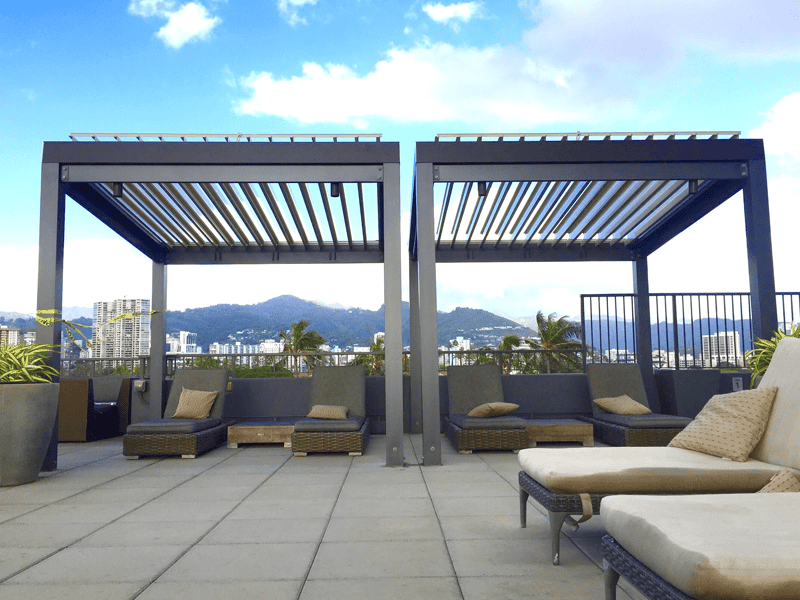
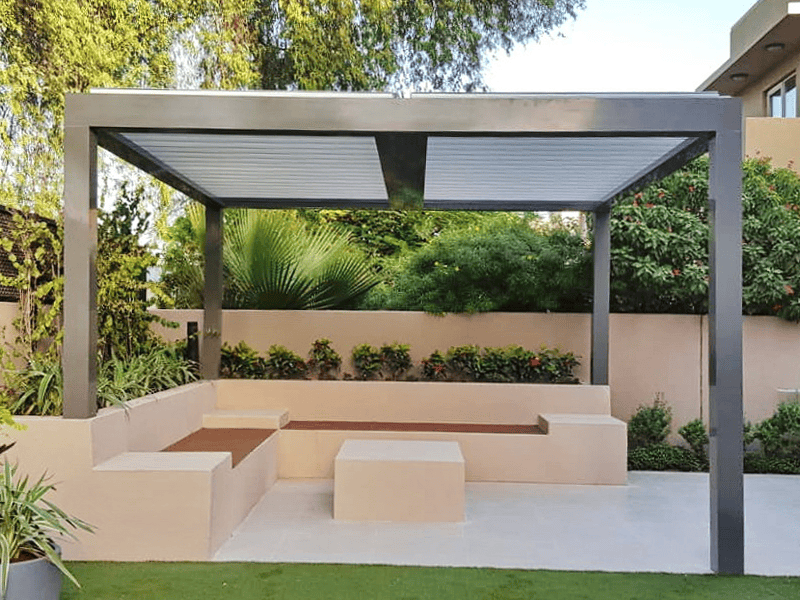
If you want more coverage, you can add a retractable canopy, outdoor curtains, or climbing plants like wisteria that grow over the structure. Some homeowners also choose a louvered pergola where the slats rotate to control how much sun gets through.
The goal isn’t always full shade. Many people want a balance between sun protection and airflow, especially in Houston where trapped heat makes outdoor spaces uncomfortable. A well-designed pergola gives you options to adjust coverage based on the season and how you’re using the space.
Installation itself usually takes one to three days for a standard custom pergola. Smaller freestanding structures can go up in a day. Larger attached pergolas with custom features might take closer to three days.
The timeline before installation is longer because of permits and HOA approvals. Once you approve the design and estimate, we submit permit applications to the city, which typically take two to four weeks to process. If you’re in an HOA, add another week or two for their approval process.
Total time from signing the contract to finished pergola is usually four to eight weeks depending on permit turnaround and scheduling. We keep you updated throughout and don’t start work until everything’s approved and you know exactly when we’ll be on site.
Both options work, and the choice depends on your property layout and how you want to use the space. An attached pergola connects to your home’s exterior wall, usually extending from a back door or patio. It creates a covered transition between indoors and outdoors and often feels more integrated with the house.
Freestanding pergolas sit independently in your yard, which gives you more flexibility with placement. You can position one over a seating area, near a pool, or anywhere you want a defined outdoor room. They also avoid any structural concerns about connecting to your home’s exterior.
Attached pergolas require careful flashing and waterproofing where they meet your house to prevent leaks. Freestanding structures don’t have that concern but need proper footings to stay stable. Both styles work well in Greater Heights, and we’ll recommend the best option based on your specific property and goals during the consultation.
Most custom pergolas in this area run between $38 and $50 per square foot for aluminum, with wood options sometimes starting lower but requiring more maintenance investment over time. A typical 12×16 pergola would range from $7,000 to $9,500 depending on materials, design complexity, and site conditions.
Attached pergolas with integrated lighting, fans, or louvered roofs cost more because of the additional components and labor. Freestanding structures with basic designs tend to fall on the lower end. Your specific cost depends on size, materials, features, and any site prep needed before installation.
We provide detailed estimates during the free consultation so you know exactly what you’re paying for. That includes materials, labor, permits, and any extras you choose. No hidden fees or surprise charges after the fact. And we offer financing up to $125,000 if you’d rather spread the cost over time instead of paying upfront.
Other Services we provide in Greater Heights