
Transform your Houston home with our custom sunrooms, liferooms, pergolas, and more! Quality Designs That Improve Your Space And Lifestyle.
Contact Info
Transform your Houston home with our custom sunrooms, liferooms, pergolas, and more! Quality Designs That Improve Your Space And Lifestyle.
Contact Info
Hear From Our Clients
You know the problem. Your backyard looks great until the sun shows up. By mid-morning, it’s a no-go zone. By afternoon, forget it.
A pergola gives you control. Not the flimsy kind that looks nice but does nothing when it’s 98 degrees and climbing. The kind that’s designed for how Channelview actually feels in July—humid, relentless, and unforgiving if you’re not prepared.
Wood or aluminum, attached or freestanding, louvered or fixed—it depends on what you’re trying to do out there. Entertain? Relax? Create a space that doesn’t cook you alive before dinner? That’s where the design conversation starts. You get shade where you want it, airflow when you need it, and a structure that doesn’t fall apart the first time a storm rolls through.
Your outdoor space shouldn’t sit empty nine months a year. It should work for you, not against you.
We’re not new to outdoor living. We’ve been building custom structures across the country since the 1970s, and here in the Houston area, that means understanding what Gulf Coast weather does to anything you put outside.
Channelview sits right in the path of hurricane season, heat waves, and humidity that warps wood and rusts metal if you’re not careful. So when someone asks us to design a pergola, we’re thinking about windstorm compliance, material durability, and whether your structure will still look good in five years—not just five months.
We handle the design, the permits, the HOA paperwork if needed, and the installation. You get a free consultation, a detailed estimate with no surprises, and a team that shows up when they say they will. Fully licensed, fully insured, and focused on getting it done right the first time.

First, we come to you. A free in-home consultation means we see your space, talk through what you’re trying to accomplish, and figure out what makes sense—attached pergola extending your patio, freestanding structure creating a new focal point, louvered system for adjustable shade, whatever fits your yard and your goals.
Then we design it. You’ll see exactly what it’s going to look like, where it’s going, and what it costs. No vague estimates. No “we’ll figure it out later.” If permits are required, we handle them. If your HOA needs drawings, we submit them. You’re not chasing paperwork.
Installation comes next. Our team shows up with the right materials, the right equipment, and a plan. We’re talking engineered footings, corrosion-resistant fasteners, laser levels, and construction that meets local wind load requirements. This isn’t a weekend DIY project that might hold up—it’s built to last.
Once it’s done, you’ve got a functional outdoor space that actually gets used. That’s the whole point.

Ready to get started?
Material choice matters in this climate. Aluminum pergolas don’t rust, don’t rot, and handle the humidity without breaking down. Wood pergolas—premium cedar specifically—give you that natural look but need to be built right or they’ll warp in the Texas heat. We’ll walk you through both.
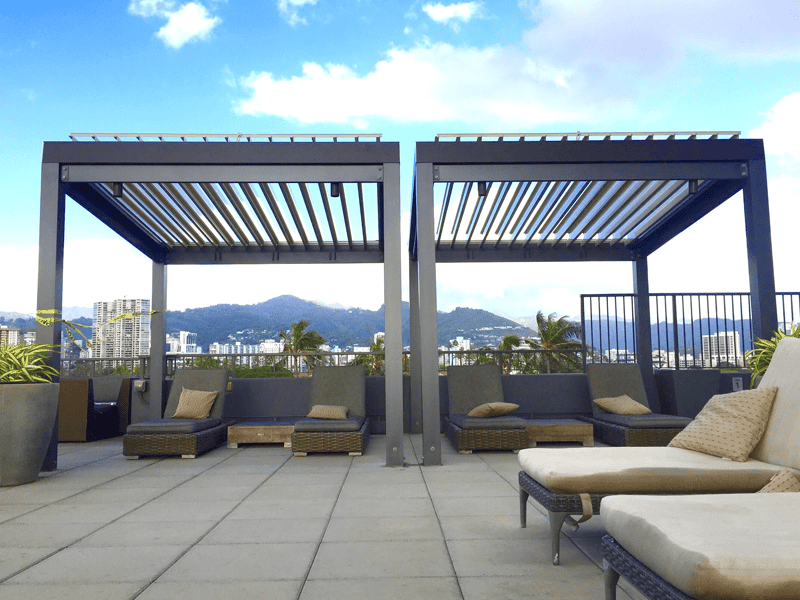
Louvered pergolas give you control. Adjust the louvers for shade, open them for airflow, close them when rain hits. Some systems are motorized—remote control or smartphone app. You’re not stuck with one setting all day.
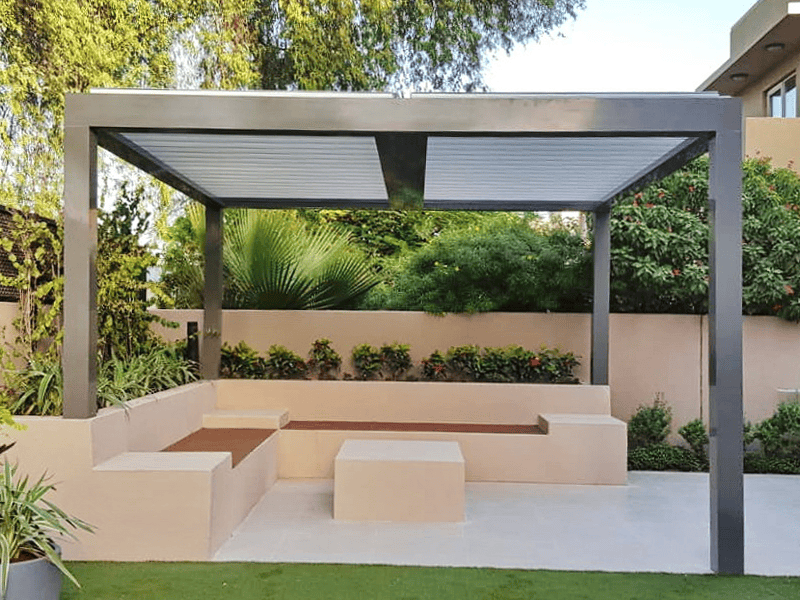
Attached pergolas extend your home’s architecture and create a seamless transition from inside to outside. Freestanding pergolas define a space in your yard—over a seating area, around a fire pit, wherever you want a dedicated zone that feels intentional.
And because this is Channelview, everything we install is engineered to meet TDI windstorm requirements. When hurricane season rolls around, you’re not wondering if your pergola is going to hold. It’s designed to.
Channelview homeowners deal with heat that regularly pushes past 95 degrees, storms that can shred anything not built to code, and outdoor spaces that go unused because there’s no relief. A well-designed pergola fixes that. You get backyard shade that works, modern pergola design that fits your home, and a structure that stands up to what Texas throws at it.

Wood pergolas, especially premium cedar, give you a natural, warm look that a lot of homeowners prefer. Cedar is naturally resistant to insects and decay, but in Channelview’s humidity, it still needs proper sealing and occasional maintenance to prevent warping or weathering. If you want that classic wood aesthetic and don’t mind some upkeep, it’s a solid choice.
Aluminum pergolas are virtually maintenance-free. They don’t rust, don’t rot, and won’t warp in the heat. For the Gulf Coast climate, aluminum makes sense if you want something that looks good without the ongoing maintenance. It’s also lighter, which can matter depending on your installation location and whether you’re attaching it to your home.
Both can be engineered to meet windstorm requirements. Both can support shade options like retractable canopies or climbing plants. The decision usually comes down to aesthetics versus maintenance. If you’re not sure, we can show you examples of both and talk through what makes sense for your specific situation and how you plan to use the space.
A standard pergola with open slats provides partial shade—usually around 30-50% coverage depending on the slat spacing and sun angle. That’s enough to take the edge off, but on a 98-degree afternoon, it’s not going to make your patio comfortable by itself.
That’s why most homeowners in Channelview add something. Retractable canopies give you full coverage when you need it and open sky when you don’t. Louvered pergolas let you adjust the slats to control exactly how much sun gets through—close them for full shade, angle them for partial coverage, or open them completely. Some people use outdoor curtains or let climbing plants grow over the structure for natural shade that builds over time.
If your goal is to actually use your outdoor space during the day in summer, plan for more than just the pergola frame. The structure gives you the bones, but the shade options are what make it functional. We’ll walk you through what works best based on your yard’s orientation, how much sun you’re dealing with, and what you’re trying to accomplish out there.
If it’s designed and installed correctly, yes. Channelview sits in a windstorm zone, which means any outdoor structure needs to meet TDI (Texas Department of Insurance) windstorm requirements. That’s not optional—it’s code.
A properly engineered pergola uses footings that go deep enough to anchor the structure, corrosion-resistant fasteners that won’t fail in high winds, and construction techniques that account for the wind loads specific to Harris County. We’re talking about engineered designs that consider how wind moves around and through the structure, not just something that looks sturdy.
The material matters too. Aluminum pergolas are lighter and less likely to become projectiles if something does fail. Wood pergolas need to be built with the right fasteners and bracing. Either way, the installation is what makes the difference. A DIY pergola or one installed by someone who doesn’t understand local wind load requirements is a risk. A professionally installed, code-compliant pergola is built to handle what Gulf Coast weather throws at it—including the storms that roll through every few years.
It depends on the size, location, and whether it’s attached to your home. In most cases, yes—you’ll need a permit from the City of Houston (Channelview falls under Houston’s jurisdiction for permitting). Attached pergolas almost always require permits because they’re considered an extension of your home’s structure. Freestanding pergolas might require permits depending on square footage and setback distances from property lines.
If you’re in an HOA, you’ll also need approval before construction starts. Some HOAs have specific design guidelines for outdoor structures, including materials, colors, and placement. Skipping this step can mean tearing down a finished pergola or paying fines, so it’s worth handling upfront.
We take care of the permit process and HOA submittals as part of the project. You’re not filling out forms or chasing approvals. We submit the drawings, coordinate with the city, and make sure everything is approved before we start building. It’s one less thing you have to deal with, and it ensures the pergola is compliant from day one.
Once permits are approved and materials are ready, the actual installation usually takes a few days to a week, depending on the size and complexity of the design. A simple freestanding pergola goes up faster than a large attached structure with integrated lighting, motorized louvers, and custom features.
The timeline before installation starts depends on permits and HOA approvals. Permitting through the City of Houston can take a few weeks. HOA approval times vary—some move quickly, others take longer. We handle all of that, but it’s worth knowing upfront that the design and approval phase takes more time than the actual build.
Once we’re on-site, the work moves efficiently. We’re not dragging out a project that should take days into weeks. You’ll see progress every day, and when we’re done, the site is clean and the pergola is ready to use. If weather delays things—heavy rain, extreme heat that affects material handling—we’ll keep you updated. But in general, from approval to completion, you’re looking at a few weeks total, with most of that being paperwork, not construction.
There’s no one-size-fits-all number because every project is different. A basic freestanding wood pergola costs less than a large attached aluminum structure with motorized louvered roof, integrated lighting, and retractable screens. Size, materials, features, and site conditions all affect the price.
What you should expect is a detailed, upfront estimate that includes everything—materials, labor, permits, installation, and any add-ons you’re considering. No vague ranges or surprise costs later. We give you a clear number after the consultation so you can make an informed decision.
Financing is available if you’d rather spread the cost out. We offer flexible options up to $125,000 with competitive rates, so you’re not forced to pay everything upfront or settle for a cheaper structure that won’t last. The goal is to build something that works for your space and your budget without cutting corners on quality or durability. If you want a real number, the best move is to schedule a free consultation. We’ll look at your yard, talk through what you want, and give you an accurate estimate based on your actual project—not a generic ballpark figure.