
Transform your Houston home with our custom sunrooms, liferooms, pergolas, and more! Quality Designs That Improve Your Space And Lifestyle.
Contact Info
Transform your Houston home with our custom sunrooms, liferooms, pergolas, and more! Quality Designs That Improve Your Space And Lifestyle.
Contact Info
Hear From Our Clients
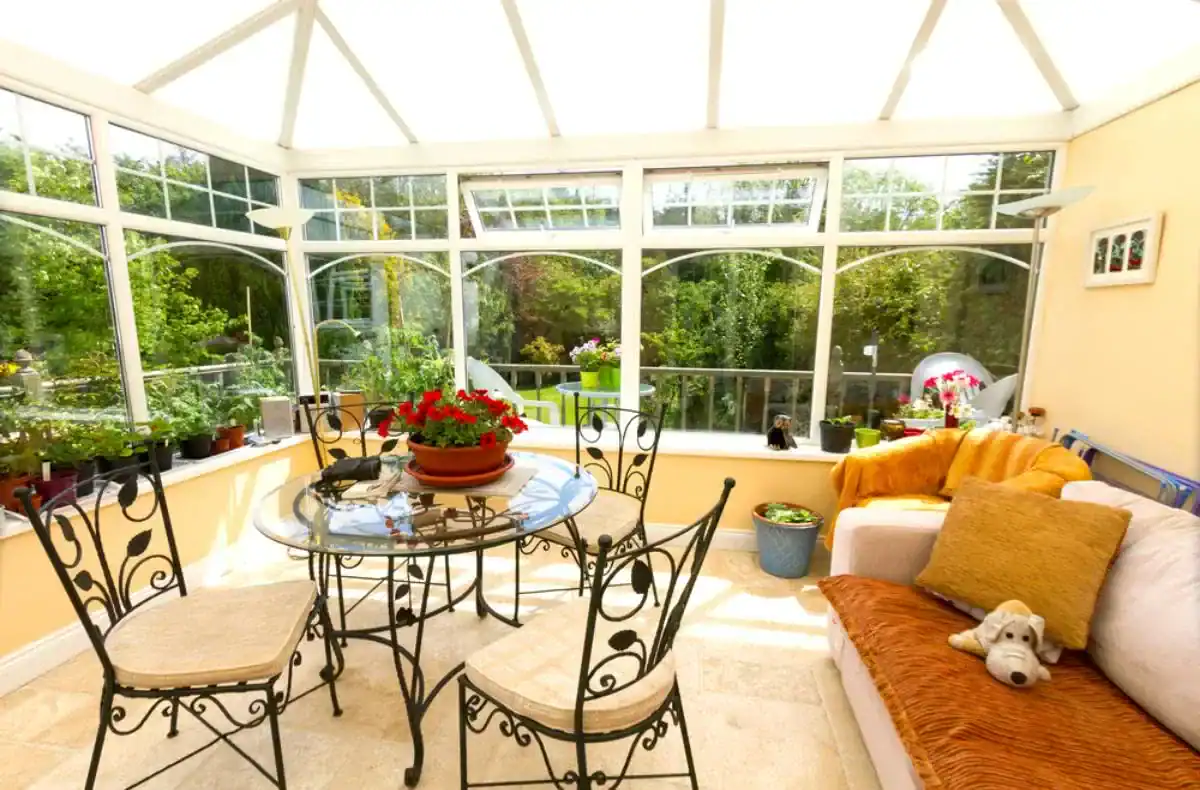
Most sunrooms in Tomball sit empty from June through September because the heat makes them unbearable. Then again from December through February when the cold creeps in. That’s seven months where you’re looking at wasted square footage.
A four season room changes that math completely. You get insulated construction, energy efficient glass that blocks heat without blocking light, and proper climate control integration. The result is a space that stays comfortable when it’s 95 degrees outside or when a cold front drops temps into the 30s overnight.
This isn’t about adding any room. It’s about adding a room you’ll actually use. Morning coffee in February. Kids doing homework in July. Dinner with a view in October. The whole point is year-round function, and that requires year-round comfort.
We’ve been manufacturing custom sunroom systems since the mid-1970s. We’re not a general contractor who dabbles in sunrooms—this is what we do, and we’ve built the systems, training, and supply chain to do it right.
Our Tomball clients are part of a growing community where home values are climbing and outdoor living matters. You’re not looking for the cheapest option. You’re looking for something that works long-term, holds up to Texas weather, and doesn’t become a maintenance headache three years in.
We’re locally operated, fully licensed and insured, and we use materials designed specifically for four-season performance. No shortcuts. No surprises.

It starts with an on-site consultation where we look at your home’s layout, your existing HVAC capacity, and what you actually want to use the space for. That conversation shapes everything—size, orientation, glass options, and whether you need dedicated climate control or can tie into your current system.
From there, we design a custom sunroom that fits your home’s architecture and your budget. You’ll see drawings, material specs, and a clear timeline before anything gets built. No guessing.
Once you approve the design, we handle permits and scheduling. Installation typically takes a few weeks depending on size and complexity. We’re building a structure with insulated walls, a solid roof system, and integrated windows—not just screwing panels together.
After installation, we walk you through operation, maintenance, and warranty coverage. Then you’ve got a finished space that’s ready to use regardless of what the weather does.

Ready to get started?
Every all season sunroom we build in Tomball includes insulated wall systems, a solid insulated roof, and energy efficient glass designed to block UV rays and reduce heat transfer. These aren’t optional upgrades—they’re standard, because without them you don’t have a four-season room.
Sunroom heating and cooling gets handled one of two ways. If your existing HVAC system has capacity, we can extend ductwork into the new space. If not, we’ll spec a mini-split or supplemental system that keeps the room comfortable without overworking your main unit. Either way, the goal is consistent temperature control that doesn’t spike your energy bills.
Tomball’s climate makes this especially important. Summer heat isn’t a minor inconvenience—it’s a design challenge. We use Low-E glass, thermal breaks in the framing, and proper insulation to keep heat out. In winter, that same construction keeps warmth in. It’s the difference between a room you use and a room you avoid.
You also get custom design options that match your home’s style, professional installation by trained crews, and warranty coverage that transfers if you sell. This is a long-term addition, and it’s built like one.

Most four season room projects in Tomball start around $25,000 and can go up from there depending on size, materials, and whether you need a dedicated HVAC system. A basic 12×12 insulated sunroom with standard glass and tied into existing climate control will be on the lower end. A larger space with premium energy efficient glass, custom finishes, and a mini-split system will cost more.
The price reflects what you’re actually getting—insulated construction, engineered framing, quality glass, and a structure that meets building codes for year-round use. That’s different from a three-season screen room or a basic patio cover, and the cost reflects that difference.
For context, you’re typically looking at 50-70% return on investment when you sell your home. It’s not a full recoup, but it’s better than most remodeling projects, and you get years of use before that even matters.
Sometimes, but not always. It depends on your current system’s capacity and how much load the sunroom adds. A 150-square-foot sunroom with insulated walls and energy efficient glass doesn’t require much additional heating or cooling. A 300-square-foot room with a lot of west-facing glass is a different story.
We’ll evaluate your existing system during the consultation. If there’s capacity, extending ductwork is usually the most cost-effective option. If your system is already running at max, adding more load will make it struggle and drive up energy costs. In that case, a ductless mini-split system makes more sense—it’s efficient, quiet, and keeps the sunroom comfortable without affecting the rest of your home.
The key is matching the climate control solution to the actual space and your existing setup. There’s no one-size-fits-all answer, and anyone who tells you otherwise isn’t paying attention.
A three-season sunroom is built for spring, fall, and mild winter days. It usually has single-pane glass, minimal insulation, and no integrated climate control. It’s comfortable when outdoor temps are between 50 and 80 degrees. Outside that range, it’s too hot or too cold to use.
A four season room is insulated, uses double-pane or Low-E glass, and includes heating and cooling. It’s designed to stay comfortable year-round, even during a Texas summer or a January cold snap. The construction is more substantial, the materials are higher-grade, and the cost reflects that.
In Tomball, a three-season room gives you about five months of comfortable use. A four-season room gives you twelve. If you’re investing in additional square footage, it’s worth building something you can actually use whenever you want—not just when the weather cooperates.
Most installations take two to four weeks from start to finish, depending on the size of the room and whether we’re tying into existing utilities. A straightforward 12×14 insulated sunroom on an existing concrete patio usually takes closer to two weeks. A larger custom build with electrical, HVAC integration, and site prep can take four weeks or a bit more.
Permitting adds time on the front end—typically one to two weeks in Tomball depending on the season and permit office workload. We handle that process, but it’s part of the overall timeline you should plan for.
Weather can affect the schedule, especially during foundation or roofing work. We don’t rush through critical steps just to hit a date. You’re better off with a project that takes an extra few days than one that’s done fast and done wrong.
Yes, but not dollar-for-dollar. A quality four season sunroom typically returns 50-70% of the investment when you sell, which is solid compared to most home improvements. If you spend $40,000, you can expect to recoup $20,000 to $28,000 in added home value.
The bigger value is in how it makes your home more attractive to buyers. In a growing market like Tomball, additional living space with year-round usability is a competitive advantage. Buyers see a finished, functional room and they can picture using it immediately. That emotional appeal often matters more than the appraisal number.
If you’re planning to stay in your home for several years, the return on investment is really about your quality of life during that time. You’re getting extra space, more natural light, and a room that improves how you use your home every day. The resale value is a bonus, not the main reason to build.
If they’re built right, yes. The key is using materials and construction methods designed for the climate. That means impact-resistant glass in storm-prone areas, insulated roofing that doesn’t turn the space into an oven, and framing that can handle wind load and thermal expansion.
Texas heat is the bigger daily challenge. A glass roof might look nice, but it traps heat at levels that are expensive and difficult to manage in summer. That’s why we use insulated solid roofs with proper ventilation and drainage. The glass goes in the walls where you get views and light without the constant solar gain overhead.
Storms require proper anchoring, sealed construction, and glass that meets local wind ratings. We follow Texas building codes and manufacturer specs to make sure the structure holds up long-term. A well-built four season room isn’t fragile—it’s engineered to handle what Texas throws at it.
Other Services we provide in Tomball