
Transform your Long Island home with our custom sunrooms, liferooms, pergolas, and more! Quality Designs That Improve Your Space And Lifestyle.
Contact Info
Transform your Long Island home with our custom sunrooms, liferooms, pergolas, and more! Quality Designs That Improve Your Space And Lifestyle.
Contact Info
Hear From Our Clients
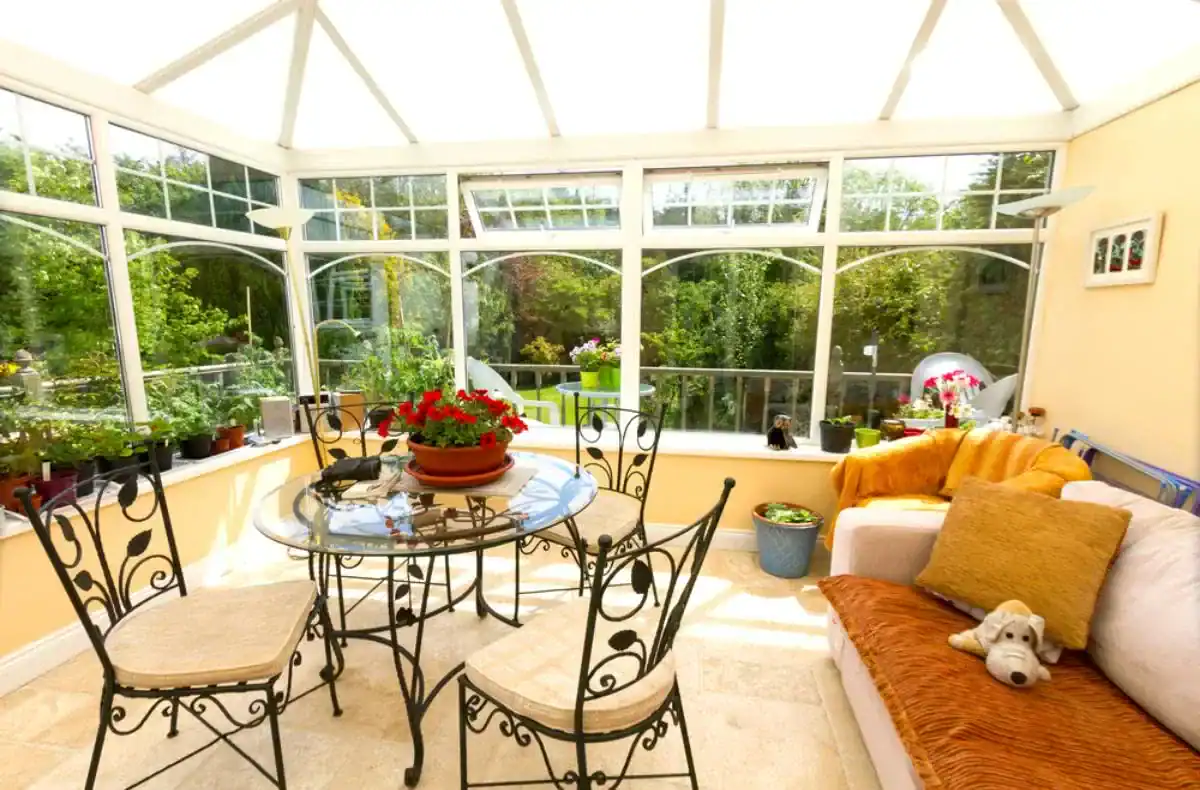
You already know Houston doesn’t have four seasons. It has hot summer, hotter summer, still summer, and Christmas. That’s why a true all season sunroom isn’t just a patio with windows—it’s an insulated, climate-controlled space designed to handle the extremes.
The difference comes down to three things: insulation levels, glass performance, and HVAC integration. Without proper insulation in the walls and roof, you’re building a greenhouse that bakes in July and leaks heat in January. Without energy efficient glass—specifically double-paned with Low-E coatings—you’ll fight solar heat gain all day long. And without connecting the space to your home’s heating and cooling system, you’re relying on portable units that can’t keep up.
When those three elements work together, you get a room that feels like the rest of your home. You can read in there at 2 p.m. in August. You can host family dinners in December without space heaters. You’re not checking the weather app before deciding whether to use the space—you just use it.
That’s the point. A four season room should expand how you live in your home, not give you another area to worry about.
We’re a family-owned company with contractors who’ve spent over 65 years in this industry. We’re not new to Houston’s climate, and we’re not experimenting with materials that might hold up. We know what works here.
El Lago homeowners have specific needs. You’ve got high property values, established homes, and a community that expects quality work. You’re near the water, which means humidity and salt air are part of the equation. We account for that in every project—from the framing materials we use to how we seal and insulate the structure.
Every sunroom we build comes with a 100% satisfaction guarantee. We’re licensed, insured, and we use premium Four Seasons products including CONSERVAGLASS™ NXT, which has stay-clean technology and energy performance that actually makes a difference on your utility bills. You’re not getting a sales pitch from us—you’re getting a straight answer about what your home needs and what it’ll cost.

We start with a consultation at your home. You show us the space, we talk through how you want to use it, and we take measurements. No pressure, no gimmicks—just a clear conversation about whether a sunroom makes sense for your property and your budget.
Once you decide to move forward, we create a custom design that matches your home’s architecture. We’re not bolting on a prefab box. We’re building something that looks like it was always part of the house. You’ll see renderings, material samples, and a timeline before anything gets ordered.
Installation typically takes a few weeks depending on the size and complexity. Our crew handles the foundation work, framing, insulation, glass installation, and HVAC integration. We pull permits, coordinate inspections, and clean up the site daily. You’ll know what’s happening and when.
After the build, we walk you through the finished space and make sure everything works the way it should. You get warranty documentation, care instructions, and a direct line if anything comes up. Then it’s yours to enjoy—morning coffee, afternoon work sessions, evening relaxation. Whatever you need the space to be.

Ready to get started?
Every year round sunroom we install includes high-performance insulation in the walls, ceiling, and floor. This isn’t the same insulation you’d use in a screened porch or three-season room. We’re talking about R-values that meet or exceed what’s in the main structure of your home.
The glass is double-paned with Low-E coatings designed for hot climates. In El Lago, where summer sun is relentless and humidity sits heavy even after dark, standard glass will turn your sunroom into a sauna. Low-E glass reflects infrared light, which means it blocks heat without blocking natural light. You still get the bright, open feel—you just don’t get the greenhouse effect.
We integrate the sunroom into your existing HVAC system whenever possible. That means the same thermostat that controls your living room also controls your sunroom. If your current system doesn’t have the capacity, we’ll talk through options like a mini-split or a dedicated unit. Either way, you’re getting consistent temperature control without running up your electric bill.
The framing is engineered to handle wind load and moisture. Composite materials resist warping, rotting, and pest damage better than wood, which matters in a humid climate near Clear Lake. And because El Lago has strict building standards and an active homeowners association culture, we make sure everything meets local codes and looks right for the neighborhood.

Most insulated sunrooms in the Houston area run between $40,000 and $80,000, depending on size, materials, and how much HVAC work is involved. A 12×16 room with standard features will land on the lower end. A 16×20 room with premium glass, custom finishes, and a dedicated climate control system will push toward the higher end.
The cost isn’t just about square footage. It’s about what goes into the walls, the quality of the glass, and whether we’re tying into your existing HVAC or installing a new system. If your home’s current heating and cooling can handle the extra load, that saves money. If it can’t, we’ll need to add capacity, which increases the budget.
We offer financing up to $125,000 with competitive rates, so you’re not writing one big check upfront. And because a well-built sunroom typically adds $50,000 to $60,000 in resale value—based on what we’ve seen in the Dallas and Houston markets—you’re not just spending money. You’re shifting it into your home’s equity while getting a space you’ll actually use.
If it’s built right, the increase is minimal. If it’s built wrong, yes—you’ll see a spike, especially in summer.
The key is insulation and glass performance. A poorly insulated sunroom with single-pane or standard double-pane glass will heat up fast in the Texas sun. Your AC will run constantly trying to cool it, and you’ll feel it on your electric bill. But a properly insulated four season room with Low-E glass actually reduces the load on your HVAC because it’s designed to resist heat transfer.
Natural light is another factor. When you’re using the sunroom during the day, you’re not turning on lights in other parts of the house. That cuts electricity use. And if you’re spending time in a space that’s already comfortable, you’re not cranking the thermostat in the main house to compensate for a room that’s too hot or too cold.
We’ve had clients in the Houston area report little to no change in their monthly bills after installation. Some even see a slight decrease because they’re using their main living areas less during peak sunlight hours. It all comes down to how the room is built and how you use it.
Yes, but only if it’s designed as an all season sunroom with real climate control. A three-season room or a basic patio enclosure won’t cut it here.
Houston’s summer heat isn’t a joke. You’re looking at months of 95+ degree days with humidity that makes it feel even hotter. A sunroom without proper insulation, energy efficient glass, and HVAC will be unusable from May through September. You’ll open the door, feel the wall of heat, and close it again.
An insulated sunroom with double-paned Low-E glass and integrated heating and cooling stays comfortable even when it’s 98 degrees outside. The glass blocks most of the solar heat before it enters the room. The insulation keeps conditioned air inside. And the HVAC maintains whatever temperature you set, just like the rest of your home.
We build for Houston’s climate specifically. That means accounting for intense sun exposure, high humidity, and the occasional cold snap in January. If you want a space you can use every single month of the year, you need a true four season room—not something that works great in April and October but sits empty the rest of the time.
Most projects take three to five weeks from the day we break ground to the day you’re using the space. Larger or more complex builds can run six to eight weeks, especially if we’re doing significant HVAC work or dealing with site challenges.
The timeline depends on a few things. Permitting in El Lago usually takes one to two weeks, and we don’t start construction until those are approved. Once we begin, foundation work and framing happen first—that’s typically the first week. Then we move into insulation, glass installation, electrical, and HVAC integration, which takes another two to three weeks. Final finishes, trim, and cleanup round out the last few days.
Weather can slow things down, especially during Houston’s rainy season. We don’t install glass or insulation in the rain, and we won’t pour a foundation if the ground is saturated. But we build buffer time into the schedule so a couple of weather delays don’t push your project out by a month.
You’ll have a clear timeline before we start, and we’ll update you if anything changes. No surprises, no disappearing for days at a time. You’ll know where we are in the process and when to expect the next phase.
A three-season room is built for spring, fall, and mild winter days. It has some insulation and decent windows, but it’s not designed to handle temperature extremes. You’ll use it when the weather’s nice and avoid it when it’s not.
A four season room—also called an all season sunroom—is built to the same standards as the rest of your home. It has full insulation in the walls, ceiling, and floor. The glass is double-paned with Low-E coatings that block heat in summer and retain warmth in winter. And it’s connected to your home’s heating and cooling system, so it stays comfortable no matter what’s happening outside.
In Houston, a three-season room might work from October through April. But from May through September, it’ll be too hot to use unless you’re running a standalone AC unit, which is loud, inefficient, and still won’t keep up with the heat. A four season room stays usable all year because it’s engineered for climate control, not just weather protection.
If you’re investing in a sunroom, you want to use it more than half the year. That’s why most El Lago homeowners go with a true all season build. It costs more upfront, but you’re not paying for a space that sits empty eight months out of the year.
Yes. Any permanent structure that adds square footage to your home requires a building permit in El Lago, and sunrooms fall into that category.
The permit process involves submitting plans to the city, getting approval from the building department, and scheduling inspections at key stages of construction—usually after the foundation is poured, after framing and electrical are complete, and before final occupancy. We handle all of that. You don’t need to visit city hall or figure out what forms to file.
El Lago also has zoning rules about setbacks, lot coverage, and how close structures can be to property lines. We verify all of that during the design phase so there are no issues when we submit for permits. If you’re in a neighborhood with a homeowners association, we’ll also make sure the design meets any architectural guidelines they have in place.
Skipping permits isn’t worth it. If you try to sell your home later and the sunroom wasn’t permitted, it can kill a deal or force you to remove the structure. We do it right from the start—permitted, inspected, and built to code. That protects your investment and keeps everything legal.
Other Services we provide in El Lago