
Transform your Long Island home with our custom sunrooms, liferooms, pergolas, and more! Quality Designs That Improve Your Space And Lifestyle.
Contact Info
Transform your Long Island home with our custom sunrooms, liferooms, pergolas, and more! Quality Designs That Improve Your Space And Lifestyle.
Contact Info
Hear From Our Clients
Most homeowners in West University Place have beautiful outdoor furniture that sits empty half the year. Too hot in summer. Mosquitoes in spring. Unpredictable rain any month. You paid good money for that patio, and it’s not delivering.
A properly designed lanai enclosure changes that. You get the breeze and natural light without the bugs. Protection from sun and rain without feeling boxed in. A space that works in February and August alike.
We’re talking about porch screening that doesn’t sag or tear. Materials engineered for Texas humidity and UV exposure. Custom designs that match your home’s architecture instead of looking like an afterthought. This isn’t about adding square footage—it’s about reclaiming the outdoor living space you already have and making it functional every single day.
We’ve been designing custom outdoor living spaces since the mid-1970s. We’re not new to Texas weather, HOA requirements, or what works in West University Place’s architectural landscape.
We understand that homes in this area aren’t cookie-cutter. You’ve got everything from classic colonials to modern builds, and a lanai enclosure needs to complement that—not clash with it. We handle the engineering, permitting, and installation so you don’t have to navigate West University Place’s contractor registration requirements or worry about whether the structure meets code.
You’re working with people who’ve built hundreds of outdoor rooms across the Houston area. We know which materials hold up and which ones don’t. We know how to design for drainage, wind load, and the kind of afternoon sun that turns a patio into a griddle.

We start with a free in-home consultation. Someone from our team comes out, looks at your existing patio or outdoor area, and talks through what you’re trying to accomplish. We measure, take photos, and discuss options—materials, screening types, roof styles, how you want to use the space.
From there, we create a custom design with detailed drawings and a transparent estimate. No surprises, no vague line items. If your project needs HOA approval, we provide the elevation drawings and material specs they require. Once you’re ready to move forward, we handle permitting and schedule the build.
Installation timelines vary based on project size, but most lanai enclosures take one to two weeks once we break ground. Our crews show up on time, keep the site clean, and communicate if anything changes. When we’re done, you get a finished outdoor living space that’s built to last, with warranties that back up the work.

Ready to get started?
Every custom lanai we build includes professional-grade porch screening designed to withstand Houston’s humidity and wind. We use materials like aluminum, vinyl, or wood depending on your aesthetic and maintenance preferences. Aluminum offers durability with minimal upkeep. Vinyl provides energy efficiency. Wood brings warmth but requires more care over time.
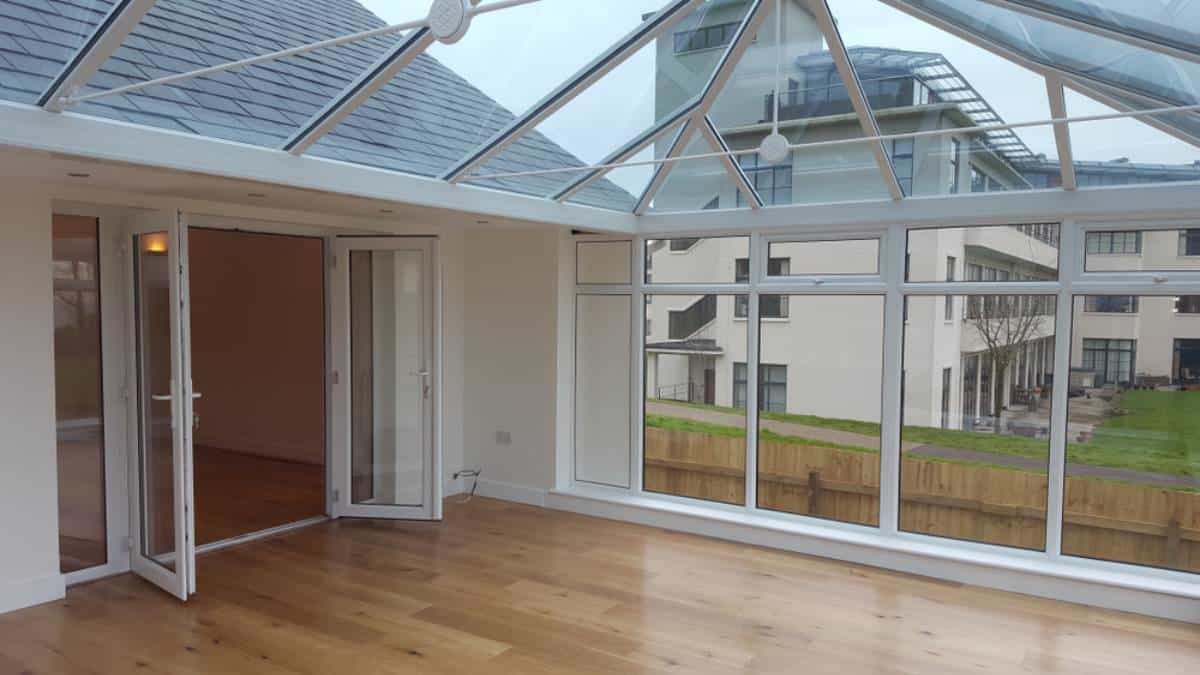
Roof options include insulated panels, CONSERVAGLASS™ for natural light without the heat, or traditional shingle-style covers that match your home. We engineer each structure to handle Texas weather—heavy rain, high winds, intense sun. That means proper drainage, wind-rated fasteners, and UV-resistant finishes.
West University Place homeowners often add features like ceiling fans, recessed lighting, or French doors that open from the main house. We can integrate those during construction. If you’re planning outdoor furniture or a dining setup, we design around that so the space flows naturally. The goal is patio construction that feels like an extension of your home, not an add-on. You get a finished lanai enclosure that works with your property’s layout and your family’s routine.

Pricing depends on size, materials, and features, but most projects in West University Place range from $15,000 to $40,000. A basic 12×20 screened enclosure with an aluminum frame and standard roof starts around $14,000 to $18,000. Add custom features like CONSERVAGLASS™ panels, upgraded screening, integrated lighting, or premium finishes, and you’re looking at $25,000 to $40,000 or more.
We provide a detailed, upfront estimate after the in-home consultation. That includes materials, labor, permits, and any engineering work required. No hidden fees or vague allowances. If you need financing, we offer unsecured loans up to $125,000 with competitive rates, so you’re not stuck waiting to start the project.
The investment makes sense when you consider how much more you’ll use your outdoor space. Homeowners in this area see strong ROI on outdoor improvements—landscaping and patio upgrades consistently rank among the highest-value exterior projects. You’re not just building a lanai; you’re adding functional square footage that increases your home’s appeal.
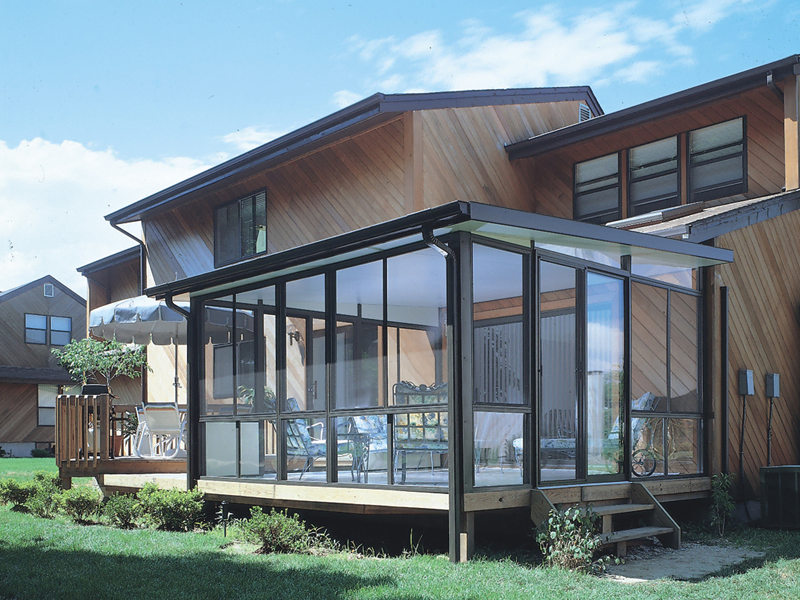
A lanai is typically a covered outdoor space with screening or glass panels, designed to let in airflow and light while keeping out bugs and weather. It’s attached to the house and often extends from the back or side. Think of it as a hybrid between a patio and an enclosed room.
A sunroom is fully enclosed with glass windows and insulated walls, designed for year-round climate control. You can heat and cool it like any other room in your house. It’s more of an addition than an outdoor space. A screened porch is simpler—usually just a roof and screening with minimal structure. It’s great for bug protection but doesn’t offer much in terms of weather control or insulation.
In West University Place, most homeowners choose lanais because they want outdoor living space that’s usable most of the year without the cost and complexity of a full sunroom addition. You get protection from mosquitoes, shade from the sun, and cover from rain, but you’re not paying to condition the space or dealing with the permitting requirements of adding heated square footage. It’s the middle ground that makes the most sense for Texas weather.
Most likely, yes. West University Place has strict building codes, and if you’re in a neighborhood with an HOA, you’ll need approval before construction starts. That usually means submitting a site survey, elevation drawings, material samples, and a detailed project description.
We handle this process regularly. We provide the documentation your HOA needs—professional drawings, material specs, color samples, and a clear explanation of the project scope. We know what local boards look for and how to present the project in a way that gets approved without unnecessary back-and-forth.
Even if you’re not in an HOA, you’ll still need to meet West University Place’s contractor registration and permitting requirements. We’re fully licensed and insured with the required $300,000 general liability coverage. We pull permits, coordinate inspections, and make sure everything is up to code. You don’t have to navigate the bureaucracy yourself—that’s part of what you’re hiring us to do. The goal is to make the approval and permitting process as smooth as possible so you can focus on enjoying the finished space.
Most lanai projects take one to three weeks from the day we start construction to final walkthrough. Smaller screened enclosures on existing concrete patios can be done in a week. Larger projects with custom roofing, electrical work, or structural modifications take closer to two or three weeks.
The timeline also depends on permitting and HOA approval. That part is out of our hands, but it typically adds one to three weeks before we can break ground. We start the paperwork as soon as you approve the design, so there’s no unnecessary delay.
Weather can impact the schedule—heavy rain or extreme heat sometimes push things back a day or two. We communicate clearly if that happens and adjust as needed. Once we’re on-site, our crews work efficiently and keep the project moving. You’re not dealing with a job that drags on for months. We show up, do the work right, and finish on the timeline we commit to. If something changes, you’ll know before it becomes a problem.
Maintenance depends on the materials you choose, but most lanai enclosures require very little upkeep. Aluminum frames don’t rust, rot, or need repainting. You might hose them down once or twice a year to remove pollen or dirt. Vinyl is similarly low-maintenance—just occasional cleaning with soap and water.
Screening can get damaged over time from debris, pets, or wear, but professional-grade materials last years before needing replacement. If a panel does tear, it’s a straightforward fix. Wood frames require more attention—staining or sealing every few years to protect against moisture and UV damage. It looks great, but it’s not a set-it-and-forget-it option.
The roof is the other consideration. Insulated panels and CONSERVAGLASS™ don’t need much beyond occasional cleaning. Shingle-style roofs should be inspected annually, just like the rest of your home’s roof. Gutters and drainage need to stay clear so water doesn’t pool or back up during heavy rain. Overall, you’re looking at minimal maintenance compared to the value you get from the space. This isn’t a high-maintenance addition—it’s designed to work without constant attention.
Yes, but comfort depends on how the space is designed. A basic screened lanai works great in spring and fall when temperatures are mild. You get airflow, natural light, and bug protection. In summer, it’s still usable in the early morning or evening, but midday heat can make it uncomfortable without fans or shade features.
If you want true year-round functionality, consider options like insulated roof panels, CONSERVAGLASS™ that blocks heat while letting in light, or adding ceiling fans and misters for summer cooling. Some homeowners install removable glass panels or vinyl curtains that can close off the space in winter, turning it into a semi-conditioned room.
Texas weather is unpredictable, but it’s also mild compared to northern climates. You’re not dealing with snow or freezing temperatures for months on end. A well-designed lanai gives you usable outdoor living space at least eight to ten months a year, and with the right features, you can push that even further. The key is building for flexibility—designing a space that adapts to the season instead of sitting empty half the year.
Other Services we provide in West University Place