
Transform your Houston home with our custom sunrooms, liferooms, pergolas, and more! Quality Designs That Improve Your Space And Lifestyle.
Contact Info
Transform your Houston home with our custom sunrooms, liferooms, pergolas, and more! Quality Designs That Improve Your Space And Lifestyle.
Contact Info
Hear From Our Clients
Living in one of Houston’s hottest neighborhoods means your outdoor space sits empty most of the year. Too hot in summer, too unpredictable when the weather shifts. A retractable roof system changes that completely.
You get instant shade control when temperatures spike. Rain protection when storms roll in without warning. And the ability to open everything up when conditions are perfect. Your patio becomes actual living space instead of wasted square footage.
The system responds faster than you can. Smart sensors detect wind speed, temperature changes, and rain, automatically adjusting the pergola position to protect the structure and anyone underneath. You’re not scrambling to close things up or guessing whether it’s safe to stay outside. The technology handles it while you keep doing what you’re doing.
This isn’t about making your backyard prettier. It’s about making it usable when Gulfton’s climate says otherwise.
We bring nearly 50 years of outdoor living experience to every retractable pergola installation in Gulfton. We’re a family-owned company that’s been building custom sunrooms, patio covers, and automated shade systems since before most competitors existed.
We know Houston’s weather. We know what holds up in 175 mph wind gusts and what fails after one season. We know the permit process and local building codes. And we know Gulfton homeowners need systems that work in extreme heat without constant maintenance.
Every project gets the same approach: high-quality materials, modern installation techniques, and clear communication from consultation through completion. We’re licensed, insured, and we finish on time. No surprises, no runarounds.

You start with a consultation at your property. We look at your outdoor space, discuss what you need the pergola to do, and take measurements. You tell us about your priorities—shade control, rain protection, wind resistance, automation level—and we design a system that addresses those specific requirements.
Once you approve the design, we handle permits and scheduling. Installation timing depends on the system complexity, but most retractable pergola projects complete within a few days. Our team builds the structure, installs the motorized components, integrates any smart sensors or home automation connections, and tests everything before we leave.
You get a walkthrough of the controls—whether that’s a remote, smartphone app, or voice commands through Alexa or Google Home. We show you how to adjust the sliding pergola roof manually if needed, explain the sensor settings, and answer any questions about maintenance or operation.
After installation, the warranty coverage starts. You have our contact information for any issues, adjustments, or questions that come up. The system should work without much intervention, but we’re available if something needs attention.
Ready to get started?
The retractable roof system includes motorized operation with remote and smartphone control. You’re not manually cranking anything or climbing on furniture to adjust shade. The motor handles the heavy work, and you control it from wherever you’re standing.
Smart weather sensors come standard on most systems we install. These detect rain, wind speed, and temperature changes, automatically adjusting the pergola position to protect both the structure and anyone underneath. In Gulfton’s unpredictable weather, this isn’t a luxury feature—it’s necessary.
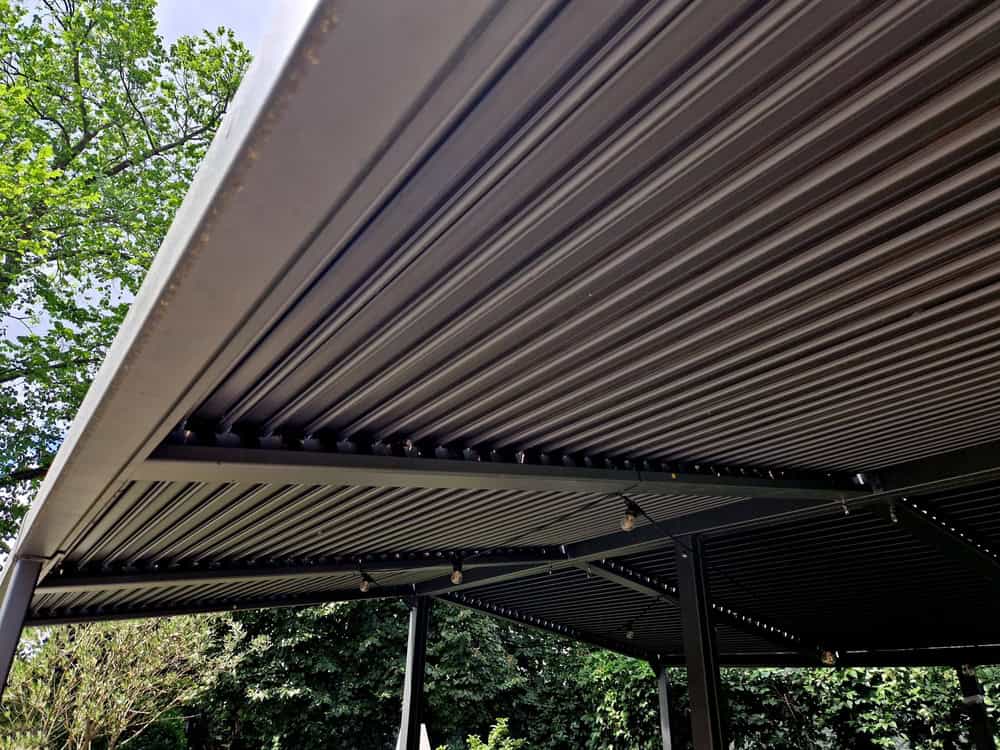
The structure itself is engineered for Houston’s climate. We use weather-resistant materials that handle extreme heat, sudden storms, and high humidity without warping, fading, or requiring constant upkeep. Several designs we install are rated to withstand up to 175 mph wind gusts, which matters when severe weather hits.
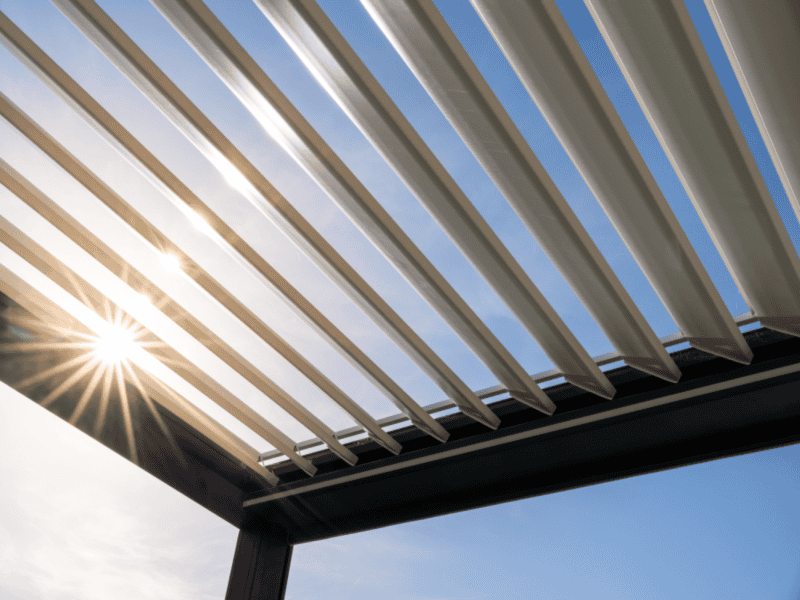
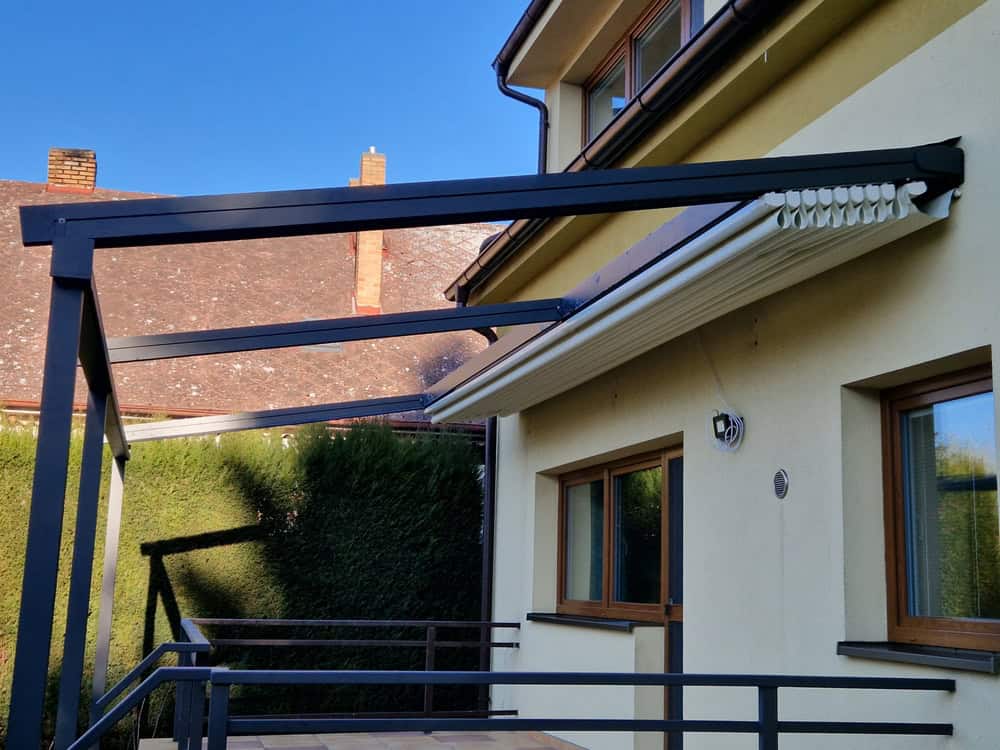
You can choose between rotating louvers that angle from 0 to 170 degrees or retractable fabric panels that slide along tracks. Both give you variable shade control throughout the day. The louver systems offer more airflow, while fabric panels provide complete coverage when you need it.
Integration with existing home automation systems is available if you want voice control or automated schedules. Some homeowners set their pergola to close automatically at certain temperatures or open when they leave for work. Others prefer manual control. The system adapts to either approach.
Cost depends on size, materials, automation level, and structural requirements for your specific property. A basic motorized system for a standard patio starts around $8,000 to $12,000. Larger structures with premium materials, advanced sensors, and home automation integration can run $20,000 to $35,000 or more.
The price includes the pergola structure, motorized components, installation, permits, and warranty coverage. Additional costs come from electrical work if your patio doesn’t have existing power, concrete work for footings, or custom design elements beyond standard configurations.
We offer financing options up to $125,000 with competitive rates if you prefer to spread payments over time. Most homeowners see a 70-80% ROI on well-designed outdoor living spaces, which helps offset the initial investment when you eventually sell. But the real value is using your outdoor space year-round instead of letting it sit empty because the weather won’t cooperate.
Yes, if it’s designed and installed correctly for this climate. Houston’s weather demands structures that can handle extreme heat, sudden storms, high winds, and heavy rain without failing. We install pergola systems engineered to withstand up to 175 mph wind gusts, which exceeds what most hurricanes produce.
The materials matter as much as the engineering. Aluminum frames resist rust and corrosion in Houston’s humidity. Weather-resistant fabrics are UV-rated and won’t fade or deteriorate under constant sun exposure. Powder-coated finishes hold up better than paint in extreme temperatures.
Smart sensors add another layer of protection. When wind speeds hit dangerous levels or storms approach, the system automatically retracts or adjusts to the safest position. You’re not relying on manual intervention or hoping you get home in time to close things up. The pergola protects itself and your patio furniture without you lifting a finger.
Regular maintenance is minimal but important. Keeping tracks clean, checking motor function annually, and inspecting fabric or louvers for wear extends the system’s lifespan. Most homeowners spend less time maintaining a retractable pergola than they do on basic yard work.
Most modern retractable pergola systems include smartphone integration as a standard or available feature. You download the manufacturer’s app, connect it to your pergola’s control system, and operate everything from your phone. This lets you adjust shade levels before you get home, close the roof if rain starts while you’re away, or check the current position from anywhere.
Voice control through Alexa or Google Home is available on systems that integrate with home automation platforms. You can set up commands like “close the pergola” or “set shade to 50 percent” and the system responds immediately. Some homeowners create routines that automatically adjust the pergola based on time of day, temperature, or weather forecasts.
The setup process is straightforward if you’re comfortable with basic smart home technology. Most systems connect via WiFi and walk you through pairing in the app. If you’re not tech-savvy or don’t want automation, every system also includes a physical remote control and manual override options.
Integration capabilities vary by manufacturer and model. During your consultation, tell us if voice control or specific automation features are priorities. We’ll recommend systems that support those functions and handle the setup during installation.
Most retractable pergola installations complete in two to five days, depending on the system size, complexity, and site conditions. A straightforward motorized pergola on an existing concrete patio with nearby electrical access typically takes two to three days. Larger custom structures, complex automation setups, or projects requiring new concrete footings can extend to four or five days.
Day one usually involves site preparation, setting footings if needed, and beginning the frame assembly. Day two focuses on completing the structure, installing the motorized components, and running electrical connections. Day three covers final assembly, testing all functions, integrating smart sensors or home automation, and walking you through the controls.
Weather can delay outdoor construction, especially during Houston’s rainy season. We schedule with buffer time built in and communicate immediately if conditions push the timeline back. Most delays are a day or two at most.
You can use your patio throughout most of the installation process. There will be periods where we need clear access to work areas, but it’s not like a full renovation where the space is unusable for weeks. Once we finish, the pergola is ready to use immediately—no curing time or waiting periods.
Yes, when positioned correctly near your home. A retractable pergola provides adjustable shade that blocks direct sunlight from hitting windows, doors, and exterior walls during the hottest parts of the day. This reduces heat transfer into your home, which means your air conditioning doesn’t work as hard to maintain comfortable temperatures.
The energy savings are most noticeable on west-facing and south-facing patios where afternoon sun creates the most heat gain. By closing the pergola louvers or extending the retractable fabric during peak sun hours, you create a buffer zone that keeps that heat outside. When temperatures drop or you want natural light, you open the system back up.
The exact savings depend on your home’s insulation, window quality, and how strategically you use the shade control. Most homeowners in Gulfton’s extreme heat see a noticeable difference in cooling costs during summer months, though it’s hard to quantify an exact dollar amount without monitoring your specific usage patterns.
Beyond energy costs, the pergola makes your outdoor space usable without cranking the AC to compensate for heat coming through patio doors. You’re extending your living area instead of cooling unused square footage, which changes how you use energy throughout your home.
Retractable pergolas are designed for low maintenance, but they’re not maintenance-free. You’ll need to clean the tracks and louvers or fabric panels a few times per year to prevent debris buildup. A simple rinse with a garden hose and mild soap handles most cleaning. Avoid pressure washers, which can damage seals and finishes.
Check the motor function annually. Most systems include diagnostic features that alert you to issues, but a quick manual test of all positions ensures everything operates smoothly. Lubricate moving parts according to the manufacturer’s schedule—usually once or twice per year depending on how frequently you adjust the pergola.
Inspect fabric panels for tears, fading, or wear if you have a retractable canopy system. UV-resistant materials last years under Houston sun, but eventually they’ll need replacement. Louver systems require less frequent part replacement but should be checked for loose hardware or alignment issues.
Smart sensors need occasional recalibration to maintain accuracy. This is typically a simple process through the control app, but some homeowners prefer having us handle it during an annual service check. We offer maintenance packages if you’d rather not deal with upkeep yourself.
The warranty covers motor failures, structural defects, and manufacturing issues for a specified period. Normal wear items like fabric or routine maintenance aren’t covered, but major component failures are. Keep your warranty documentation and contact us immediately if something stops working correctly.